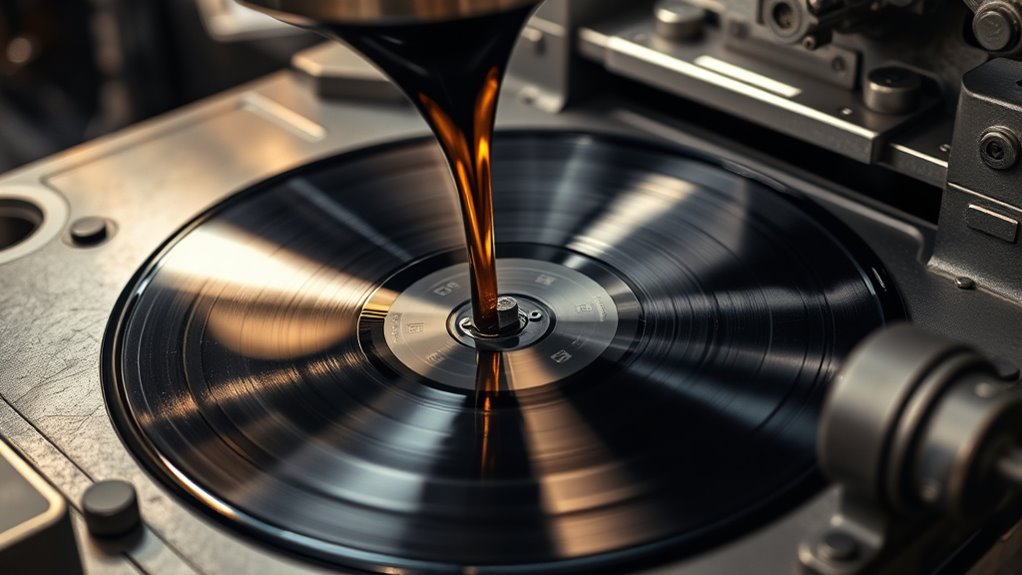

The vinyl record pressing process transforms your audio into durable discs through several detailed steps. First, your music is mastered specifically for vinyl, then transferred onto a lacquer that captures sound nuances. This lacquer becomes a metal master, which is used to create stampers for pressing. The vinyl is heated, molded between those stampers, cooled, trimmed, and inspected. Each step guarantees quality and fidelity, and knowing more about each phase helps you appreciate the craft behind your records.

Get furniture and decor delivered free with Prime
- Fast, free delivery on millions of items
- Prime Video, Amazon Music and more included
- Member-only deals all year
Key Takeaways
- The process begins with mastering audio specifically for vinyl, which is transferred onto a lacquer to capture sound nuances.
- A metal master is created from the lacquer, serving as the template for pressing records, with quality control to prevent defects.
- Vinyl pellets are heated, extruded into liquid, and pressed between metal stampers to form the record’s grooves.
- Precise calibration and quality checks during pressing ensure consistent thickness and sound quality, preventing defects like skips.
- Sustainable practices such as recycling vinyl scraps and reducing chemicals are increasingly integrated into the manufacturing process.

The vinyl record pressing process transforms digital or analog audio into a physical format that music lovers cherish. This intricate procedure involves multiple steps to guarantee the final product maintains high vinyl pressing quality, capturing the warmth and depth that enthusiasts seek. As you explore this process, it’s important to understand how each stage influences both the sound quality and the environmental impact of producing vinyl records. High-quality pressing requires precision at every step, from mastering to the final packaging, and mindful practices can help reduce the environmental footprint of vinyl production.
First, the audio is mastered specifically for vinyl, which involves equalization and adjustments to optimize it for the medium’s physical limitations. Once mastered, the audio is transferred into a lacquer, a essential component that captures the sound wave’s nuances. This lacquer is then used to create a metal master, which serves as the template for pressing records. Throughout this process, maintaining vinyl pressing quality is critical; any flaws in the master or handling can lead to imperfections like pops, skips, or distortion in the final product. Quality control measures, such as inspecting each master and pressed record, help guarantee that only records meeting strict standards reach consumers.
After the master is finalized, the pressing process begins. Vinyl pellets are heated and extruded into a liquid called vinyl compound, which is then molded into a record by pressing it between two metal stampers. This step demands precision to guarantee consistent thickness and sound fidelity across the entire run. The pressing machines are calibrated regularly to uphold quality, and the records are cooled and trimmed to remove excess material. The entire process considerably impacts vinyl pressing quality because even minor deviations can affect the sound and durability of the final product.
While the focus is often on achieving excellent sound quality, the environmental impact of vinyl pressing shouldn’t be overlooked. Producing records involves the use of plastics and chemicals, contributing to waste and emissions. Many manufacturers are now adopting eco-friendly practices, such as recycling vinyl scraps, using less harmful chemicals, and sourcing sustainable materials. By doing so, they aim to minimize their carbon footprint without compromising vinyl pressing quality. As a music lover, knowing that some labels prioritize sustainability can influence your choices, encouraging a more environmentally responsible approach to enjoying your favorite records.
Ultimately, understanding the vinyl record pressing process reveals a delicate balance between craftsmanship and environmental consciousness. Each step, from mastering to pressing, plays an indispensable role in delivering records that sound exceptional while also respecting our planet’s health. When you appreciate the effort that goes into creating high-quality vinyl, you’ll value not only the music but also the sustainable practices behind the records you cherish.
Products Worth Considering

Ring Alarm 14-Piece Wireless Security System Kit

Shark Navigator Robot Vacuum with Self-Empty Base, Dark Grey (RV2120AE)

Dyson V8 Cordless Vacuum
As an affiliate, we earn on qualifying purchases.
Frequently Asked Questions
How Long Does the Vinyl Pressing Process Typically Take?
The vinyl pressing process usually takes about 4 to 8 weeks, depending on the pressing schedule and turnaround time. You’ll find that factors like the complexity of your order and current demand can extend this timeframe. To guarantee timely delivery, check with your pressing plant, as they can provide specific estimates based on their schedule. Planning ahead helps avoid delays and keeps your project on track.
What Are Common Issues Encountered During Record Pressing?
You’ll love how record pressing can sometimes turn into a game of “spot the defect.” Common issues include quality control slip-ups like warping, off-center records, and pressing defects that make your groove jump. It’s almost charming how these hiccups remind you that even in vinyl, perfection is elusive. Expect occasional surface noise or skips, but with proper oversight, you can minimize these flaws and enjoy that warm, vintage sound.
How Is Sound Quality Maintained Throughout Pressing?
You maintain sound quality during pressing by guaranteeing high audio fidelity through meticulous mastering techniques. These involve equalization, compression, and precise level adjustments to preserve clarity and balance. Quality control checks at each stage catch any distortions or defects, while choosing the right materials and maintaining press equipment help prevent sound degradation. This careful process ensures your vinyl records deliver the authentic, rich sound that enthusiasts expect.
What Materials Are Used in the Vinyl Pressing Process?
Imagine crafting a timeless keepsake; you use a sturdy vinyl composition, mainly polyvinyl chloride (PVC), to create your record. At the pressing plant, specialized equipment applies heat and pressure, transforming the raw materials into a smooth, durable disc. This careful process guarantees your music stays preserved and vibrant, as every step in the pressing plant equipment works harmoniously to produce a high-quality vinyl record that lasts for generations.
How Environmentally Friendly Is Vinyl Record Manufacturing?
Vinyl record manufacturing is becoming more environmentally friendly by implementing recycling initiatives and using sustainable materials. You can find pressing plants that recycle excess vinyl and packaging waste, reducing landfill impact. Some companies are also exploring eco-friendly materials like biodegradable plastics or recycled vinyl. While not yet entirely green, these efforts show a positive shift toward more sustainable practices, helping you enjoy music while minimizing environmental harm.
Conclusion
Now you see how intricate and precise the vinyl pressing process truly is. Some might think it’s outdated or unnecessary, but the rich sound and nostalgic feel make it worth the effort. Don’t be discouraged by the complexity; every record you enjoy is the result of craftsmanship and care. When you hold that vinyl in your hands, you’re experiencing a timeless tradition that’s well worth the effort and passion behind it.