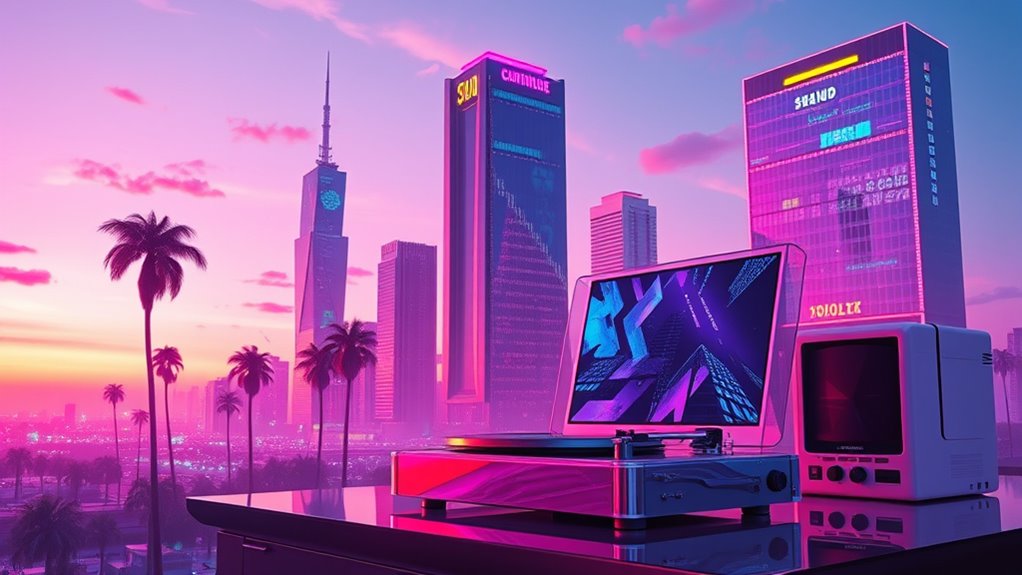

Vaporwave and Y2K aesthetics revive the vibrant, nostalgic visuals of the late 90s and early 2000s, blending retro-futurist themes with digital culture. You’ll notice bright neon colors, pixel art, holographic effects, and vintage computer fonts that evoke memories of arcade games and early internet graphics. This style celebrates optimistic visions of the future while remixing past trends in a playful, surreal way. Keep exploring to discover how these influences shape contemporary art and design.
Key Takeaways
- Vaporwave and Y2K aesthetics revive late 20th-century digital culture with neon colors, pixel art, and vintage computer fonts.
- They blend nostalgic visuals like glitch art and VHS distortion with futuristic themes like holographs and digital landscapes.
- The revival emphasizes playful reinterpretations of past trends, merging retro visuals with modern music, fashion, and digital art.
- Both styles reflect a sense of optimism, irony, and curiosity about technological progress, inspired by 80s and 90s visions of the future.
- The movement creates a cultural remix, connecting early internet graphics, arcade aesthetics, and digital culture with contemporary creativity.
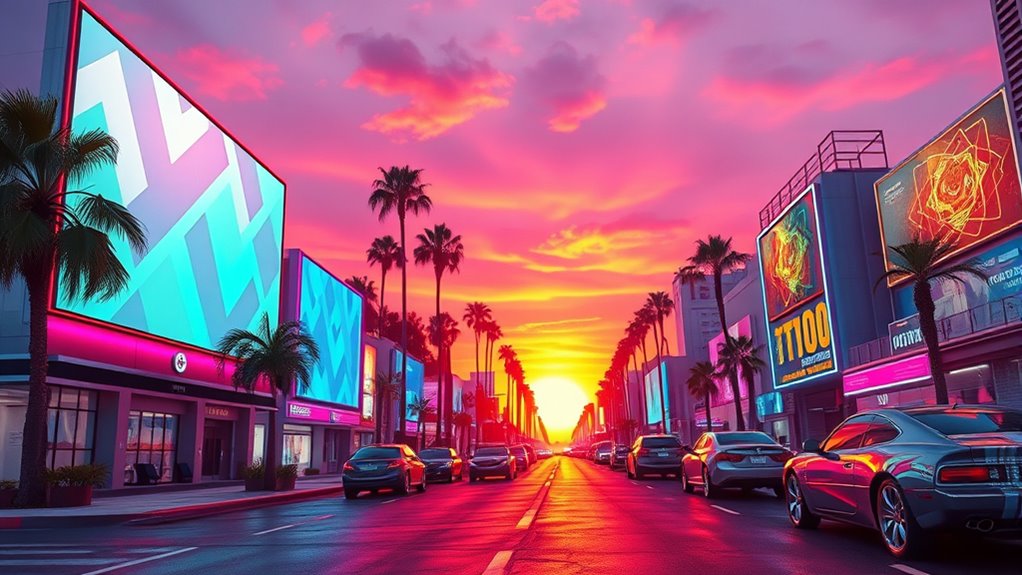
In recent years, vaporwave and Y2K aesthetics have experienced a surprising resurgence, capturing the imagination of a new generation. You might find yourself drawn to their nostalgic visuals that evoke a sense of familiarity while also feeling fresh. These styles thrive on a blend of retro futurism—futuristic visions from the late 20th century—and a playful reimagining of past trends. As you explore this aesthetic revival, you’ll notice how it taps into collective memories of early digital culture, arcade games, and early internet graphics, all wrapped in a glossy, surreal package. It’s like stepping into a digital time capsule where the optimism of the late 20th century collides with modern sensibilities.
Discover the nostalgic glow of vaporwave and Y2K, blending past digital dreams with modern imagination.
The nostalgic visuals are central to this revival. Bright neon colors, pixelated graphics, and vintage computer fonts create a vivid palette that instantly transports you to the cusp of the new millennium. These images often feature distorted VHS tapes, glitch art, and surreal collage work, all designed to evoke memories of a time when technology was rapidly evolving but still felt playful and experimental. This aesthetic acts as a visual shorthand for a period marked by both technological optimism and a desire to push boundaries. You might find yourself scrolling through social media feeds where these elements are combined with contemporary music and fashion, creating a seamless bridge between past and present.
Retro futurism is another key element that defines this aesthetic. It presents a vision of the future as imagined in the 80s and 90s—think shiny chrome surfaces, holographic effects, and digital landscapes. This look isn’t about predicting the future anymore; it’s about celebrating the imaginative, often idealized, visions of what the future once promised. You’re encouraged to embrace this blend of old and new, recognizing that it’s less about authenticity and more about capturing a mood—one of hope, curiosity, and a touch of irony. Whether it’s through vaporwave album covers or Y2K-inspired fashion, the emphasis is on creating a world that’s both nostalgic and forward-looking.
As you explore further, you’ll realize how this revival feels like a cultural remix, blending memories with modern creativity. It’s an aesthetic that invites you to revisit the past through a new lens—one that’s colorful, surreal, and endlessly inventive. You’re not just observing a trend; you’re experiencing a reimagining of a digital age that continues to influence art, music, and design today. This resurgence isn’t about nostalgia alone; it’s about celebrating the limitless possibilities of imagination, both past and future. European cloud innovation also plays a role in inspiring new digital art and design trends rooted in technological progress and sustainability.

AILBTON 20Ft Neon Rope Lights,Flexible Led Rope Lights Control with App/Remote,Multiple Modes Music Sync Gaming RGB Led Neon Lights for Bedroom Outdoor
Ambience Redefined: Enhance your gaming setup, living room, or bedroom with these stylish neon RGB LED strip lights….
As an affiliate, we earn on qualifying purchases.
As an affiliate, we earn on qualifying purchases.
Frequently Asked Questions
How Did Internet Culture Influence Vaporwave and Y2K Aesthetics?
Internet culture shaped vaporwave and Y2K aesthetics by spreading memes and social media trends that embraced nostalgia and digital excess. You find how viral images, glitch art, and retro visuals fueled the movement’s themes. Social media platforms like Tumblr and Instagram allow fans to share and remix these styles, making them more accessible. This constant exchange of nostalgic content keeps the aesthetics fresh and connected, influencing new generations to explore the digital past.
What Are the Main Visual Elements Distinguishing Vaporwave From Y2K Styles?
You notice vaporwave’s dreamy, pastel retro color palettes and classical sculptures, creating a surreal, nostalgic vibe. In contrast, Y2K styles burst with bold, metallic hues, shiny surfaces, and glitch art techniques that emphasize digital chaos. Vaporwave feels calm and introspective, while Y2K exudes high-tech energy and chaos. The main visual difference lies in vaporwave’s soft, nostalgic aesthetics versus Y2K’s vibrant, futuristic, and often chaotic digital visuals.
Are There Specific Music Genres Associated With These Aesthetics?
You’ll find that vaporwave is closely linked to genres like chillwave, synthwave, and lo-fi, emphasizing nostalgic, dreamy sounds that match its retro visuals. Y2K aesthetics are often associated with pop, dance, and electronic music, reflecting the energetic, futuristic fashion trends of the era. Both styles influence their respective music genres and fashion trends, creating immersive, nostalgic experiences that transport you back to the late 20th and early 21st centuries.
How Has Nostalgia Impacted the Resurgence of These Styles?
Nostalgia gently guides your fascination with these styles, like a warm breeze stirring memories. It fuels nostalgia-driven branding and retro-futuristic design, making the aesthetics feel both familiar and exciting. You’re drawn to their playful, colorful visuals, which evoke a sense of longing for a simpler, tech-inspired past. This emotional connection keeps the revival alive, inviting you to explore a world where past and future blend seamlessly in vibrant harmony.
What Are Modern Applications of Vaporwave and Y2K Aesthetics?
You see vaporwave and Y2K aesthetics thriving in modern digital fashion and social media. Designers incorporate neon colors, glitch art, and retro graphics into clothing, accessories, and digital content. Social media platforms like TikTok and Instagram showcase these styles through memes, filters, and influencer collaborations. This approach helps you connect with nostalgia while expressing individuality, blending vintage vibes with contemporary trends for a fresh, eye-catching aesthetic.

Arteck Backlit USB Wired Full Size Keyboard with Media Hotkey for PC and Laptop
7 Unique Backlight Color: 7 Elegant LED backlight with 3 brightness level.
As an affiliate, we earn on qualifying purchases.
As an affiliate, we earn on qualifying purchases.
Conclusion
As you immerse yourself in the vibrant worlds of vaporwave and Y2K aesthetics, you realize they’re more than just styles—they’re a glimpse into a nostalgic future. But as these looks resurface, question lingers: what’s next for this retro-futuristic revival? Will it fade away or evolve into something even bolder? One thing’s certain—your journey into these colorful, surreal aesthetics isn’t over yet. Stay tuned; the future of nostalgia might just surprise you.

3Dhologramfan, 52cm 3Dhologramfan Projector HD LED Holographic Christmas Tree Advertising Display with Remote Bluetooth WiFi,1500 Video Library for Business,Bar,Halloween Missyou 20.5 Inch
Discover A New Era Of Visual Presentation With The Missyou 20.5 Inch m. This Exceptional 3d Holographic Display…
As an affiliate, we earn on qualifying purchases.
As an affiliate, we earn on qualifying purchases.

Heltrappe Vintage Japanese Canvas Wall Art 90s Vaporwave Aesthetic Print Asian Music Poster Artwork for Lndie Room Bedroom Living Room Gallery Decor 12x16in Unframed
1. 90s Vaporwave Fusion with Japanese Vintage This canvas wall art masterfully combines vintage Japanese elements with the…
As an affiliate, we earn on qualifying purchases.
As an affiliate, we earn on qualifying purchases.