
If you’re blending ’70s bohemian elements into vintage decor, explore boho’s layered textures, earthy tones, and globally inspired accents for a relaxed, eclectic vibe. In contrast, retro style offers sleek lines, bold colors, and polished finishes for a more curated look. Both styles celebrate the era but create distinct moods—boho’s warm, layered atmosphere versus retro’s vibrant, streamlined aesthetic. Keep exploring to discover how these styles can beautifully coexist in your space.

Get furniture and decor delivered free — and shop member deals
- Fast, free delivery on millions of items
- Access to Prime Big Deal Days deals on October 6–7
- Prime Video, Amazon Music and more included
Key Takeaways
- Boho decor emphasizes layered textures, global patterns, and earthy tones, blending ’70s bohemian elements with eclectic vintage pieces.
- Retro style features sleek lines, high-contrast colors, and polished surfaces, integrating ’70s vintage aesthetics with modern sophistication.
- Incorporate textured textiles like fringed throws and embroidered cushions for boho authenticity, or smooth vinyl and glass for retro charm.
- Use warm, earthy palettes for boho, while bold, vibrant hues with black and white accents define retro vintage decor.
- Proper lighting enhances each style’s mood: textured and layered for boho, bold and polished for retro vintage spaces.
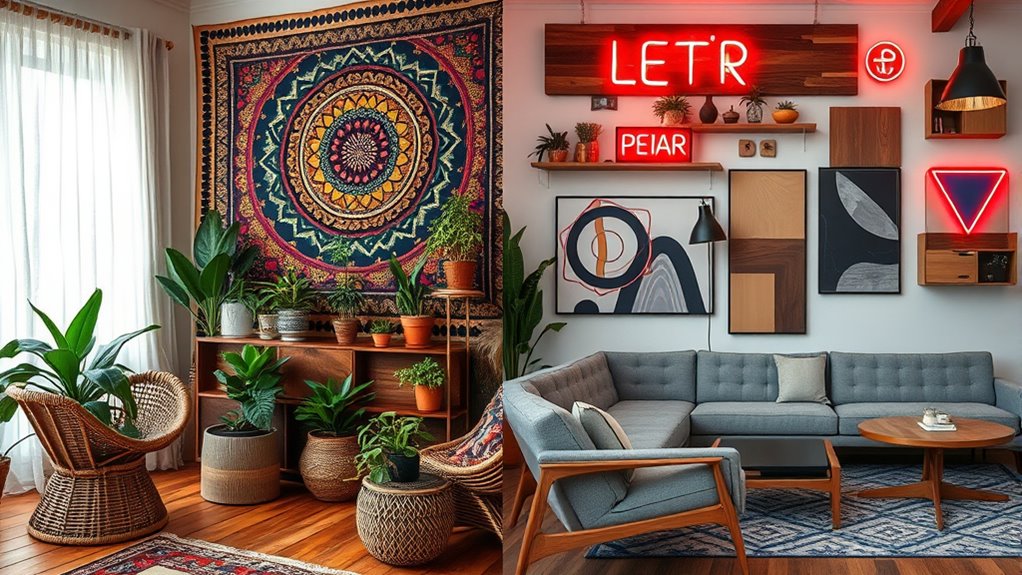
When it comes to vintage decor, the choices between boho and retro styles can seem overwhelming, but understanding their distinct characteristics can help you make the right choice. With boho, you’re embracing a free-spirited, eclectic vibe rooted in the ’70s, while retro leans more toward a polished, nostalgic look inspired by mid-century trends. To truly grasp these styles, focus on their textile textures and color palettes, which are key elements that define their unique personalities.
Understanding boho and retro styles hinges on textiles and colors that define their unique vintage charm.
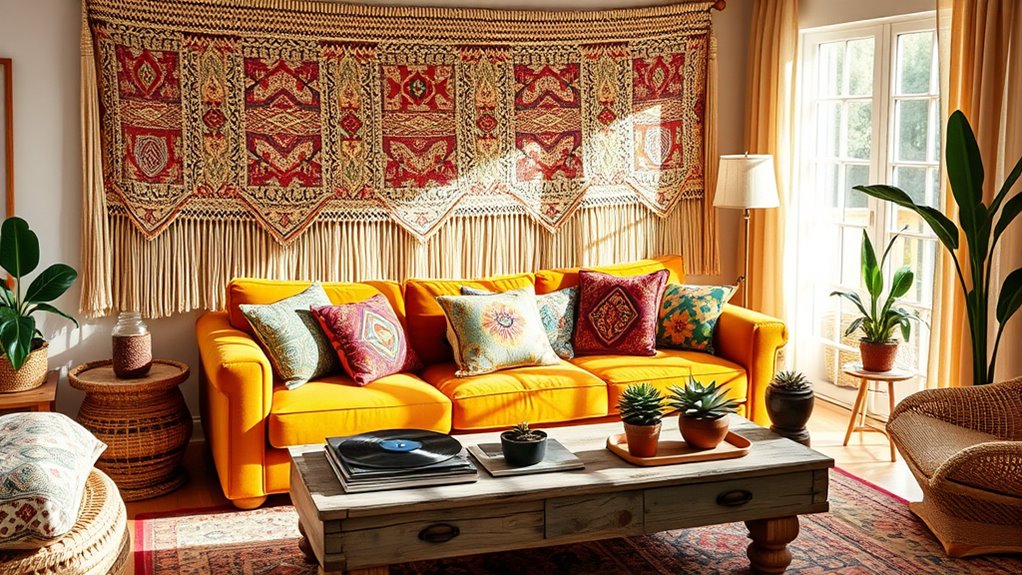
In boho decor, textile textures are rich and varied. Think layered rugs, fringed throws, embroidered cushions, and woven wall hangings. These textures create a tactile, inviting atmosphere that feels warm and relaxed. Your goal is to mix different fabrics and patterns—lace, burlap, macramé, and ethnic prints—to craft an eclectic, globally inspired look. The color palette in boho decor is equally diverse, often featuring earthy tones like terracotta, mustard yellow, olive green, and deep browns, complemented by vibrant accents such as turquoise, coral, and magenta. These colors evoke a sense of adventure and wanderlust, encouraging a laid-back yet lively environment.
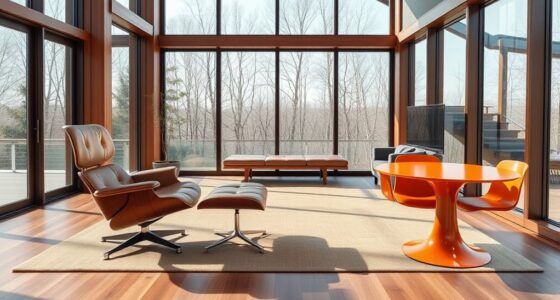
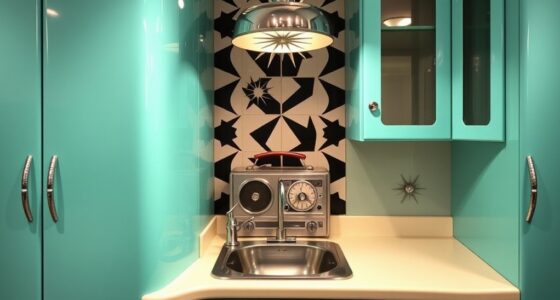
Retro decor, on the other hand, leans toward sleek, smooth textiles. Think of shiny vinyl cushions, polished wood furniture, and smooth glass accents. The textures are more uniform and refined, emphasizing clean lines and a curated aesthetic. When it comes to colors, retro style favors bold, high-contrast palettes. Popular hues include teal, mustard, avocado green, and bright oranges or reds, often paired with black and white for a striking visual impact. These vibrant, saturated colors help evoke the optimism and energy of the ’50s, ’60s, and ’70s.
While boho embraces an unstructured, layered approach with a mix of textures and a warm, earthy color palette, retro opts for streamlined, cohesive textures paired with bold, bright colors. Your choice depends on whether you want a space that feels whimsically layered and globally inspired or one that’s sleek, nostalgic, and more uniform. Both styles celebrate the ’70s in their own way but do so through very different textile textures and color palettes. Additionally, incorporating lighting techniques can further emphasize the mood and style of your decor, whether boho or retro. Understanding these differences allows you to curate a space that reflects your personality—whether you prefer the eclectic charm of boho or the polished nostalgia of retro.
As an affiliate, we earn on qualifying purchases.
Frequently Asked Questions
How Can I Mix Boho and Retro Styles Without Clashing?
To mix boho and retro styles without clashing, focus on texture mixing and pattern balancing. You can combine boho textiles like fringed rugs and woven wall hangings with retro geometric prints. Keep a neutral background to anchor vibrant patterns, and vary textures to add depth. Use similar color palettes or complementary hues to unify the look, ensuring each style enhances rather than competes with the other.
What Are Essential Color Palettes for Boho-Retro Fusion?
Color combinations create enthralling contrasts, so opt for earthy oranges and warm browns paired with vibrant teals and sunny yellows. Incorporate pattern pairings like geometric shapes with free-spirited florals to fuse boho and retro vibes smoothly. You should select a palette that’s playful yet grounded, blending bold hues with muted neutrals. This way, your space feels lively, balanced, and unmistakably boho-retro, making your decor unforgettable and effortlessly stylish.
Which Furniture Pieces Best Represent Boho and Retro Aesthetics?
You’ll want to choose furniture pieces that blend vintage textiles and natural materials, like a carved wooden coffee table or a plush velvet armchair for boho vibe, paired with retro-inspired items like a curved sofa or starburst clock. Incorporate rattan, wicker, and distressed woods to evoke a relaxed, eclectic look. These pieces showcase both boho’s free-spirited charm and retro’s bold character, creating a harmonious vintage-inspired space.
How Do Lighting Choices Influence Boho and Retro Decor?
Lighting choices shape the mood, set the tone, and define your style. Ambient illumination creates a warm, inviting atmosphere, while statement fixtures draw attention and add personality. With boho decor, opt for soft, layered lighting to enhance the eclectic vibe, and choose bold, vintage-inspired fixtures for retro spaces. These lighting elements work together to create a cohesive look, emphasizing your space’s character and making every corner feel intentional and inviting.
Can Boho and Retro Styles Be Adapted for Small Spaces?
Yes, you can adapt boho and retro styles for small spaces by choosing scale models that complement your room’s size. Incorporate wall art with bold patterns or vintage posters to add personality without cluttering. Opt for multi-functional furniture and light, airy textiles to keep the space feeling open. Focus on a few statement pieces, like a textured throw or a colorful rug, to create a cozy yet stylish vibe.
As an affiliate, we earn on qualifying purchases.
Conclusion
Whether you lean toward the free-spirited charm of boho or the nostalgic groove of retro, blending these styles lets your personality shine through your decor. Think of it as painting your own masterpiece—each element adding a splash of your unique vibe. So, embrace the mix, play with textures, and let your space tell a story that’s as lively and layered as a vintage record collection. Your dream decor is just a creative remix away.
As an affiliate, we earn on qualifying purchases.
mid-century modern vintage decor
As an affiliate, we earn on qualifying purchases.
As an affiliate, we earn on qualifying purchases.
Halloween Picks
halloween
As an affiliate, we earn on qualifying purchases.