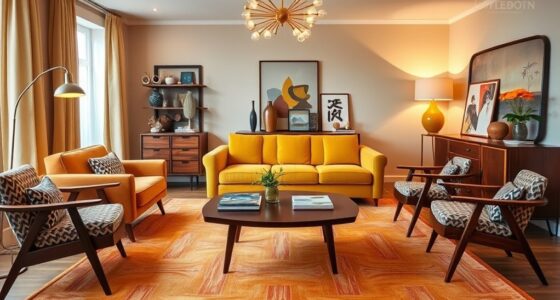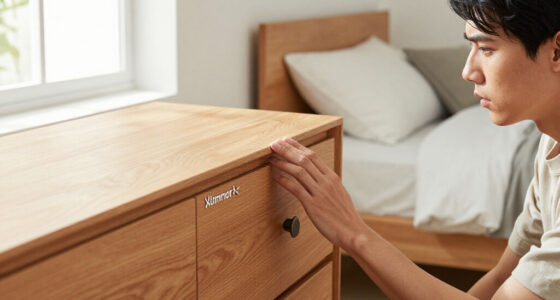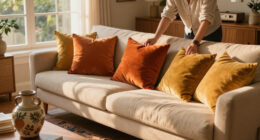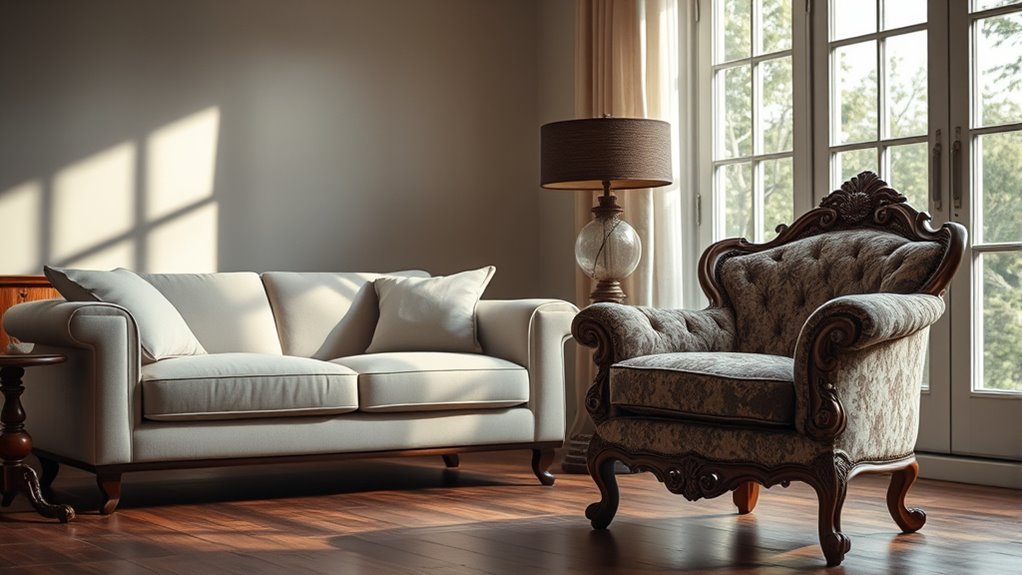
Choosing secondhand antique furniture over new pieces is often smarter because it’s more sustainable, durable, and unique. Reusing old furniture reduces waste and minimizes environmental impact, while high-quality craftsmanship ensures your pieces last for generations. Antique furniture also carries character and a story that modern designs can’t match. If you keep exploring, you’ll discover even more reasons why vintage often beats new in style and longevity.
Key Takeaways
- Antique furniture is more durable, built with high-quality materials designed to last generations.
- Reusing antiques reduces waste and environmental impact, supporting sustainability.
- Traditional craftsmanship and artisanal techniques give antiques unique character and intricate details.
- Secondhand pieces often offer better cost-effectiveness over time due to their longevity.
- Antique furniture adds timeless style and storytelling, enriching home decor with personality and history.
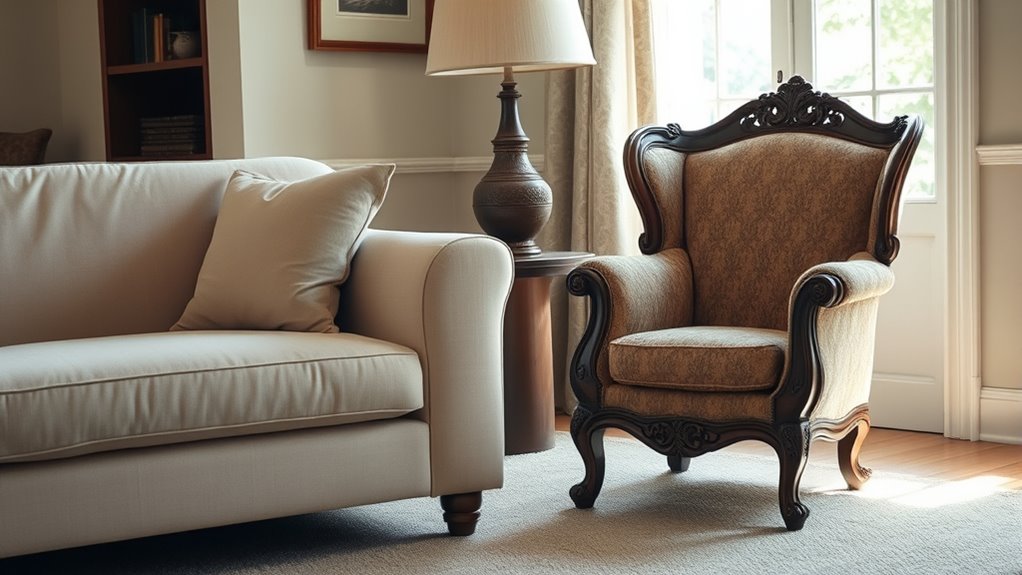
Are you torn between choosing new or antique furniture for your space? It’s a common dilemma, but understanding the benefits of secondhand options can help you make a smarter choice. When you opt for antique furniture, you’re not just investing in a piece; you’re embracing sustainability benefits that are hard to match with new items. Reusing and repurposing old furniture reduces waste, lessens demand for new resources, and minimizes the environmental impact associated with manufacturing. Every antique piece you bring into your home is a step toward a more eco-friendly lifestyle. Plus, many antique furniture pieces are built to last, often from solid wood and high-quality materials that stand the test of time—something that’s increasingly rare with mass-produced new furniture.
One of the most noticeable differences between new and antique furniture is craftsmanship. Antique pieces often showcase craftsmanship differences that are difficult to replicate today. They were built with attention to detail, using traditional techniques that emphasize durability and artistic flair. Hand-carved embellishments, intricate joinery, and the use of natural finishes reflect a level of skill and patience that machines can’t easily reproduce. When you choose antique furniture, you’re acquiring a piece that’s a testament to the artisan’s expertise, often with unique characteristics and imperfections that add character and charm. This craftsmanship isn’t just about aesthetics; it’s about quality and longevity. Many antique pieces were designed to last for generations, unlike some modern furniture that might be made quickly and with cost-cutting in mind.
Choosing antique furniture also means you’re embracing history and storytelling, adding a layer of depth to your home decor. Each piece carries its own story, often with a rich patina that reveals its past life. While new furniture might look pristine, it can sometimes lack the soul and personality that antique pieces naturally possess. Additionally, antique furniture can be more cost-effective in the long run. Though some may perceive it as more expensive upfront, its durability means you won’t need to replace it, and its timeless appeal makes it a versatile addition to any decor style.
Furthermore, antique furniture often demonstrates sustainable practices, since it involves reusing existing resources instead of producing new ones from scratch, which is a significant factor in reducing environmental impact. In the end, opting for secondhand furniture isn’t just about saving money; it’s about making a sustainable choice while appreciating craftsmanship differences that elevate the quality and character of your home. When you select antique furniture, you’re supporting environmentally conscious practices and celebrating the artistry of a bygone era—things that new furniture, no matter how modern, often can’t replicate.

Scotch Felt Pads 162 PCS Beige, Felt Furniture Pads for Protecting Hardwood Floors, Round, Assorted Sizes Value Pack, Self-Stick design, Protecting from nicks, dents and scratches (SP845-NA)
GREAT FOR FURNITURE AND DÉCOR: Scotch felt pads for furniture on hardwood floors are great for chair legs,...
As an affiliate, we earn on qualifying purchases.
Frequently Asked Questions
How Do I Verify the Authenticity of Antique Furniture?
To verify the authenticity of antique furniture, start with an antique appraisal from a reputable expert. They’ll examine details like craftsmanship, materials, and construction techniques to confirm its age and origin. You can also do authenticity verification by researching the piece’s history, maker’s marks, and provenance. Always trust professional appraisals and avoid impulsive purchases; these steps guarantee you’re investing in genuine antique furniture.
What Are the Environmental Benefits of Choosing Secondhand Furniture?
You’ll find that choosing secondhand furniture offers significant environmental benefits, like reducing your carbon footprint and maximizing recycling benefits. When you buy pre-owned, you help prevent furniture from ending up in landfills, saving resources and energy used in manufacturing new pieces. It’s a surprising coincidence that your small decision can make a big impact on the planet, promoting sustainability and lessening environmental harm with every piece you reuse or recycle.
How Can I Determine the True Age of an Antique Piece?
To determine the true age of an antique piece, you should examine its restoration techniques and provenance research. Look for signs of authentic restoration, such as period-appropriate joins or finishes, and avoid modern repairs. Conduct provenance research by checking for documentation, maker’s marks, or labels that trace its history. Consulting a professional appraiser can also help verify its age and authenticity, giving you confidence in your antique’s true age.
Are Secondhand Furniture Pieces More Customizable Than New Ones?
Yes, secondhand furniture pieces often offer more customization options and design flexibility than new ones. You can easily find vintage or antique items that you can paint, reupholster, or modify to match your style. Unlike mass-produced new furniture, secondhand pieces give you more room to personalize, making it easier to create unique, tailored designs that fit your space perfectly. This hands-on approach allows you to craft truly one-of-a-kind pieces.
What Maintenance Is Required to Preserve Antique Furniture’s Value?
Think of your antique furniture as a treasured family heirloom, fragile yet resilient. To preserve its timeless charm, you must embrace gentle cleaning methods and expert restoration techniques, avoiding harsh chemicals that could erode its soul. Regular dusting, controlled humidity, and careful repairs keep its story alive. By nurturing these pieces, you ensure their history continues to inspire, their value shining brighter with each careful touch.

Felt Furniture Pads 300 Pieces, Furniture Pads for Hardwood Floors Black
❤️STOP SCRATCHING YOUR FLOORS❤️ Place our felt furniture pads on the legs of your furniture to avoid scratching...
As an affiliate, we earn on qualifying purchases.
Conclusion
When choosing between new and antique furniture, remember that sometimes, old is gold. Secondhand pieces often offer better quality, unique charm, and better prices. You get character and history that new items can’t match. As the saying goes, “A stitch in time saves nine,” so investing in quality antiques now can save you money and headaches later. Ultimately, whether new or vintage, pick what feels right for your space and style—you’ll love it more when it’s just right.

Scotch Felt Pads 32 PCS Beige, Felt Furniture Pads for Protecting Hardwood Floors, 1" Round, Easy-to-apply, Self-Stick design, Reliable protection from nicks, dents and scratches (SP802-NA)
Ideal for use on furniture, lamps and décor that sit on finished surfaces
As an affiliate, we earn on qualifying purchases.
Felt Furniture Pads -56 Pcs(1+2)” Premium Felt Pads for Chair Legs Furniture, Floor Protectors for Hardwood Floors,Brown
BEST PROTECTION&ANTI SCRATCH - Place our felt furniture pads on the legs of your furniture, including beds, tables,...
As an affiliate, we earn on qualifying purchases.