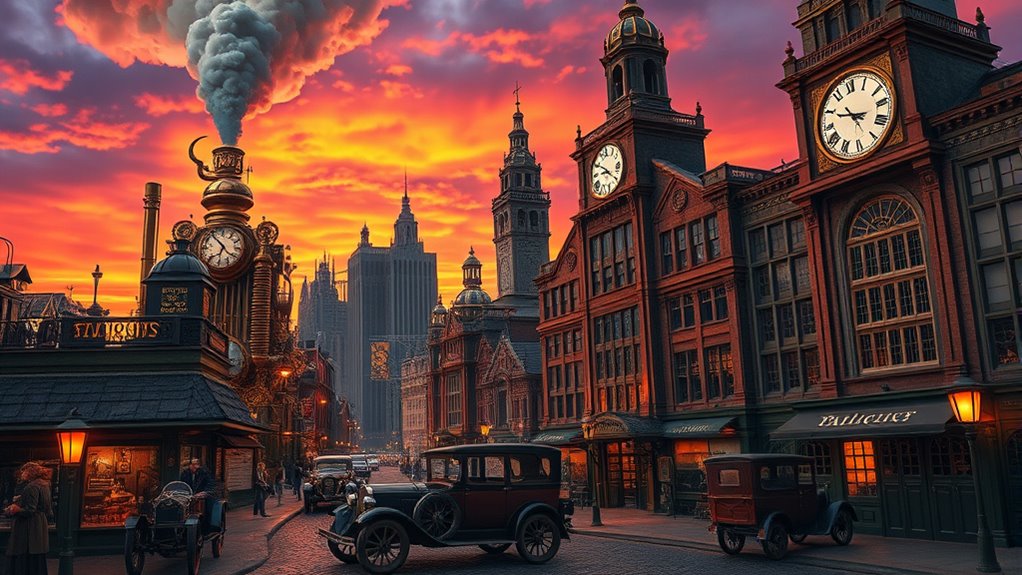

Steam power sparked incredible technological progress during the Victorian era, transforming industry, society, and culture. It fueled the rise of factories, railways, and modern engineering, inspiring fascination with craftsmanship and exploration. This period’s innovations laid the groundwork for the steampunk aesthetic, blending Victorian style with mechanical ingenuity. The fantasy world of steampunk echoes these historical advancements and imaginative visions, offering a glimpse into a future rooted in the past’s transformative power. To uncover more, explore how history shaped this mesmerizing genre.

Get furniture and decor delivered free with Prime
- Fast, free delivery on millions of items
- Prime Video, Amazon Music and more included
- Member-only deals all year
Key Takeaways
- Steam power revolutionized industry, enabling mass production, urban growth, and technological innovation during the Victorian era.
- Early steam engines laid the foundation for modern engineering and inspired Victorian aesthetics and craftsmanship.
- The Victorian era’s fascination with invention and progress fuels the imaginative themes of steampunk culture.
- Steampunk romanticizes Victorian discovery and technological transformation, blending history with fantasy and futuristic elements.
- The aesthetic combines Victorian fashion and architecture with gearwork, brass accents, and mechanical ingenuity rooted in real industrial advances.
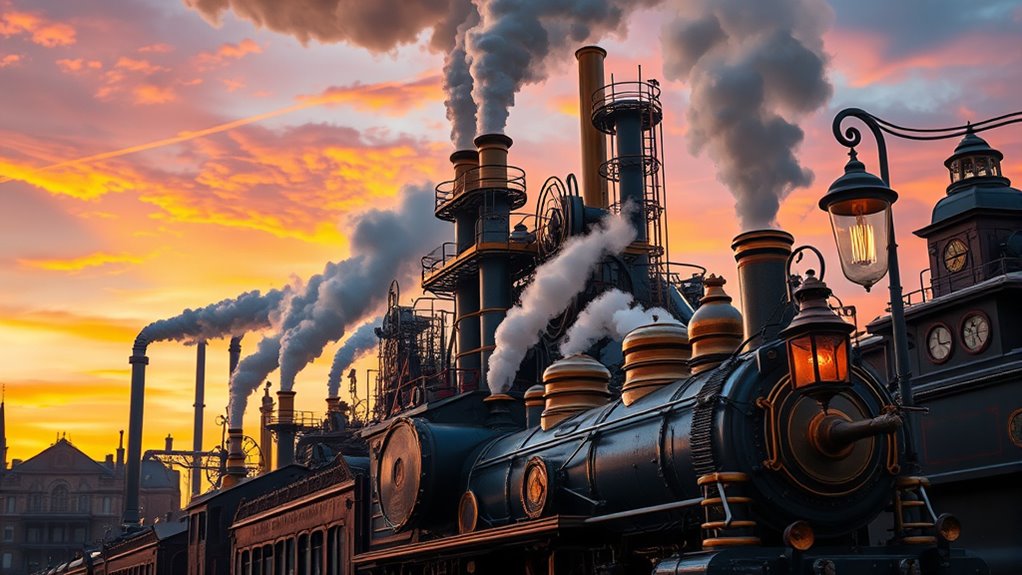
Have you ever wondered how steam power transformed the world and inspired a unique subculture known as steampunk? It all begins with Victorian innovation, a period marked by extraordinary technological advances driven by the Industrial Revolution. During this time, steam engines became the backbone of progress, revolutionizing transportation, manufacturing, and daily life. You can imagine how cities expanded, railways snaked across landscapes, and factories churned out goods at an unprecedented pace—all fueled by the power of steam. This era of rapid change didn’t just transform industry; it also sparked a cultural imagination that clings to the aesthetics and ideals of that period. Steampunk, as a subculture, draws heavily from this history, blending Victorian elegance with mechanical ingenuity, creating a futuristic nostalgia rooted in the innovations of the 19th century.
The Industrial Revolution wasn’t just about machines; it was about shaping a new world. Steam power enabled mass production, making goods more accessible and affordable, but it also introduced a new social order. As factories grew, so did the divide between the working class and the industrial elite. You might see this reflected in the intricate gearwork and brass accents of steampunk fashion and design, echoing a time when craftsmanship was highly valued yet driven by industrial necessity. The Victorian era’s fascination with progress, invention, and exploration laid the groundwork for the aesthetic and ethos of steampunk. It’s a world where the mechanical and the artistic collide, inspired by the optimism of Victorian innovation—an era that believed technology could elevate humanity and reshape society.
Steam power was more than just a technological feat; it was a cultural catalyst. It inspired stories, art, and a fascination with the possibilities of science and invention. As you explore steampunk today, you’ll notice how it romanticizes this period of discovery and transformation, often imagining a future where steam-driven machines coexist with Victorian fashion and architecture. This subculture celebrates the ingenuity of the Industrial Revolution, emphasizing craftsmanship, adventure, and a sense of wonder. The history of steam power isn’t just about engines and factories; it’s about the human spirit pushing boundaries, fueled by Victorian innovation and the relentless drive of the Industrial Revolution. Interestingly, the development of early steam engines played a crucial role in shaping modern engineering principles and technological progress. When you plunge into steampunk, you’re embracing a blend of history and fantasy—an homage to a transformative era that still captures our imagination.
Products Worth Considering

Samsung 85 M80H Series Mini LED 4K Smart TV (2026)

Dyson Big Ball Multi Floor Canister Vacuum, Yellow

Coway Airmega 250 Air Purifier for Large Rooms
As an affiliate, we earn on qualifying purchases.
Frequently Asked Questions
How Did Steam Power Influence Other Technological Advancements?
Steam power drove the industrial revolution, transforming industries and daily life. You see, steam innovation enabled faster transportation, like railways and ships, which expanded trade and communication. It also powered machinery in factories, boosting production. This technological leap laid the groundwork for later advancements like electric engines and automation. Overall, steam power reshaped society, making it more connected and efficient, and its influence still echoes in modern technology.
Are There Real-World Steampunk Inventions Currently in Development?
You’re right to wonder if steampunk inventions are real today. Yes, there are experimental prototypes and modern adaptations inspired by steampunk aesthetics and concepts. Innovators blend vintage design with cutting-edge tech, proving that history often repeats itself in creative ways. While not mainstream, these projects show that the spirit of steampunk lives on—proof that, as they say, “where there’s a will, there’s a way.”
What Cultures Contributed to Early Steam Engine Designs?
You’ll find that early steam engine designs owe much to European innovations, particularly from Britain, France, and Germany, which refined and commercialized steam technology. Asian inventions also played a vital role, with contributions from China and India, where early water and steam-powered devices were developed. These diverse cultural inputs helped shape the foundation for modern steam engines, blending European ingenuity with Asian technological advances.
How Accurate Are Steampunk’s Historical Depictions?
You’ll find that steampunk’s historical depictions are a mix of fact and fiction. While it captures the essence of the industrial revolution and Victorian era aesthetics, it often romanticizes or exaggerates certain technologies and cultural aspects. The genre invents a fantastical version of history, blending real innovations with imaginative elements. So, it’s visually accurate but not always precise in depicting the true technological and social complexities of that time.
Did Steam Power Impact Social and Political Changes Historically?
Yes, steam power profoundly impacted social and political changes during the industrial revolution. It transformed industries, creating new jobs and shifting population centers. You’d see it fueling labor movements as workers fought for better conditions and rights amid rapid technological advancements. Steam power also contributed to the rise of capitalism and urbanization, reshaping societies and prompting political debates about workers’ rights and economic equality that still influence us today.
Conclusion
As you explore the roots of steam power, you’ll find that over 1,500 patents were filed in the 19th century alone, fueling innovation and fueling the steampunk fantasy. Understanding this history reveals how real technological advances inspired the imaginative worlds you love. So, next time you see gears and brass in your favorite stories, remember—they’re built on a foundation of genuine engineering progress that changed the world forever.