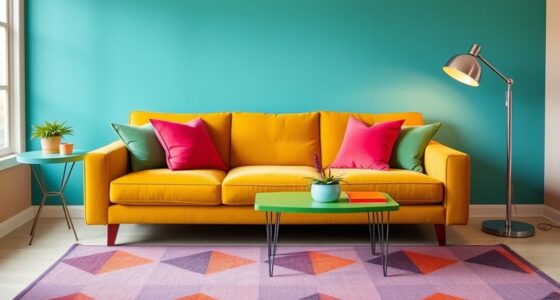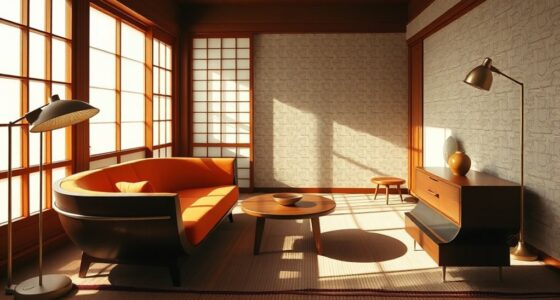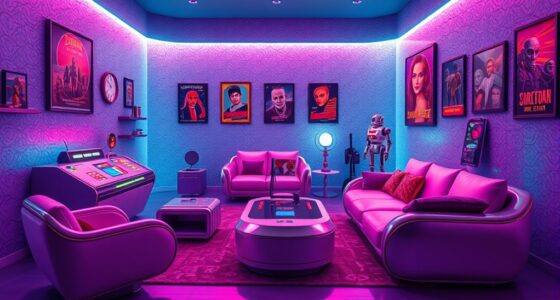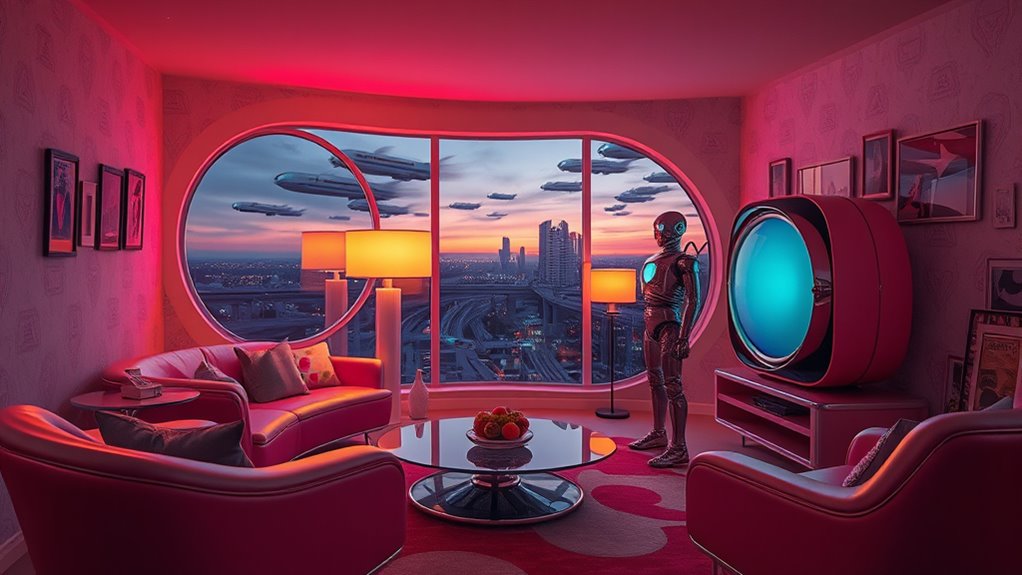

Retro futurism reveals how past decades imagined future homes using bold shapes, shiny materials, and vibrant colors inspired by the Space Age and sci-fi. You’ll see designs with streamlined furniture, robotic appliances, and smart walls that change transparency. From the Jetsons’ high-tech lifestyle to 70s and 80s geometric architecture, this style blends nostalgia with innovation. Exploring these ideas shows how visions of the future continue to influence modern design—if you keep exploring, you’ll discover even more fascinating details.

Get furniture and decor delivered free with Prime
- Fast, free delivery on millions of items
- Prime Video, Amazon Music and more included
- Member-only deals all year
Key Takeaways
- 1960s space age design emphasized metallic finishes, streamlined forms, and space-inspired motifs for futuristic home interiors.
- The Jetsons depicted high-tech homes with robotic assistants, voice-activated appliances, and flying cars, reflecting future domestic life visions.
- Retro-futuristic gadgets featured sleek, shiny materials, neon accents, and minimalist interfaces, blending advanced technology with nostalgic aesthetics.
- Bright colors, shiny metals, and unconventional shapes in furniture and lighting created playful, optimistic environments inspired by space exploration.
- Future homes were envisioned as adaptive, sustainable, and smart, with holographic displays, responsive walls, and seamless automation.
As an affiliate, we earn on qualifying purchases.
The Space Age Influence on 1960s Home Design
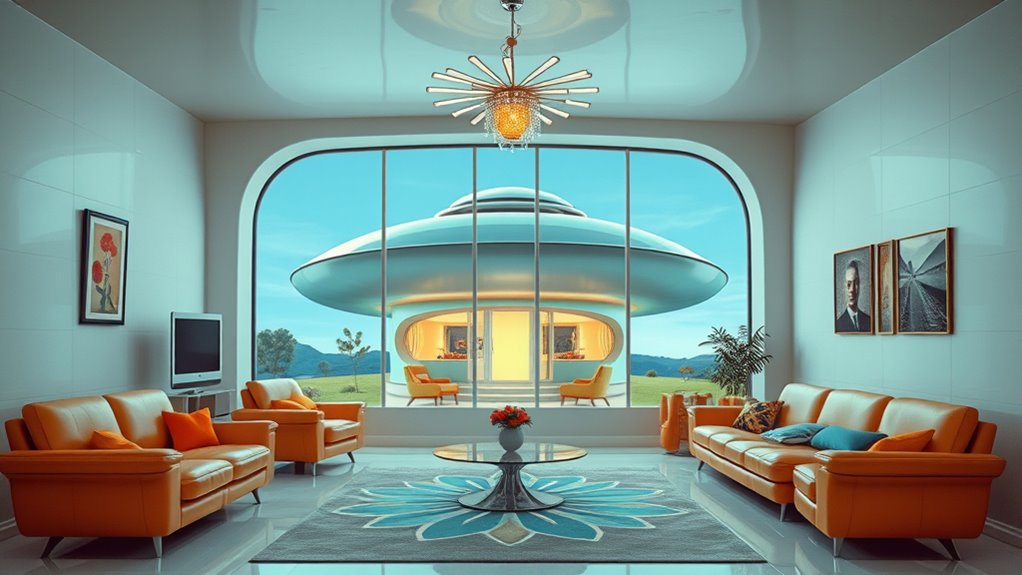
The 1960s home design was heavily shaped by the excitement and optimism surrounding the Space Age. You’ll notice this influence in sleek, futuristic shapes and bold, innovative materials that mimic space exploration. Designers drew inspiration from astronaut fashion, incorporating metallic finishes, streamlined forms, and functional aesthetics reminiscent of space suits. Walls and furniture often featured rounded edges and minimalist lines, reflecting the idea of efficiency and progress. Bright, contrasting colors like white, silver, and bold primaries became popular, echoing spacecraft interiors. This era celebrated the idea that homes could be as forward-looking as space travel itself, blending practicality with a sense of wonder about the future. Your living space, in this context, becomes a tribute to exploration and the limitless possibilities of technology. Additionally, the use of advanced manufacturing techniques during this period allowed for innovative designs and precise construction, further embodying the futuristic vision. The emphasis on futuristic design elements also extended to furnishings, emphasizing sleek surfaces and geometric forms. Incorporating space-inspired motifs such as starburst patterns and planetary shapes became a popular way to enhance the theme. In addition, the era’s fascination with space led designers to explore innovative materials, pushing the boundaries of traditional home construction and decoration. Moreover, experimental techniques in material science facilitated the creation of new textures and finishes that became signature features of 1960s home interiors.
As an affiliate, we earn on qualifying purchases.
The Jetsons and the Future of Domestic Life

Futuristic visions like The Jetsons have shaped how you imagine domestic life evolving, blending advanced technology with everyday routines. Their world features robotic maids, voice-activated appliances, and flying cars, all embedded within a sleek, space-inspired aesthetic. You can see this influence in futuristic fashion, where streamlined designs and metallic fabrics mirror space exploration art, emphasizing innovation and a sleek look. These ideas suggest a home life that’s effortless and highly integrated with technology, making daily tasks more efficient. The Jetsons’ view of the future combines comfort with high-tech, inspiring real-world designs and dreams of a smarter, more connected home. Their vision continues to influence how you envision future domestic spaces, merging style, technology, and practicality seamlessly. Additionally, the emphasis on safety features in their designs underscores the importance of creating secure and durable living environments, a concept that aligns with current efforts to develop AI safety measures for modern homes. Advances in automation are also shaping the way homes are designed to be more responsive and adaptive to residents’ needs. Incorporating maintenance and cleaning technologies into home design can help maintain these advanced systems efficiently, reflecting innovations in smart home technology that prioritize both convenience and security.
As an affiliate, we earn on qualifying purchases.
Retro-Futuristic Architecture of the 1970s and 1980s
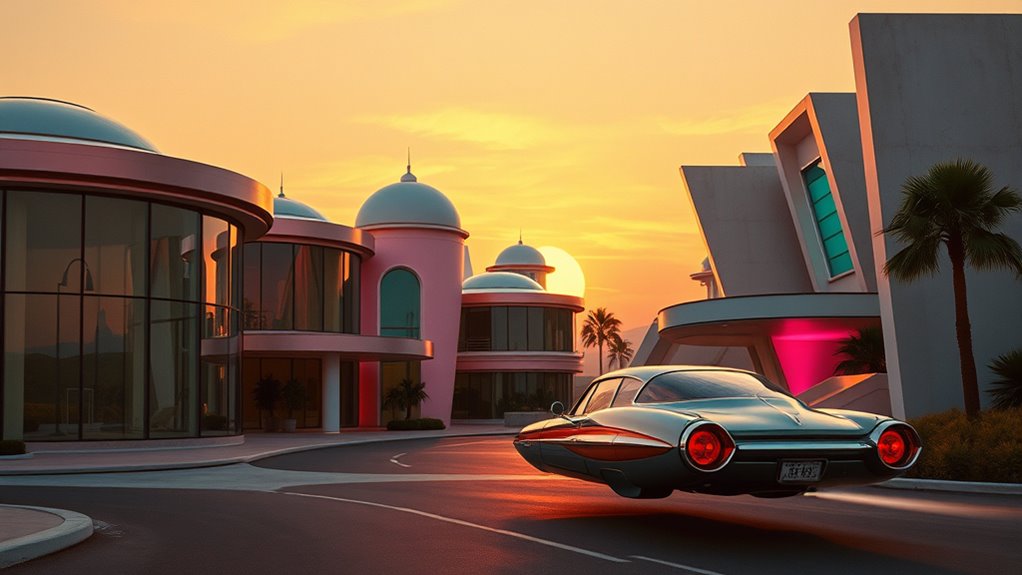
Have you ever noticed how 1970s and 1980s architecture blends bold shapes with shiny surfaces, creating a distinct retro-futuristic look? You’ll see structures featuring geometric patterns, with angular lines and curves that seem ahead of their time. Neon lighting adds a vibrant glow, emphasizing the futuristic vibe and making buildings stand out at night. This era’s design often combines metallic finishes and glass, reflecting optimism about the future. Additionally, the use of contrast ratio in lighting and surface treatments further accentuates the futuristic aesthetic.
As an affiliate, we earn on qualifying purchases.
Sci-Fi Aesthetics in Consumer Electronics and Appliances
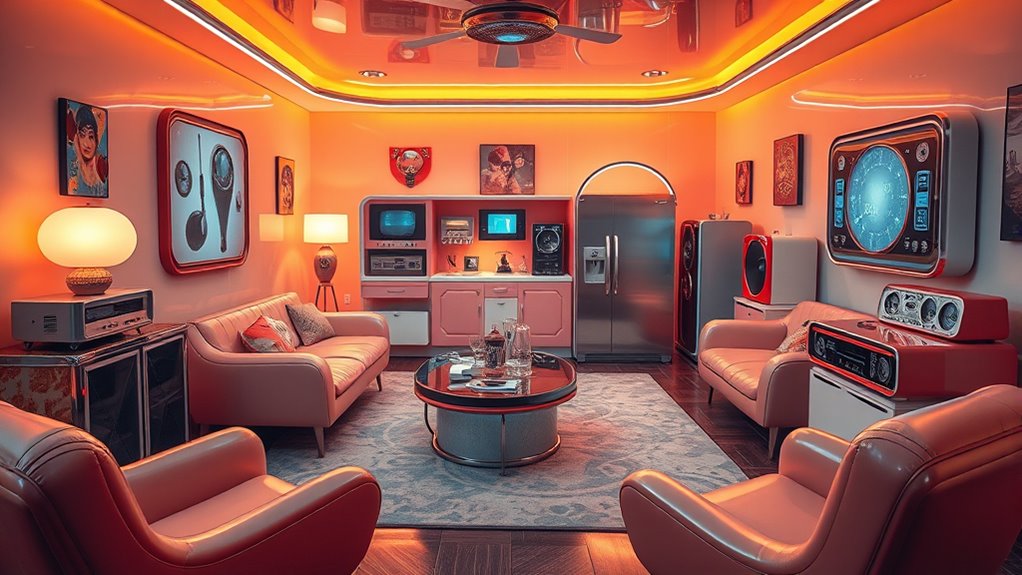
Retro-futuristic architecture of the 1970s and 1980s has influenced the design language of modern consumer electronics and appliances, infusing everyday devices with a sense of sci-fi wonder. You notice this in sleek, streamlined gadgets that evoke a futuristic feel, often incorporating elements like neon accents or metallic finishes. Augmented reality is integrated into many devices, blending digital overlays with the physical world, creating an immersive experience. Wearable technology also adopts sci-fi aesthetics, with smartwatches and glasses sporting minimalist designs reminiscent of sci-fi interfaces. These devices don’t just function—they look like they’re straight out of a retro-futuristic vision of the future, merging nostalgia with cutting-edge innovation. The result is a seamless blend of past imagination and present technology, shaping how you interact with everyday appliances. Futuristic design elements are increasingly becoming a hallmark of tech products, reflecting a desire to combine style with innovation. Additionally, the use of material finishes like brushed metals and high-gloss plastics enhances the sci-fi aesthetic, making devices visually compelling and resonating with resources and tools that emphasize sleek, modern design. As technology continues to evolve, designers draw inspiration from retro-futurism to create products that are both functional and visually captivating. Moreover, emerging technologies are enabling even more immersive and innovative design features that bridge past visions with future possibilities.
The Role of Color and Material Choices in Vintage Futurism
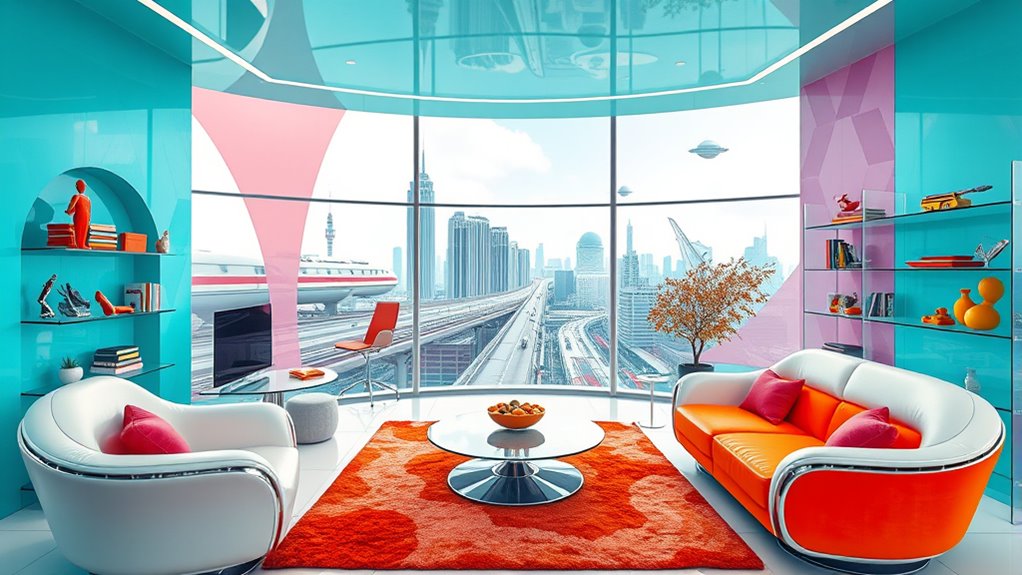
You notice how vintage futurism often features vibrant color palettes that catch the eye and evoke optimism. The materials used, like shiny plastics and sleek metals, emphasize a sense of innovation and modernity. Combining retro-inspired designs with futuristic elements creates a striking blend that defines the style. Additionally, the psychological impact of these color and material choices reflects a desire to inspire hope and confidence in the future. The financial success of entertainment industries like WWE Raw and top female singers highlights how bold, innovative aesthetics can resonate widely and leave a lasting cultural impression. Recognizing the influence of gaslighting tactics in shaping perceptions underscores how visual and material choices can manipulate and influence societal attitudes. Moreover, understanding the offensive security measures employed by ethical hackers helps reveal how these visual elements can be paralleled with strategies used to test and strengthen defenses against cyber threats.
Vibrant Color Palettes
Vibrant color palettes are essential to capturing the energetic and optimistic spirit of vintage futurism. You’ll notice how bold color schemes dominate, creating a sense of excitement and innovation. Playful hues like vivid turquoise, bright orange, and electric pink reflect the era’s desire to push boundaries and embrace a futuristic outlook. These colors aren’t just decorative—they evoke a sense of adventure and curiosity about what’s to come. By using striking contrasts and eye-catching tones, designers emphasized a fun, forward-thinking attitude. This approach made future homes feel lively, dynamic, and full of possibility. Your eyes are drawn to these bold combinations, which reinforce the optimistic vision of a vibrant, colorful future that never lost its sense of wonder.
Futuristic Material Trends
Color played a pivotal role in shaping the material choices of vintage futurism, influencing both aesthetics and perceived innovation. You’d notice a preference for sleek, sustainable materials that emphasized clean lines and minimalist textures. These choices reflected a desire for efficiency and forward-thinking design.
To create a vivid picture, consider these elements:
- Metallic finishes like chrome and brushed aluminum
- Translucent plastics in bold or pastel shades
- Smooth, matte surfaces emphasizing minimalism
- Recycled and eco-friendly composites
- Monochromatic palettes enhancing futuristic simplicity
These trends highlight how color and material choices intertwined, emphasizing sustainability and minimalist textures. They helped shape the iconic look of vintage futurist homes, blending technological optimism with eco-conscious design.
Retro-Modern Combinations
Retro-modern combinations in vintage futurism seamlessly blend sleek, futuristic materials with bold, nostalgic colors to create a distinctive aesthetic. You’ll notice how futuristic furniture often features smooth, unconventional shapes paired with vivid hues like chrome, avocado green, or bright orange, emphasizing both innovation and nostalgia. Space age lighting plays a vital role, with designs that evoke spacecraft and sci-fi imagery, adding a sense of wonder. These choices highlight a desire to bridge the past’s optimistic view of the future with modern design sensibilities. By mixing shiny metals, plastics, and vibrant colors, retro-futurist interiors evoke a playful yet forward-thinking vibe. This fusion invites you to imagine a future rooted in the exciting possibilities of yesterday’s dreams.
Visionary Concepts: From Robotic Homes to Automated Living
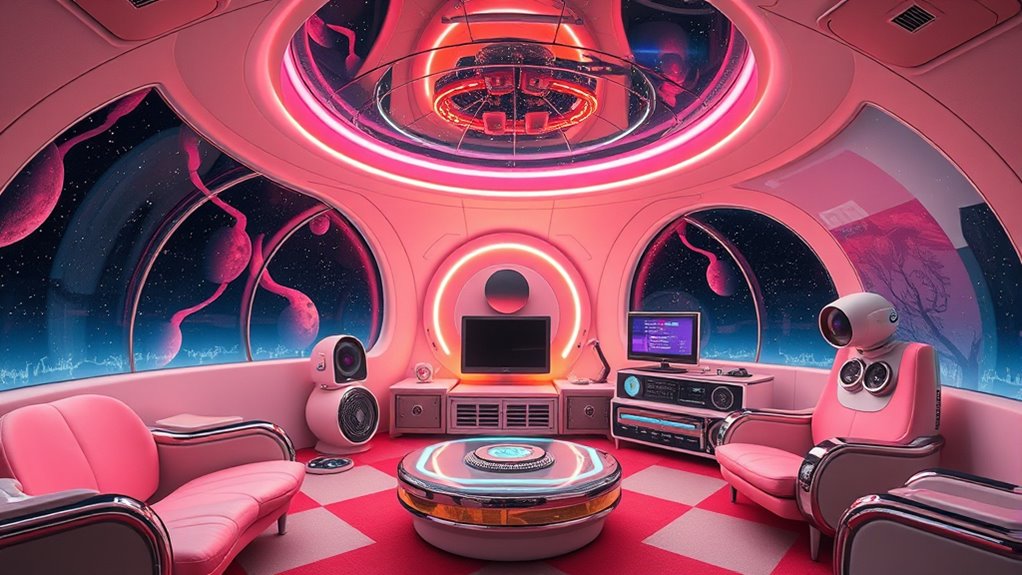
Have you ever imagined a home that anticipates your needs and handles daily tasks automatically? Visionary concepts make this possible, blending futuristic fashion with space age entertainment. You might experience:
Envision a smart home that intuitively adapts to your lifestyle with futuristic design and seamless automation.
- Robotic assistants that prepare meals and clean effortlessly
- Automated climate control adapting to your preferences
- Smart walls that change transparency or display art at your command
- Voice-activated systems managing lighting, security, and appliances
- Immersive entertainment zones with holographic and virtual reality setups
These innovations create a seamless living experience, transforming your home into an intelligent, intuitive space. As futuristic fashion evolves, your home’s design could mirror sleek, space-inspired aesthetics, making everyday life feel like a sci-fi adventure. This vision of automated living pushes us closer to a future where technology and comfort coexist effortlessly.
The Evolution of Smart Home Ideas in Past Decades
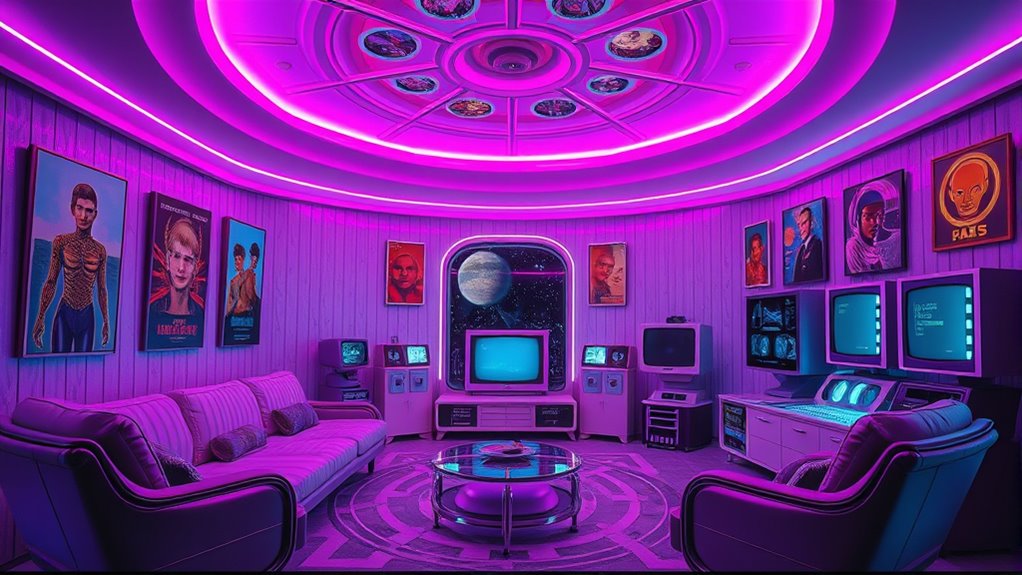
Over the past few decades, ideas about smart homes have evolved from simple automation prototypes to sophisticated systems that integrate seamlessly into daily life. You’ve seen early concepts with basic smart home gadgets controlling lighting and temperature. Today, futuristic architecture blends sleek design with intelligent technology, creating homes that anticipate your needs. These advancements reflect a continuous desire to make living spaces more efficient and intuitive. As you explore this evolution, consider how smart home ideas transitioned from novelty to necessity, shaping modern living environments. Here’s a quick comparison:
| Past Concepts | Modern Innovations |
|---|---|
| Basic automation prototypes | Fully integrated smart home systems |
| Standalone smart gadgets | Seamless connectivity and AI |
| Futuristic architecture as visual design | Functional, tech-embedded spaces |
| Limited user control | Personalized, intuitive experiences |
How Retro Futurism Continues to Inspire Modern Design Trends
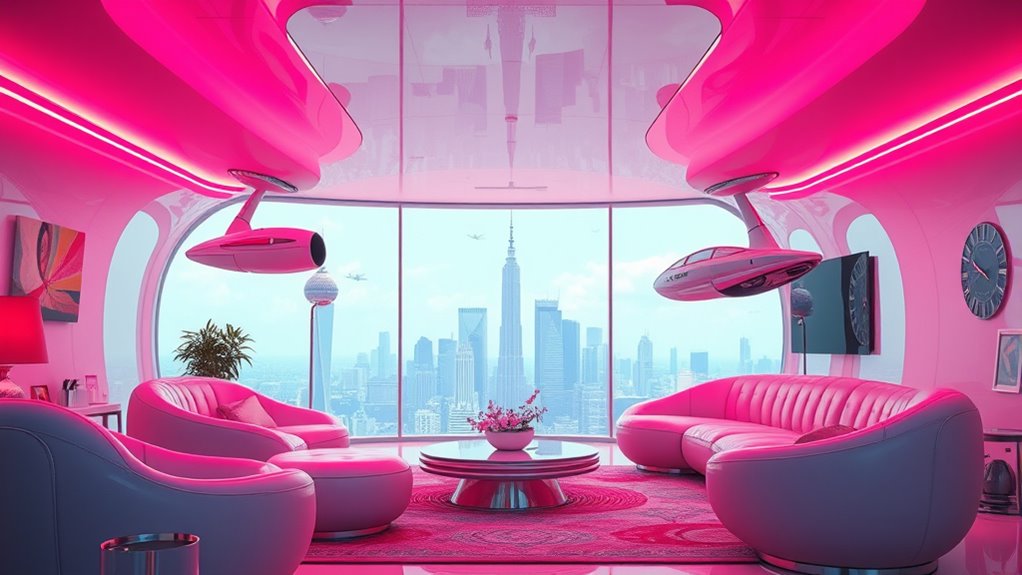
Retro futurism, with its bold visions of sleek, space-age designs and innovative technology, continues to shape contemporary aesthetics. It inspires modern trends that blend nostalgic charm with forward-thinking ideas. You see this influence in sustainable design, where eco-friendly materials meet retro-inspired curves and finishes. Minimalist aesthetics are also prominent, emphasizing clean lines and functional simplicity that echo vintage visions of future living.
- Streamlined furniture with metallic accents
- Geometric shapes and bold color contrasts
- Use of sustainable, recycled materials
- Integration of smart, hidden technology
- Futuristic lighting with a vintage twist
These elements create spaces that feel both nostalgic and cutting-edge, reflecting how retro futurism fuels innovative, sustainable, and minimalist interior styles today.
Frequently Asked Questions
How Did 1960S Space Exploration Influence Home Interior Styles?
You notice how 1960s space exploration inspired home interior styles through space-themed decor and futuristic lighting. These elements include sleek, metallic finishes, bold shapes, and glowing accents that evoke a spacecraft’s interior. You might incorporate star patterns or planets into your design, creating a sense of adventure. Futuristic lighting adds a modern touch, making your space feel innovative and ahead of its time, just like those space missions.
What Iconic Design Features Characterized Jetsons-Era Domestic Environments?
You notice that jetsons-era homes feature robotic furnishings that move or serve you effortlessly, making daily tasks easier. Holographic interfaces are everywhere, allowing you to interact with virtual screens and control systems seamlessly. Bright, rounded shapes and sleek, shiny surfaces define the space, creating a futuristic yet cozy atmosphere. This design makes you feel like you’re living in a sci-fi world, blending technology and comfort effortlessly.
Which Materials Were Popular in Retro-Futuristic Architecture of the 70S and 80S?
Think of the future as a shining neon sign—bright and bold. In the 70s and 80s, retro-futuristic homes often used plastic composites, symbolizing innovation and modernity, while neon accents brought a pop of energy and excitement. These materials made spaces feel like a sci-fi dream, blending sleek, futuristic vibes with playful color. You’d see them in furniture, walls, and decor, symbolizing a bold leap into the future you envisioned.
How Did Sci-Fi Aesthetics Shape Everyday Consumer Electronics Design?
You notice that sci-fi aesthetics influence your everyday electronics through sleek, futuristic designs. Smart appliance aesthetics often incorporate smooth lines, bold colors, and a high-tech look inspired by sci-fi movies. Holographic interfaces become more common, making controls feel more advanced and intuitive. This blend of futuristic style and technology shapes how you interact with devices, creating a sense of living in a future straight out of your favorite sci-fi stories.
What Future Home Automation Concepts From Past Decades Are Still Relevant Today?
You see, smart thermostats, voice assistants, and automated lighting are concepts from past decades that still shape your home today. These ideas keep evolving, making your space more comfortable, efficient, and intuitive. You benefit from the foresight of earlier visions, experiencing seamless control, personalized environments, and energy savings. By embracing these timeless concepts, you enjoy a smarter, more connected home that reflects the innovative spirit of retro futurism.
Conclusion
You can see how retro futurism reflects our hopes and dreams for the future, blending past visions with modern innovations. notably, a 2022 survey found that 68% of people still find inspiration in vintage sci-fi designs when imagining their ideal smart homes. By embracing these nostalgic ideas, you’ll find that today’s cutting-edge technology often pays homage to those bold, colorful visions of tomorrow that once seemed so far away.
Fall Picks
fall essentials
As an affiliate, we earn on qualifying purchases.