Vintage receivers are gaining new fans because their warm, rich sound quality offers a unique listening experience that modern devices often lack. Their nostalgic design with analog dials and sturdy craftsmanship adds style and character to any space. Many are now upgraded with Bluetooth and digital inputs, blending old-school charm with today’s technology. If you want to discover how these classic pieces can enhance your audio setup, there’s more to explore beyond the surface.
Key Takeaways
- Their warm, rich sound quality produced by vacuum tubes offers a uniquely authentic listening experience.
- Modern enhancements like Bluetooth and USB make vintage receivers compatible with current technology.
- Their distinctive aesthetic and tactile controls add visual appeal and nostalgic charm to home decor.
- Built with durable components, they are highly collectible and can be restored for long-term use.
- The combination of vintage craftsmanship and modern features appeals to both audiophiles and design enthusiasts.

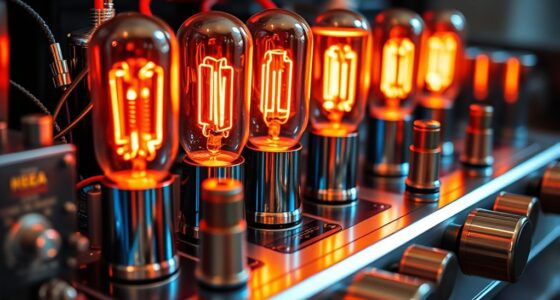
Have you ever wondered why vintage receivers continue to captivate audiophiles today? It’s a question that often comes up as more enthusiasts seek out these classic pieces of audio technology. One of the main reasons is their unique approach to sound quality, especially when it comes to tube amplification. Unlike modern digital equipment, vintage receivers often utilize vacuum tubes, which produce a warm, rich sound that many listeners find more natural and inviting. This tube amplification adds a harmonic complexity that solid-state devices sometimes lack, giving music a depth and presence that can’t easily be replicated. It’s this characteristic that draws in those looking for a more authentic listening experience, one that feels alive and emotionally resonant.
Vintage receivers deliver warm, rich sound with harmonic complexity, creating an authentic, emotionally resonant listening experience.
Another factor contributing to their resurgence is the ability of vintage receivers to offer modern compatibility. Despite their age, many of these units have been retrofitted or designed with features that accommodate contemporary audio sources—Bluetooth, USB inputs, or even digital outputs—making them usable in today’s tech landscape. This means you can enjoy the nostalgic charm and superior sound qualities of a vintage receiver without sacrificing the convenience of modern connectivity. It’s a perfect blend of old-school craftsmanship and current-day practicality.
People are also attracted to the aesthetic appeal of vintage receivers. Their large, analog dials, illuminated meters, and sturdy build give them a presence that sleek, minimalist modern designs often lack. When you set up a vintage receiver in your space, it becomes more than just audio equipment; it’s a statement piece that adds character and personality to your home. Plus, many of these units have a tactile quality—knobs and switches that feel satisfying to operate—offering a hands-on experience that digital devices can’t match.
Furthermore, vintage receivers tend to be more durable and built with high-quality components. This craftsmanship means they can often be restored and maintained for decades, making them a worthwhile investment. Their robust construction and timeless appeal have turned them into collectibles, as well as functional audio gear. Collectors and audiophiles alike appreciate the history and craftsmanship embedded in each unit, and many enjoy the process of restoring and customizing their equipment.
In the end, the combination of tube amplification’s warm sound, modern compatibility features, aesthetic charm, and durability explains why vintage receivers are gaining new fans. They offer a unique listening experience that connects the past with the present, satisfying both the desire for high-quality audio and a touch of nostalgia.
Frequently Asked Questions
How Do Vintage Receivers Compare in Sound Quality to Modern Ones?
Vintage receivers often deliver superior sound quality compared to modern ones, offering exceptional sound clarity, warmth, and richness. You’ll notice their audio feels more natural and immersive, thanks to analog circuitry that many believe reproduces music more authentically. While modern receivers may have more features, vintage models excel in delivering a timeless, high-quality listening experience that many audiophiles prefer for their warm, rich tones.
Are Vintage Receivers Compatible With Current Audio and Video Technology?
Did you know that 60% of vintage receivers still support essential connector compatibility? While they excel in audio quality, many vintage models lack digital integration, making it tricky to connect modern devices. However, with adapters and external interfaces, you can bridge the gap. So, yes, vintage receivers can work with current technology, but expect some extra setup to guarantee seamless digital integration with your modern gadgets.
What Are Common Restoration Challenges for Vintage Receivers?
You often face restoration challenges with vintage receivers like aging capacitors, corroded switches, and deteriorated wiring. To tackle these issues, you should use proper restoration techniques such as carefully cleaning contacts and replacing faulty components. Component replacement is essential, especially for worn-out parts like tubes or transistors, ensuring the receiver functions reliably. Patience and precision help you restore these units to their former glory and preserve their nostalgic charm.
How Long Do Vintage Receivers Typically Last With Proper Maintenance?
With proper maintenance, your vintage receiver can last several decades, thanks to its durable components and well-preserved circuitry. Regular cleaning, replacing worn-out parts, and avoiding overuse help boost its maintenance longevity. You’ll find that with careful care, these units often outperform modern electronics in durability, providing you with reliable sound for years to come. Keep up with routine upkeep, and your vintage receiver will serve you well for many more years.
Can Vintage Receivers Be Used With Wireless Streaming Devices?
Yes, vintage receivers can be compatible with wireless streaming devices. While they don’t usually have built-in wireless compatibility, you can add streaming integration with a Bluetooth or Wi-Fi adapter. This setup allows you to stream music seamlessly, blending old-school charm with modern convenience. You get the best of both worlds: the warm sound of vintage gear and the ease of wireless streaming, creating a versatile listening experience.
Conclusion
If you’re considering a vintage receiver, you’re not alone—over 60% of audiophiles now prefer them for their warm sound and timeless appeal. These classic units often outperform modern equipment in character and craftsmanship. By choosing a vintage receiver, you connect with a rich history of audio innovation while enjoying superior sound quality. It’s a rewarding experience that keeps both your music and your style timeless. So, go ahead—discover why so many are falling for vintage receivers today.