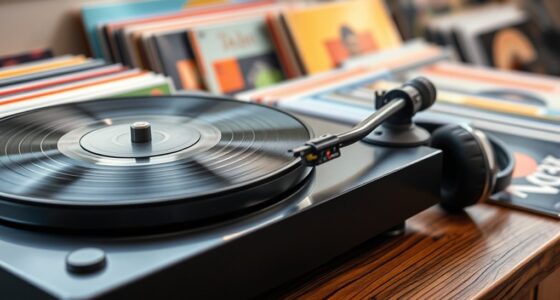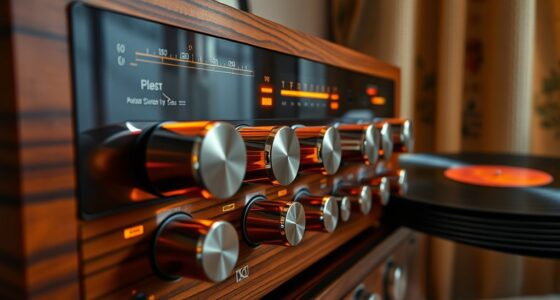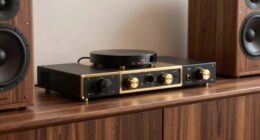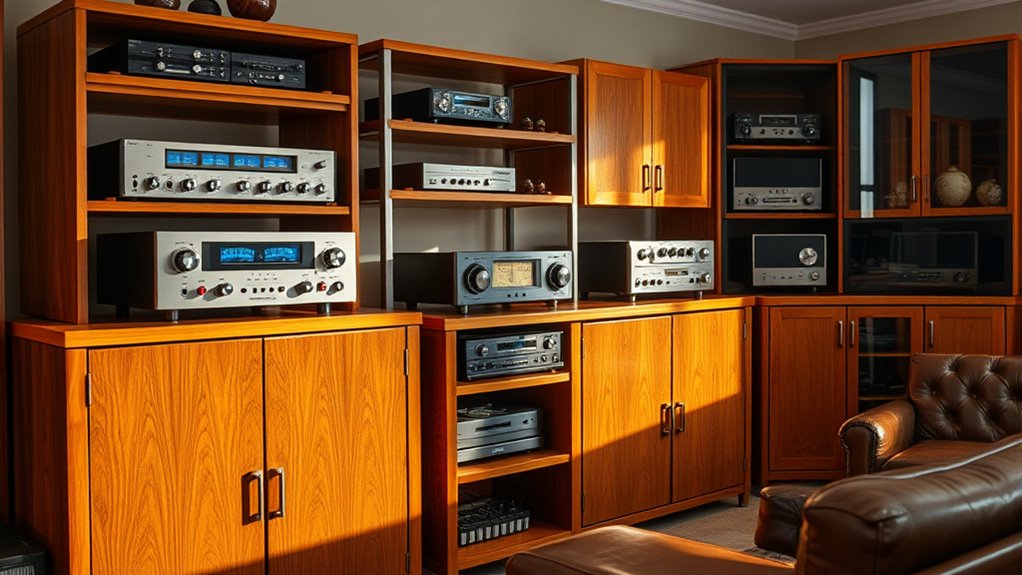

To create a vintage audio setup with racks, consoles, and cabinets, focus on smart placement and cable management. Position speakers at ear level and form an equilateral triangle with your listening spot for balanced sound. Keep cables tidy with clips or sleeves and guarantee proper ventilation to prevent overheating. Aim for a balance between style and function, making sure your gear is accessible yet visually appealing. Continue exploring for tips to perfect your vintage audio environment.
Key Takeaways
- Choose vintage furniture that supports optimal speaker placement and cable management for both aesthetics and sound quality.
- Incorporate adjustable shelves and stands to position equipment at ear level and maintain accessibility.
- Ensure proper ventilation within racks or cabinets to prevent overheating of vintage audio components.
- Use stylish cable organizers like leather straps or woven sleeves to keep wiring neat and unobtrusive.
- Balance the vintage style with functional layout, making controls and connections easily accessible while preserving the aesthetic.

Vintage audio furniture combines timeless style with functional design, making it a popular choice for audio enthusiasts and decor lovers alike. When you’re setting up your vintage rack, console, or cabinet, paying attention to speaker placement is essential. Proper positioning not only enhances sound quality but also preserves the aesthetic appeal of your furniture. You want your speakers to be at ear level when seated, ideally forming an equilateral triangle with your listening spot. This ensures clear, balanced audio. If your vintage piece allows for adjustable shelves or speaker stands, use them to fine-tune the height and angle, avoiding sound distortion and echo. Keep in mind that the placement of speakers influences the overall vibe of your space, so take your time to experiment with different positions until you find the perfect setup.
Cable management is another vital aspect when working with vintage audio furniture. Older pieces often feature open shelving or exposed compartments, which can make cluttered cables a visual distraction. You can’t neglect this detail if you want a clean, organized look that complements the furniture’s style. Use cable clips, sleeves, or adhesive cable organizers to route wires neatly along the back or behind the unit. This keeps cables out of sight and prevents accidental disconnections or damage. Also, consider using color-coded or labeled cables so you can easily identify and troubleshoot connections later. Good cable management not only improves the aesthetics but also prolongs the lifespan of your equipment by reducing strain on connectors and wires. Additionally, understanding proper ventilation for vintage audio equipment can help prevent overheating and maintain optimal performance.
When arranging your vintage furniture, think about accessibility. You’ll want to reach your controls, switch out records, or replace cables without hassle. Position your gear so that essential connections are within easy reach, but avoid cluttering the front or sides with tangled wires. Incorporate cable management solutions that blend with the furniture’s style, such as leather straps or woven sleeves, to keep the vintage look intact. Remember, the goal is to strike a balance between form and function—your furniture should look stylish while supporting a practical, efficient setup.

Armocity 4-Tier AV Media Stand with Power Strips, Stereo Stand with LED Lights, Audio Tower Rack with Adjustable Shelves, Small Entertainment Center, 30'', Rustic Brown
Large Accommodation – 23.6'' wide shelf boards that this media stand has offer you enough space to place…
As an affiliate, we earn on qualifying purchases.
As an affiliate, we earn on qualifying purchases.
Frequently Asked Questions
How Do I Restore Vintage Audio Furniture Without Damaging Its Value?
To restore vintage audio furniture without damaging its value, use gentle restoration techniques like cleaning with mild, non-abrasive solutions and avoiding harsh chemicals. Preservation tips include keeping the furniture out of direct sunlight and maintaining stable humidity levels. Carefully repair scratches or dents with matching finishes, and consider consulting a professional for any major work. This approach guarantees you enhance its beauty while protecting its historical and monetary worth.
What Materials Are Most Durable for Vintage Audio Furniture?
You should choose hardwoods like oak or teak for durability, as they resist wear and maintain their beauty over time. Metal components made from stainless steel or powder-coated steel are best because they resist corrosion and scratches. Be mindful of wood durability by avoiding soft woods like pine, which can dent easily. Regular maintenance and proper cleaning will also help preserve your vintage audio furniture’s integrity and value.
How Can I Identify Authentic Vintage Audio Furniture?
You can’t miss authentic vintage audio furniture—it practically screams history! To identify genuine pieces, look for signs like original craftsmanship, aged patina, and authentic markings or labels. Distinguishing vintage styles involves recognizing classic design elements from different eras, such as mid-century modern or Art Deco. Trust your instincts, compare with verified images, and examine hardware and joints closely. If it feels like holding a piece of history, you’ve probably found the real deal!
What Are the Best Maintenance Tips for Preserving Vintage Audio Furniture?
To keep your vintage audio furniture in top shape, regularly use gentle cleaning techniques like a soft cloth and mild wood cleaner to remove dust and grime. Avoid harsh chemicals that can damage finishes. Additionally, prevent pests by sealing any cracks and keeping the environment dry. Store your furniture away from direct sunlight and humidity, and inspect it periodically to catch any issues early, ensuring your piece stays beautiful and functional for years.
How Do I Adapt Vintage Furniture for Modern Audio Equipment?
You can adapt vintage furniture for modern audio equipment by installing modern cable management solutions, like sleek clips or channels, to keep cords organized and tidy. Additionally, add ergonomic seating nearby to enhance your listening experience comfortably. Make sure to measure your equipment carefully, and consider custom modifications if needed, so everything fits seamlessly without compromising the vintage aesthetic or functionality.

Alex Tech 25ft – 1/2 inch Cord Protector Wire Loom Tubing Cable Sleeve Split Sleeving For USB Cable Power Cord Audio Video Cable – Protect Cat From Chewing Cords – Black
Size: Diameter: 1/2"| Length: 25 Feet | Color: Black. Our wire loom is split and easy to load…
As an affiliate, we earn on qualifying purchases.
As an affiliate, we earn on qualifying purchases.
Conclusion
Think of vintage audio furniture as the heart of your listening sanctuary, a timeless anchor that holds your passion and memories. Each rack, console, or cabinet isn’t just storage—it’s a gateway to the past and a bridge to your musical soul. Embrace these pieces, and let them symbolize your dedication to quality and nostalgia. In your space, they become more than furniture—they become the heartbeat of your vintage journey.

OneBlis 40" Large Record Player Stand with Charging Station, Mid Century Modern Turntable Cabinet with Sliding Doors, Wood Vinyl Record Storage Stand for Living Room Music Corner
Built-in Charging Station: This wooden record player stand features a convenient built-in power hub with 2 standard AC…
As an affiliate, we earn on qualifying purchases.
As an affiliate, we earn on qualifying purchases.
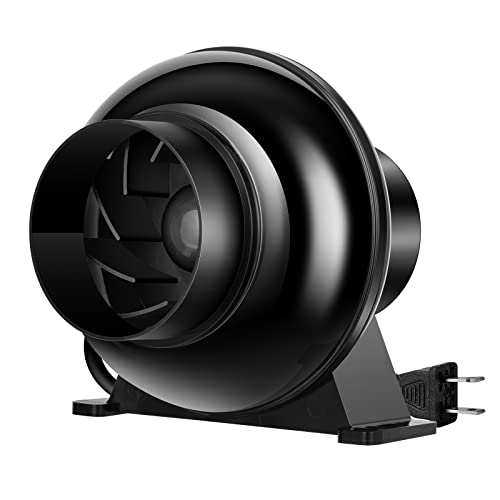
VIVOSUN D4 4 Inch 195 CFM Inline Duct Ventilation Fan, HVAC Vent Blower for Grow Tent, Attic, Basements or Kitchen, Hydroponics Exhaust Booster Fan
Powerful Airflow: This powerful blower with a fan speed of 2500 RPM can create an airflow of 195…
As an affiliate, we earn on qualifying purchases.
As an affiliate, we earn on qualifying purchases.