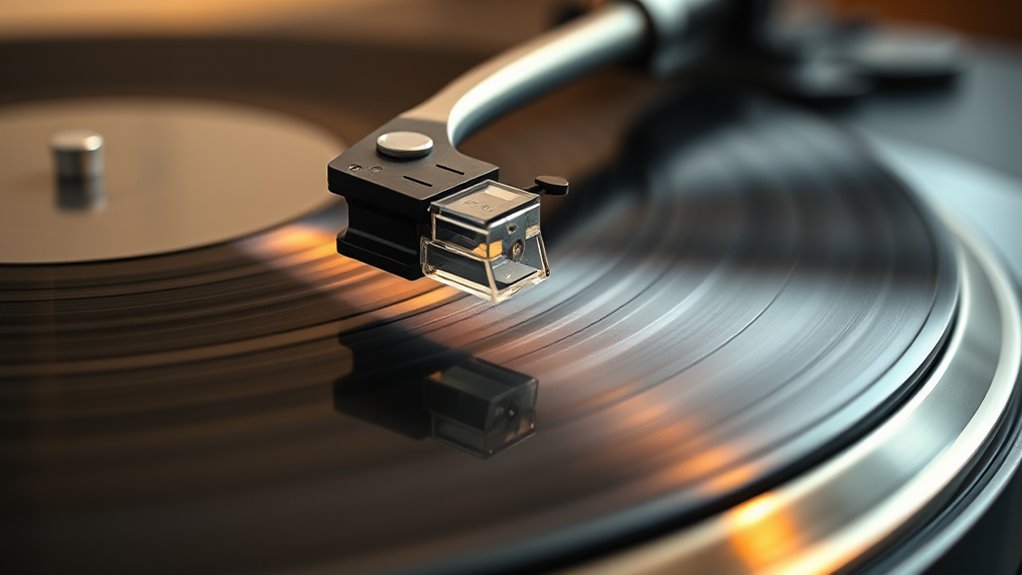

Your turntable cartridge is vital for converting vinyl grooves into sound, so choosing the right one and maintaining the needle is important for top sound quality. When selecting a cartridge, consider factors like stylus type and compatibility with your turntable. Replacing the stylus when it shows signs of wear keeps your records safe and audio clear. Regular cleaning and proper alignment guarantee peak performance. Keep exploring to discover more tips on maintaining your setup effectively.
Key Takeaways
- Selecting the right cartridge involves matching it to your turntable and listening preferences for optimal sound quality.
- Stylus (needle) types vary; choose based on record type, sound detail, and compatibility with your cartridge.
- Proper alignment using tools like protractors ensures accurate tracking and prevents record and stylus damage.
- Regular stylus cleaning and timely replacement maintain clear sound and protect your vinyl collection.
- Follow manufacturer guidelines for cartridge setup and stylus replacement to ensure longevity and consistent performance.

A turntable cartridge is a critical component that translates the grooves on a vinyl record into an electrical signal, guaranteeing your music sounds clear and detailed. Proper cartridge alignment is indispensable for peak sound quality and to prevent unnecessary wear on your records and stylus. When you set up your turntable, take the time to carefully align the cartridge following the manufacturer’s specifications. Use an alignment protractor or a cartridge alignment app to make sure the stylus sits perfectly in the groove at the right angles. Misalignment can cause distorted sound, uneven wear, and even damage to your records over time. Regularly checking and adjusting the alignment keeps your setup in top shape and preserves the longevity of your vinyl collection. Additionally, using proper tools and techniques for cleaning and replacement can significantly improve your listening experience. Equally significant is stylus cleaning. Over time, dust, dirt, and residue can accumulate on the stylus, leading to reduced audio clarity and increased record wear. You should clean your stylus regularly using a dedicated stylus brush or a cleaning solution designed for this purpose. Gently brush the stylus from back to front, avoiding excessive pressure that could damage the delicate tip. A clean stylus ensures better tracking of the record grooves, resulting in clearer sound and less distortion. When you’re not playing records, keep the stylus covered with the provided stylus guard to minimize exposure to dust and debris. Replacing the stylus when it shows signs of wear is essential. Most styluses are rated for a certain number of hours or records, but if you notice a decline in sound quality, skipping, or distortion, it’s time for a new needle. When replacing the stylus, handle it carefully to avoid damaging the cartridge or the stylus itself. Follow the manufacturer’s instructions, and if you’re unsure, seek professional help to guarantee proper installation. Proper cartridge alignment and stylus cleaning aren’t just maintenance tasks — they’re necessary steps to get the most out of your vinyl listening experience.
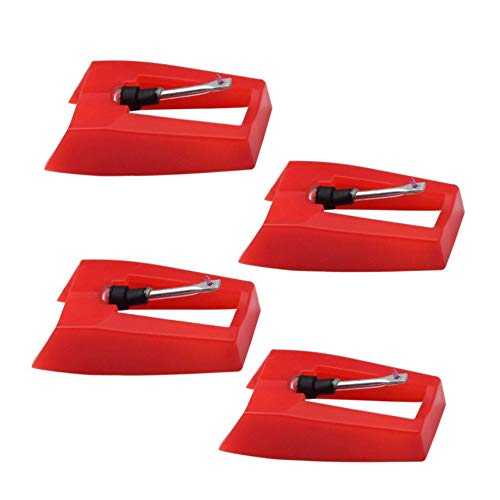
4 Pack Ruby Record Player Needle Turntable Stylus Replacement for ION Jenson Crosley Victrola Sylvania Turntable Phonograph LP Vinyl Player More Brand
1: Ruby Ceramic Record player needle: Compatible with most record player in the markets now. like:Crosley,ION,Victrola,1byone,Jenson,Innovative-Technology, Boytone, TechPlay,Capehart…
As an affiliate, we earn on qualifying purchases.
As an affiliate, we earn on qualifying purchases.
Frequently Asked Questions
How Often Should I Replace My Turntable Cartridge?
You should replace your turntable cartridge every 1,000 to 2,000 hours of use, or roughly every 1 to 2 years. Regular stylus care helps maintain sound quality, but over time, the stylus and cartridge compatibility may decline. Keep an eye out for increased skipping or distortion, which signals it’s time for a replacement. Proper maintenance guarantees peak performance and longevity of your turntable setup.
Can I Upgrade My Cartridge Without Changing the Tonearm?
Yes, you can upgrade your cartridge without changing the tonearm, but you need to take into account cartridge compatibility and tonearm weight considerations. Make sure the new cartridge matches the tonearm’s tracking force range and weight limits to avoid damage or poor sound quality. Check if the mounting style and electrical connections are compatible. If these factors align, upgrading your cartridge is a straightforward way to improve your sound.
What Are the Signs of a Worn-Out Needle?
You notice your music sounds dull and distorted, like a scratched record. When you do a stylus inspection, you might see a bent or worn tip. Signs of a worn-out needle include skipping, excessive record noise, and visible damage to the stylus. If you ignore these signs, you risk record damage and poor sound quality. Replacing the stylus promptly keeps your sound crisp and your records safe.
How Does Cartridge Alignment Affect Sound Quality?
Cartridge alignment directly impacts sound quality by ensuring proper stylus tracking and cartridge stability. When aligned correctly, your turntable produces clearer sound with minimal distortion, allowing the stylus to accurately follow the grooves. Misalignment causes tracking errors, leading to muffled audio and increased wear. Regularly check and adjust the alignment to keep your cartridge stable and optimize sound performance, giving you the best listening experience every time.
Are There Differences Between Moving Magnet and Moving Coil Cartridges?
Honestly, choosing between moving magnet and moving coil cartridges is like picking between a hero and a villain—both have their charms. Moving magnet cartridges have stronger magnetic properties, making them more affordable and easier to replace, while moving coil cartridges boast superior groove tracking accuracy and finer detail. If you crave precision and are willing to spend more, go coil. Otherwise, magnet’s your trusty, budget-friendly sidekick.

Boundless Audio Stylus Cleaner Brush – Carbon Fiber Anti-Static Stylus Brush for Turntable Needle Cleaning
Safely clean your turntable stylus — Soft carbon fiber and wool bristles safely and effectively remove built-up dust…
As an affiliate, we earn on qualifying purchases.
As an affiliate, we earn on qualifying purchases.
Conclusion
Choosing and replacing your turntable cartridge is like fine-tuning a musical instrument—small adjustments can unlock a world of rich, vibrant sound. When you select the right needle, you’re not just maintaining your setup; you’re opening a gateway to crystal-clear melodies and deep, soulful bass. Treat your cartridge with care, and it’ll become the loyal conductor of your sonic symphony, turning every record into a masterpiece waiting to be discovered.

Hudson Hi-Fi Turntable Cartridge Alignment Kit – The Audiophile Purists Perfected 3-Piece LP Cartridge Setup Set. Accuracy Optimized Digital Scale, Azimuth Ruler, Protractor – Rich Pure Sonic Sound
All-Inclusive Kit: Each kit comes with a turntable stylus digital scale and Premium PE Case. With our alignment…
As an affiliate, we earn on qualifying purchases.
As an affiliate, we earn on qualifying purchases.
4 Pack Ruby Record Player Needle Turntable Stylus Replacement for ION Jenson Crosley Victrola Sylvania Turntable Phonograph LP Vinyl Player More Brand
1: Ruby Ceramic Record player needle: Compatible with most record player in the markets now. like:Crosley,ION,Victrola,1byone,Jenson,Innovative-Technology, Boytone, TechPlay,Capehart…
As an affiliate, we earn on qualifying purchases.
As an affiliate, we earn on qualifying purchases.