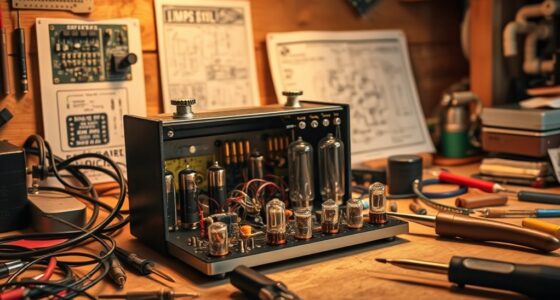
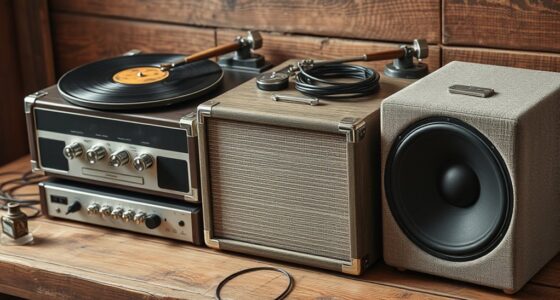
If you prefer a warm, harmonic-rich sound with natural compression and pleasing overdrive, a tube amp is your best choice. It adds character and aOrganic feel to genres like blues or classic rock. Conversely, if you want a clear, precise tone with greater durability and affordability, go for a solid-state amp. Each offers distinct sound qualities and advantages—exploring these differences further can help you find the perfect match for your style and needs.
Key Takeaways
- Tube amps produce a warm, harmonic-rich sound with natural compression and pleasing overdrive, ideal for genres like blues and classic rock.
- Solid-state amps offer a clear, precise, and uncolored sound with consistent tone across volume levels, suitable for high-fidelity and studio use.
- Tube amps generate subtle harmonic distortion and organic response, enhancing musicality, while solid-state amps deliver straightforward, transparent audio output.
- Overdrive in tube amps results in warm, musical saturation, whereas solid-state amps often emulate distortion digitally, which can sound harsher.
- The tonal character and response differences stem from the tubes’ harmonic richness versus solid-state’s clarity, impacting overall sound preference.
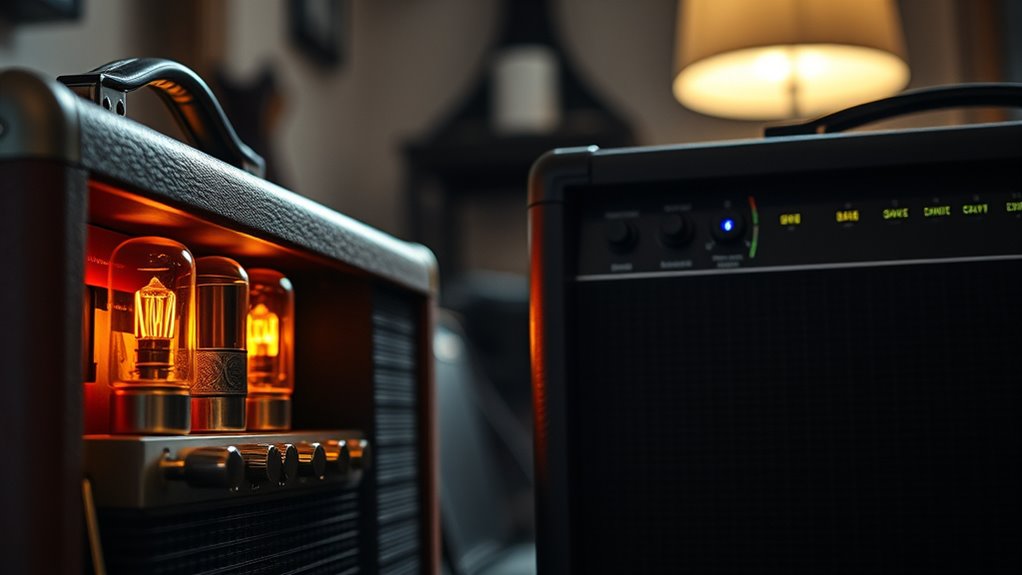
When choosing between a tube amp and a solid-state amplifier, understanding their fundamental differences can help you make an informed decision. One of the most noticeable distinctions lies in the way each type produces sound. Tube amps are renowned for their tube warmth, which adds a rich, harmonic complexity to the audio. This warmth creates a sense of depth and character that many players and listeners find especially appealing. On the other hand, solid-state amps deliver solid clarity, providing a clean, precise sound that’s consistent across different volume levels. This clarity makes them ideal for scenarios where accuracy and transparency are priorities, such as studio recording or genres that demand tight, articulate tones.
Tube amps tend to have a natural compression effect, which smooths out the dynamics and results in a more musical, organic feel. When you play through a tube amp, you’ll notice that the sound seems to breathe and resonate more, especially at higher volumes. The tubes themselves add a subtle harmonic distortion that enhances the overall warmth of the tone, making your guitar or instrument sound more inviting and lively. This characteristic is especially appreciated in genres like blues and classic rock, where the emotional expressiveness of the sound plays a crucial role. Conversely, solid-state amps use transistors and electronic components to produce sound, which allows for a more straightforward, uncolored output. They excel in delivering consistent sound without the added character of tube warmth, making them reliable for situations where neutrality and accuracy matter most.
Another key difference is in how each amplifier handles distortion. Tube amps tend to produce a natural, pleasing overdrive as they are pushed into saturation, providing a warm, musical breakup that enhances solos and lead lines. Solid-state amps, however, often use digital or solid-state circuitry to emulate distortion or produce it more abruptly, which can sometimes sound harsher or more artificial. The result is that tube amps may feel more responsive to your playing dynamics, giving you a more expressive experience. Solid-state amps, being more precise and less prone to temperature-related issues, offer durability and lower maintenance, making them suitable for musicians on the go or in demanding environments. Additionally, the technology used in solid-state amps generally makes them more affordable and easier to repair than tube amps.
Frequently Asked Questions
How Does Tube Amp Warmth Affect Recording Quality?
Your tube amp warmth enhances recording quality by adding tonal richness and depth. The warmth enhancement creates a fuller, more vibrant sound that captures subtle nuances, making your recordings feel more lively and expressive. This natural compression and harmonic distortion contribute to a more pleasing and musical tone. As a result, your tracks will sound more engaging, with a sense of presence that’s often missing with other amplification styles.
Are Solid-State Amps More Durable Than Tube Amps?
Think of solid-state amps as the sturdy oak tree in your musical landscape. They’re generally more durable than tube amps, thanks to their amplifier longevity and durability factors like solid construction and fewer fragile parts. You won’t need to worry about delicate tubes or frequent replacements. While tube amps have their charm, solid-state amps stand strong against the elements, making them ideal for gigs or everyday use where resilience matters most.
Can Solid-State Amps Replicate Tube Amp Distortion Accurately?
Yes, solid-state amps can replicate tube amp distortion accurately, especially with modern technology designed for sound replication. They use sophisticated circuitry to mimic the warmth and breakup of tube amps, providing good distortion accuracy. While they might not perfectly match the organic feel of tubes, advancements allow solid-state amps to deliver convincing sound replication, making them a viable choice for players seeking consistent, reliable tone without sacrificing the character of tube distortion.
What Maintenance Do Tube Amps Require Compared to Solid-State?
Did you know tube amps need more maintenance than solid-state ones? You’ll have to replace tubes as they age, which typically happens every 1-3 years depending on usage. Regular circuit recalibration keeps your amp sounding great, especially as tubes wear out. Solid-state amps require less upkeep—they mainly need occasional cleaning. So, if you want consistent sound quality, be prepared for the extra attention a tube amp demands.
How Does Power Consumption Differ Between Tube and Solid-State Amps?
You’ll notice that solid-state amps are more power-efficient, consuming less energy during operation, which makes them cheaper to run over time. Tube amps, on the other hand, use more energy because their tubes require higher voltages and generate more heat. If you’re concerned about energy consumption and power efficiency, solid-state amps are the better choice, especially for long-term use or frequent gigs.
Conclusion
Ultimately, choosing between a tube amp and a solid state is like selecting between a passionate jazz solo and a precise classical piece; each offers its unique charm. Your preference hinges on whether you seek warm, organic tones or clean, reliable sound. Like a master painter, you’ll craft your sonic masterpiece by understanding these differences. Trust your ears, and remember, the right choice resonates with your personal musical journey—because in the end, it’s all about what moves you most.