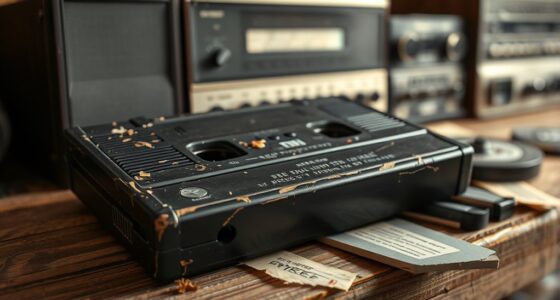
To understand vintage audio catalogs and manuals, familiarize yourself with common terms, abbreviations, and layout patterns of the era. Focus on key specifications like wattage, impedance, and frequency response, and pay attention to diagrams and circuit descriptions. Recognize how information is organized to quickly locate details, and learn the technical language used. If you keep exploring, you’ll uncover valuable insights that will help you value, restore, and enjoy vintage audio gear even more.
Key Takeaways
- Familiarize yourself with era-specific terminology, abbreviations, and common specifications like wattage, impedance, and frequency response.
- Carefully study diagrams, charts, and circuit descriptions to understand equipment layout and component functions.
- Cross-reference technical language with online forums and collector communities for clarification and insights.
- Use manuals to verify original configurations, parts, and servicing procedures for accurate restoration and valuation.
- Pay attention to footnotes, annotations, and revisions to stay updated on modifications and authentic details.
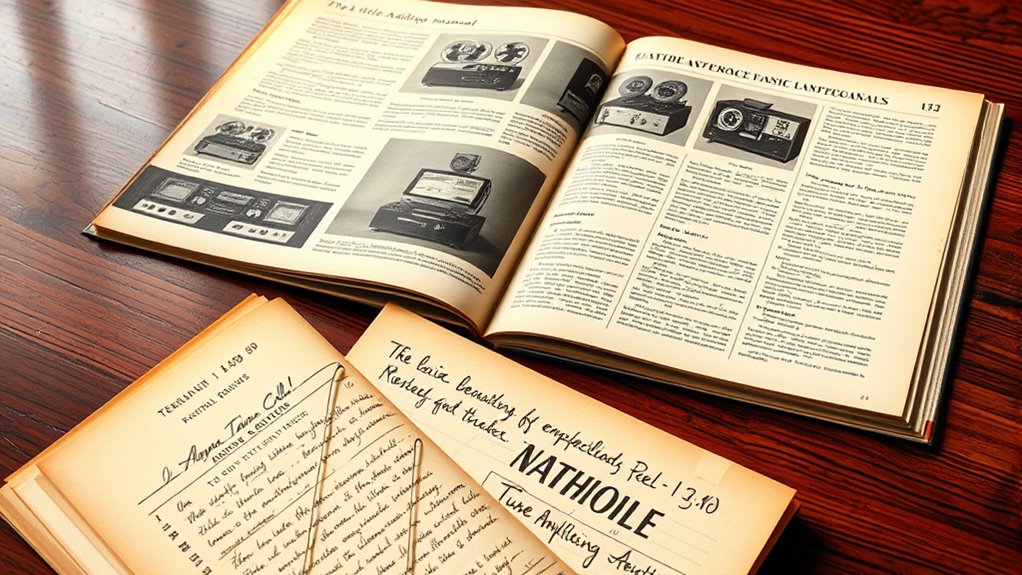
Ever wondered how to access the full potential of vintage audio catalogs and manuals? The key lies in understanding how to interpret their content accurately. Vintage catalogs are treasure troves of technical specifications, product features, and historical context, but they often use terminology and layouts that can be confusing at first glance. To unlock their value, you need to develop an eye for details and know where to look. Start by familiarizing yourself with common terms and abbreviations used during the era, as this will help you decode specifications quickly. For instance, understanding what wattage, impedance, or frequency response mean in the context of vintage equipment allows you to compare models effectively.
When reading these manuals, pay close attention to diagrams, charts, and circuit descriptions—they reveal the inner workings and design philosophies of the equipment. This is especially useful if you’re into restoration techniques, as knowing how a component fits into the overall system can guide you in repairing or upgrading your gear. As a collector, these insights can also help you identify authentic parts or original configurations, increasing the value of your collection. Collector tips often emphasize the importance of matching the specifications and original components, which you’ll be better equipped to do once you thoroughly understand the manual’s technical language.
Another essential aspect is understanding the layout and organization of the catalog or manual. Manufacturers often grouped information logically—servicing procedures, troubleshooting tips, or maintenance instructions—so *navigating* efficiently saves time. When you know where to find specific details, you can quickly assess the condition of a vintage piece or determine whether it’s worth pursuing. Also, look for footnotes, annotations, or revisions printed in the margins—they often contain updates or important clarifications that aren’t immediately apparent. Gaining familiarity with technical terminology used in vintage manuals can further streamline your understanding and improve your troubleshooting skills.
To get the most out of vintage manuals, consider cross-referencing information with online forums or collector communities. These groups have accumulated a wealth of practical knowledge and can clarify ambiguous details. They also share restoration techniques that preserve the authenticity of vintage gear while improving performance. As you gain experience, you’ll start recognizing patterns and common issues, making it easier to diagnose problems and implement effective solutions. *In essence*, reading vintage audio catalogs and manuals isn’t just about deciphering text; it’s about immersing yourself in the history, technology, and craftsmanship of a bygone era. With patience and attention to detail, you’ll *unlock* valuable insights that enhance your collecting, restoring, and appreciating vintage audio equipment.

Restoring Vintage Audio Electronics
As an affiliate, we earn on qualifying purchases.
As an affiliate, we earn on qualifying purchases.
Frequently Asked Questions
How Can I Identify the Age of a Vintage Audio Catalog?
You can identify the age of a vintage audio catalog by examining the manufacture date or copyright year, often printed on the cover or inside pages. Look at the printing style, font, and layout, which change over time and can hint at a specific era. Additionally, research the manufacturer’s history to narrow down the production period, helping you determine the catalog’s age more accurately.
Are There Common Symbols or Codes Used in Vintage Manuals?
You’ll notice that vintage manuals love their secret language of manufacturer symbols, which can be as cryptic as a treasure map. These symbols often represent circuit diagrams, making it a breeze to decode wiring and components. Keep an eye out for standardized icons—like resistors, capacitors, and transistors—so you can confidently follow the circuitry. It’s like learning a vintage tech secret handshake, but with more nostalgia and fewer passwords.
What Are the Best Preservation Techniques for Old Audio Manuals?
To preserve your old audio manuals, you should store them in acid-free sleeves or boxes to prevent deterioration. Always handle them carefully, with clean hands or gloves, to avoid smudges and tears. Keep manuals in a cool, dry, and dark environment to slow degradation. Regularly check their condition, and avoid exposing them to direct sunlight or high humidity, ensuring they stay in good shape for years to come.
How Do I Verify the Authenticity of Vintage Audio Catalogs?
Your vintage audio catalog is more precious than a hidden treasure, so verifying its authenticity is essential. To do this, focus on collector authentication methods like examining paper quality, printing techniques, and any unique markings. Cross-reference with known authentic examples and consult reputable collectors or experts. Authenticity verification ensures your treasure remains genuine, boosting its value and preserving its historical significance for future generations.
Can I Find Digital Copies of Out-Of-Print Vintage Manuals?
Yes, you can find digital copies of out-of-print vintage manuals in online digital archives. Many websites specialize in manual reproduction, offering scanned versions of rare and discontinued manuals. These archives often provide free or paid access, making it easier for you to locate the specific manual you need. Just search for the model number along with “digital archive” or “manual reproduction” to find the best sources.

High-Power Audio Amplifier Construction Manual
As an affiliate, we earn on qualifying purchases.
As an affiliate, we earn on qualifying purchases.
Conclusion
Think of vintage audio catalogs and manuals as treasure maps, guiding you through a world of hidden gems and forgotten classics. With patience and curiosity, you’ll uncover the stories behind each device, feeling like an explorer discovering lost treasures. Embrace the journey, and soon you’ll be steering these vintage waters with confidence, opening the timeless soundscape they hold. Your adventure into audio history is just beginning—dive in and enjoy the voyage!

PRUNUS Retro Vintage Radio with Bluetooth Rich Bass Stereo Sound, Radios Portable AM FM, Rechargeable Speaker with TWS Pairing, Loud Volume,BT5.0, TF Card & MP3 Player for Home/Party
【Loud Stereo Sound&Dual Connectivity】This retro bluetooth speaker is equipped with a powerful speaker, you can expect a loud…
As an affiliate, we earn on qualifying purchases.
As an affiliate, we earn on qualifying purchases.
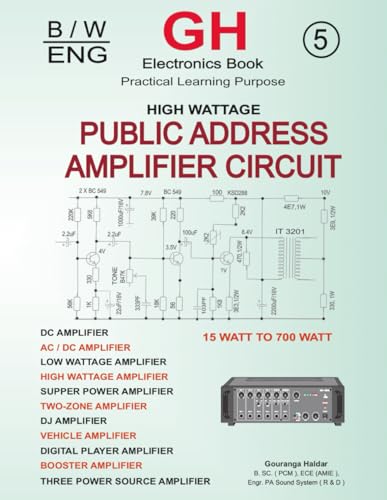
High Power Amplifier Circuit Diagrams (150kW–750kW): Complete Schematics of Popular Audio Amplifier Brands for Repair, Design & Troubleshooting
As an affiliate, we earn on qualifying purchases.
As an affiliate, we earn on qualifying purchases.