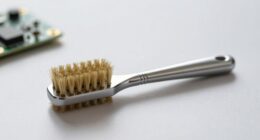
To clean vintage vinyl records properly, gently inspect the surface and remove loose dirt with an anti-static brush. Use a specially formulated record cleaning solution and a microfiber cloth or dedicated brush, wiping in circular motions along the grooves while avoiding the label. After cleaning, dry the record with a soft cloth and let it air dry in a dust-free space. Proper storage and handling help preserve your collection, and more tips await if you continue exploring.
Key Takeaways
- Inspect the record for dirt or fingerprints, then gently remove loose debris with an anti-static brush.
- Use a dedicated record cleaning solution and a microfiber cloth or brush to clean grooves in circular motions.
- Avoid household cleaners; opt for specially formulated record cleaning solutions and distilled water.
- Dry the record with a microfiber cloth and let it air dry in a dust-free environment before storing.
- Store records upright in a cool, dark place and handle with care to preserve sound quality and prevent damage.
Cleaning vintage vinyl records is vital to preserve their sound quality and extend their lifespan. Over time, dust, dirt, and oils from handling can settle into the grooves, leading to pops, skips, and overall degraded sound. Proper record cleaning isn’t just about aesthetics; it’s an indispensable preservation technique that keeps your records sounding their best for years to come. When you approach record cleaning with care, you help prevent permanent damage and maintain the authenticity of your vintage collection.
Proper record cleaning preserves sound quality and extends your vintage vinyl collection’s lifespan.
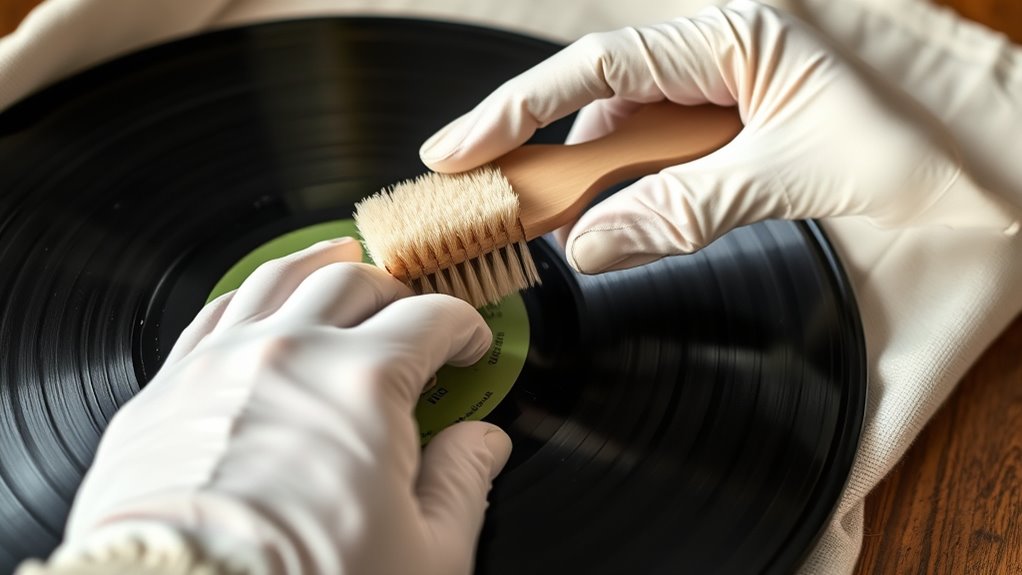
Start by gently inspecting the record for visible dirt or fingerprints. Use a soft, anti-static brush to remove loose debris from the surface. This step is fundamental because it prevents scratches that could occur when additional cleaning solutions or cloths are applied. Once you’ve brushed the surface, you can move on to more thorough cleaning methods. Many enthusiasts prefer a combination of a cleaning solution and a microfiber cloth or a dedicated record cleaning brush. Avoid harsh chemicals or household cleaners, which can damage the vinyl surface. Instead, opt for specially formulated record cleaning solutions designed to dissolve dirt without harming the material.
When performing record cleaning, always follow the preservation techniques that guarantee you don’t apply excessive pressure or cause unnecessary wear. Fill a small basin with distilled water, which is free of minerals that could leave residue. Add a few drops of the cleaning solution and dip your microfiber cloth or cleaning brush into the mixture. Gently wipe the record in a circular motion, following the grooves’ direction. Be cautious around the label area to avoid getting excess liquid underneath, which might cause the label to peel or the record to warp. Regular cleaning can also help maintain the color accuracy of your vintage records, ensuring they look as good as they sound.
After cleaning, use a dry, clean microfiber cloth to remove any remaining moisture. Let the record air dry in a safe, dust-free environment before placing it back in its sleeve. Consistent record cleaning and proper preservation techniques not only improve sound quality but also help prevent the buildup of debris that accelerates wear. Store your vintage records upright in a cool, dark place, away from direct sunlight and temperature fluctuations, to further preserve their condition.
Top picks for "clean vintage vinyl"
Open Amazon search results for this keyword.
As an affiliate, we earn on qualifying purchases.
Frequently Asked Questions
Can I Use Household Cleaning Products on Vintage Records?
You shouldn’t use household cleaning products on vintage records because household chemicals can damage the delicate surface and hinder record preservation. Instead, stick to gentle, record-specific cleaning solutions. Using harsh household cleaners risks warping or scratching your vinyl, affecting sound quality and longevity. Protect your collection by avoiding household chemicals and choosing proper cleaning methods designed specifically for vintage records.
How Often Should I Clean My Vintage Vinyl Records?
You should clean your vintage vinyl records regularly, ideally after every few plays, to maintain ideal sound quality. Keep an eye on frequency maintenance based on your storage conditions—if they’re stored in a dusty or humid environment, clean them more often. Proper cleaning prevents dirt buildup and preserves your records, ensuring they stay in good shape for years. Regular cleaning is key to enjoying your vinyl collection at its best.
Is It Safe to Clean Records With Water Alone?
Cleaning records with water alone is like sailing into stormy waters—risky. Water damage can seep into the grooves, leading to record warping and ruining your vintage treasure. Instead, use a gentle cleaning solution designed for vinyl, combined with a soft brush or microfiber cloth. This approach helps preserve your records while avoiding the dangers of water damage and warping, ensuring your vinyl stays in mint condition.
What Tools Are Best for Removing Stubborn Grime?
To remove stubborn grime, you should use record cleaning brushes designed specifically for vinyl, which gently lift dirt without scratching. Pair them with anti-static cloths to wipe away loosened debris and static buildup. These tools are effective for deep cleaning, ensuring your vintage records stay in good condition and sound quality remains ideal. Always use gentle motions to avoid damaging the delicate grooves on your treasured vinyl.
Can Cleaning Damage the Delicate Grooves of Vintage Records?
Cleaning your vintage records can risk groove damage if you’re not careful, but gentle cleaning techniques focus on groove preservation. You avoid harsh scrubbing, avoid excessive force, and use soft brushes or microfiber cloths, all aimed at protecting delicate grooves. You prioritize proper cleaning techniques that carefully remove dirt without harming the vinyl, ensuring your records stay in ideal condition and preserve their sound quality for years to come.
Conclusion
So, after all that effort to keep your vintage records pristine, it’s funny—sometimes the best way to preserve their charm is just to let a few fingerprints or dust bits stay. Ironically, over-cleaning can do more harm than good, stripping away their character. So, enjoy your collection, handle it gently, and remember: a little dirt is part of its story. After all, some things are better aged with a bit of history intact.