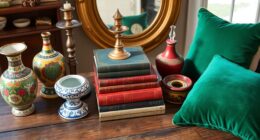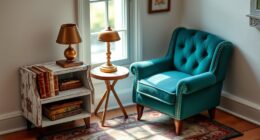
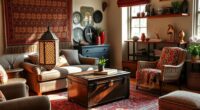
Vinyl, weathered wood, and velvet are key textures that define vintage decor, creating spaces rich with character and warmth. Vinyl adds a nostalgic charm with its smooth, sometimes distressed surface, while reclaimed wood brings natural beauty and rustic appeal. Velvet offers a plush, luxurious touch that invites comfort and elegance. Combining these textures results in a layered, tactile environment that feels timeless and personal. Explore these elements further to discover how they transform your vintage-inspired space.
Key Takeaways
- Vinyl surfaces often feature antique finishes like distressed patterns and weathered looks, adding nostalgic character to vintage decor.
- Reclaimed wood showcases natural grain and imperfections, emphasizing rustic charm and authenticity in vintage spaces.
- Velvet introduces plush, tactile luxury, enhancing the elegance and sophisticated feel of vintage furniture and decor.
- Combining vinyl, weathered wood, and velvet creates layered textures that evoke a timeless, cozy, and visually rich environment.
- These textures collectively define vintage decor by blending history, tactile richness, and visual interest.
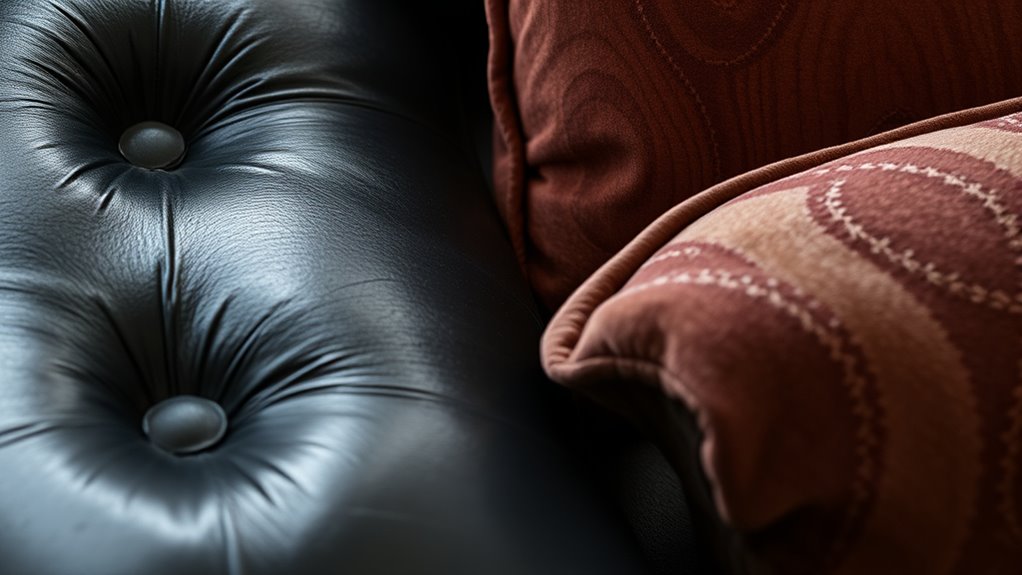
Have you ever wondered what gives vintage decor its timeless charm? It’s often the textures and finishes that transport you back in time, creating a warm, inviting atmosphere. One key element is the use of antique finishes, which add depth and character to furniture and decor pieces. These finishes often involve distressed paint, patinas, or aged wood surfaces that reveal the history behind each piece. When you see furniture with chipped paint or a slightly worn look, it’s not just an aesthetic choice—it’s a deliberate embrace of history. These antique finishes evoke nostalgia and lend authenticity to vintage spaces, making them feel lived-in and cozy.
Another defining feature of vintage decor is the use of retro patterns. Think bold geometric shapes, floral motifs, or intricate damasks that once graced mid-century furniture or wallpaper designs. These patterns, often in vibrant or muted hues, inject personality and style into any room. Combining retro patterns with antique finishes creates a layered, textured look that’s rich in visual interest. When you incorporate these patterns into upholstery or wallpaper, they instantly evoke a sense of nostalgia, capturing the essence of bygone eras. They’re not just decorative; they’re storytelling elements that connect you to the past.
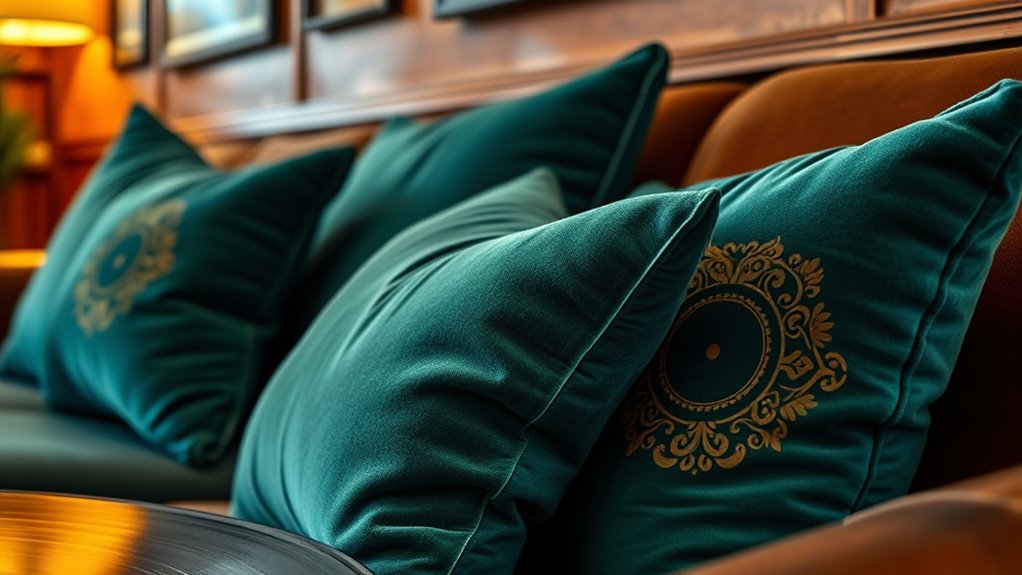
Textures like velvet also play a pivotal role in vintage interiors. Velvet’s plush, soft feel adds a touch of luxury and comfort, making any space feel inviting. Its rich surface creates a tactile experience, encouraging you to run your hand over the fabric. Velvet was popular in the roaring twenties and mid-century modern furnishings, and it continues to evoke elegance and sophistication. When paired with antique finishes, velvet enhances the sense of opulence and history, making your space feel both glamorous and warm. It’s a texture that invites touch and creates a sensory connection to the vintage aesthetic.
Wood, especially with an aged or distressed appearance, anchors vintage decor with its natural warmth. Reclaimed or weathered wood brings a rustic charm that complements antique finishes and retro patterns. Its grain and imperfections tell stories of the past, adding authenticity to your decor. Whether it’s a vintage sideboard, a weathered coffee table, or a reclaimed headboard, wood’s natural texture grounds your space and enhances its nostalgic appeal. Using reclaimed wood is also an eco-friendly choice that emphasizes sustainability and history in your design.
Together, these textures—antique finishes, retro patterns, velvet, and weathered wood—form a tactile tapestry that defines vintage decor. They create a layered, multidimensional environment that feels both timeless and personal. When you choose to incorporate these textures thoughtfully, you craft a space that’s rich in history, style, and comfort, making every corner a tribute to the enduring charm of vintage design.
Frequently Asked Questions
How Do I Mix Vintage Textures With Modern Decor?
You can mix vintage textures with modern decor by layering patterns and focusing on color coordination. Start by pairing vintage velvet or wood accents with sleek, contemporary pieces to create contrast. Use complementary colors to unify the look, and don’t be afraid to blend different textures for visual interest. This approach keeps your space feeling cohesive yet eclectic, balancing old-world charm with modern sophistication.
Which Vintage Textures Are Best for Small Spaces?
Imagine a cozy nook where vintage wall coverings with delicate patterns add warmth without overwhelming. For small spaces, opt for lightweight vintage wall coverings or antique rug patterns that bring character without crowding. These textures add visual interest and depth, making your space feel inviting. Use them strategically on accent walls or as small rugs, creating a charming vintage vibe that feels effortless and inviting.
How Do I Maintain and Clean Vintage Fabric Textures?
To maintain your vintage fabric textures, regularly vacuum using a soft brush attachment to preserve fabric quality. For stain removal, act quickly with gentle techniques like blotting with a damp cloth and mild detergent, avoiding harsh chemicals to prevent damage. Always test cleaning solutions on a hidden area first. Proper fabric preservation involves gentle cleaning, avoiding excessive moisture, and professional restoration when needed to keep your vintage pieces looking their best.
Can Vintage Textures Be Eco-Friendly and Sustainable?
Did you know that up to 80% of vintage textiles can be eco-friendly? You can make your vintage textures sustainable by choosing items made from recycled materials or eco-conscious finishes. When you prioritize these options, you reduce waste and lessen environmental impact. So, yes, vintage textures can be both beautiful and eco-friendly, helping you create a stylish space that’s also kind to the planet.
What Accessories Complement Vintage Textured Decor?
You can easily complement vintage textured decor with vintage accessories like ornate mirrors, antique picture frames, and vintage lamps. Incorporate textured decor accents such as embroidered cushions, lace doilies, or patterned rugs to enhance the layered look. These accessories add character and depth, making your space feel cozy and authentic. Choosing pieces that reflect the era will seamlessly blend with your textured decor, creating a charming and cohesive vintage aesthetic.
Conclusion
Embracing vintage decor means inviting timeless textures into your space, each whispering stories of a bygone era. Vinyl, wood, and velvet gently remind us of elegance and comfort, softly guiding us to create a warm, nostalgic sanctuary. When you choose these textures, you’re not just decorating—you’re weaving memories and charm into your daily life. Let these vintage touches subtly touch your heart, turning your home into a cozy haven where history and style peacefully intertwine.