
TL;DR

Get furniture and decor delivered free with Prime
- Fast, free delivery on millions of items
- Prime Video, Amazon Music and more included
- Member-only deals all year
A House Beautiful report examines why antique decor and historic places can feel comforting, drawing on psychologist Ashley Krause’s work on “place authenticity.” The concept describes how a place’s sensory character, history and community ties may foster emotional connection, but those perceptions vary between people.
A House Beautiful report describes “place authenticity,” a concept studied by University of Florida psychology doctoral student Ashley Krause, as one possible explanation for why people feel drawn to antique decor and historic places. Krause says distinctive design, sensory details, history and community connections can make a setting feel genuine and emotionally meaningful, though the experience is subjective rather than universal.
Krause, who co-authored a study on the concept, defines place authenticity as the distinctive quality that makes a place feel genuine, alive and connected to its history, culture or community. In comments to House Beautiful, she linked that quality to deeper emotional and psychological connections in participants’ accounts of places where they felt connected.
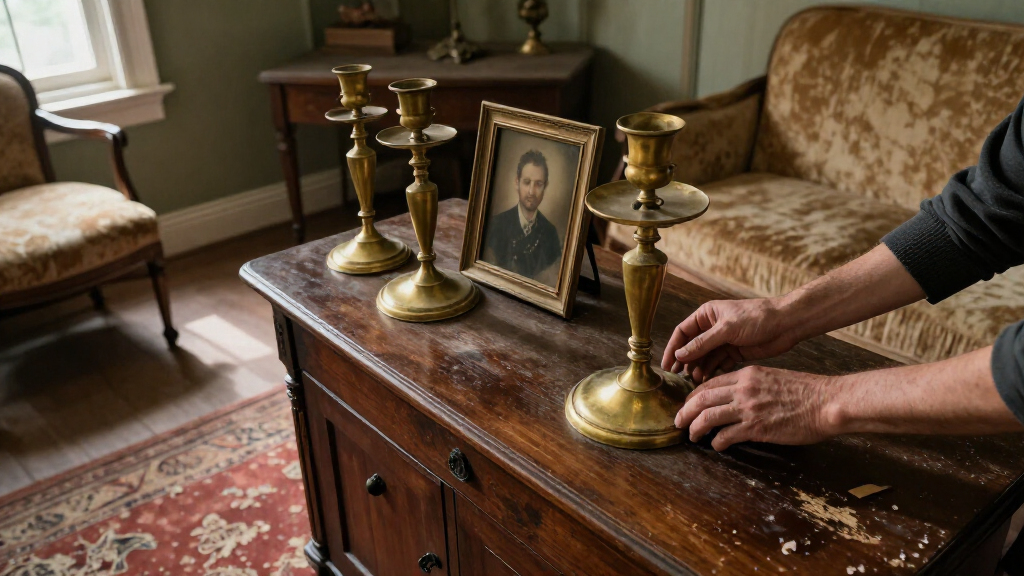
The report identifies several features that may contribute: architecture and materials tied to a local context; sensory details such as textures, sounds and smells; shared gathering spaces; visible history or craftsmanship; and a warm, lived-in atmosphere. Antique objects can carry personal or cultural meaning, but age alone does not establish that a room or building will feel authentic to everyone.
Krause told House Beautiful that people can bring the idea into their homes by using heirlooms, antiques or artwork with personal or cultural significance and by reflecting their own tastes and values. The report cautions that authenticity cannot be recreated simply by copying a look: it develops through real connections, history and emotional resonance, and may take time in a new home.
How Place Shapes Emotional Connection
The concept offers a way to understand why some people find comfort in a historic house, a neighborhood shop or a home furnished with objects that have a past. Such settings may offer a sense of continuity, stability and identity, particularly when they feel distinct from standardized spaces. The report presents that as a possible psychological explanation, not proof that antique decor has the same effect on every person.
For readers making choices about their homes, the distinction matters: a room does not become personally meaningful just because it follows a vintage trend. Individual history, community and sensory experience may matter as much as the objects themselves. The framing also avoids treating a particular design style as objectively authentic.
As an affiliate, we earn on qualifying purchases.
A Subjective Sense of Place
The House Beautiful article connects interest in antiques and historic settings with a wider appetite for homes described as having an “old soul,” as well as for more individual and less uniform interiors. It places that interest against a feeling that modern life and design can be algorithmically mediated and homogenized. Those descriptions provide the article’s cultural framing; they are not presented as findings from a population-wide study.
Krause’s account draws on research into how people describe meaningful places. The report says participants were asked to recall a time they felt connected to a place, and that the perceived authenticity of the place was associated with stronger emotional and psychological connections in those accounts. The supplied article does not provide sample size, effect estimates or study publication details, so the findings cannot be evaluated fully from the report alone.
Place authenticity is also dependent on perspective and circumstance. A neighborhood record store might feel like a genuine local gathering place to one person, while another might see it as a replacement for a shop with deeper personal or community history. The same person’s view may change over time.
“Place authenticity refers to the unique essence of a place that makes it feel genuine, alive, and connected to its history, culture, or community.”
— Ashley Krause, University of Florida doctoral student in psychology, as quoted by House Beautiful
As an affiliate, we earn on qualifying purchases.
What the Research Does Not Establish
The source does not give the study’s full citation, sample size, methods or numerical results, and it does not establish that antique decor itself causes improved well-being. The reported link is between participants’ perceptions of place authenticity and their described emotional or psychological connections; causation is not established in the material provided.
It is also unclear how broadly the findings apply across different populations and kinds of places. Since authenticity is subjective, people may disagree about whether a setting is genuine, and their judgments can shift with experience. The article offers no measure of how common these responses are or whether they persist over time.
As an affiliate, we earn on qualifying purchases.
How the Concept Can Be Applied at Home
Krause’s practical advice, as reported by House Beautiful, is to give a home meaning through objects with personal or cultural significance, choices that reflect residents’ values, and connections that develop through everyday use. For someone in a new build or recently moved home, that points toward a gradual process rather than a quick renovation designed to imitate an old interior.
The report does not announce a new study, policy or upcoming research milestone. Further detail about the underlying study—including its full publication and methods—would be needed to judge the strength and reach of the findings. For now, the article’s main takeaway remains a research-informed interpretation: antiques and old places may resonate because of the histories and connections people associate with them, not simply because they look aged.
As an affiliate, we earn on qualifying purchases.
Key Questions
What does “place authenticity” mean?
Psychologist Ashley Krause describes it as a place’s distinctive quality of feeling genuine and connected to its history, culture or community.
Does antique decor automatically make a home feel authentic?
No. The report says age or appearance alone is not enough. Personal meaning, cultural connections and the way a space is lived in may also matter.
Why might old places feel comforting?
Krause’s account suggests that distinctive sensory details, history and community ties can help people feel connected to a place. The response varies by person.
Is the research proof that antique interiors improve mental health?
No. The article reports an association between perceived place authenticity and participants’ described emotional and psychological connections. The supplied source does not establish that antiques cause better mental health.
Source: rss
Fall Picks
fall essentials
As an affiliate, we earn on qualifying purchases.