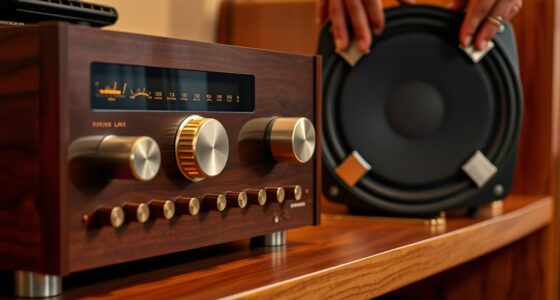
Your turntable’s plinth plays a vital role in shaping sound quality by controlling vibrations, resonance, and external noise. Using the right materials helps prevent unwanted vibrations from reaching the stylus, resulting in clearer, more detailed playback. Layered or composite bases can further reduce resonance and improve stability. Choosing the correct plinth guarantees your records sound their best with less hum and buzz. Keep exploring to discover how to optimize your turntable’s performance even further.
Key Takeaways
- The plinth material influences resonance control, reducing external vibrations that can distort sound quality.
- Properly selected materials enhance stability, leading to clearer, more detailed audio playback.
- Layered or composite plinths improve vibration damping, minimizing hum and buzz in the audio output.
- Material choice affects how well external vibrations are prevented from reaching the stylus, impacting fidelity.
- Optimal plinth materials help prolong turntable longevity and ensure consistent, high-quality sound performance.

The influence of materials extends beyond just damping vibrations. It also impacts the overall resonance behavior of the turntable. A well-chosen material can prevent external vibrations from reaching the stylus, keeping your playback clean and free from hum or buzz. Conversely, a poorly chosen material might amplify these vibrations, resulting in a muddy or distorted sound. This is why many high-end turntables feature layered or composite plinths—combining different materials to enhance stability and minimize resonance. Your choice of plinth material directly affects how well the record stays stable during playback, which in turn influences the clarity, detail, and overall fidelity of your music. Additionally, understanding vibration damping can help in selecting a plinth material that optimizes sound quality and longevity of your turntable.
Frequently Asked Questions
Can a Plinth Improve Overall Sound Clarity?
Yes, a plinth can improve overall sound clarity by enhancing record stability and reducing unwanted resonance. When you choose a sturdy, well-designed plinth, it minimizes vibrations that cause distortion. This stability helps the tonearm track accurately, while resonance filtering prevents muddy sounds. As a result, your playback becomes clearer, more detailed, and more enjoyable, making your listening experience markedly better.
What Materials Are Best for a Record Player Base?
Imagine a sturdy, sleek base cradling your record player, absorbing vibrations like a silent guardian. Choose materials like dense MDF or acrylic for durability, ensuring your turntable stays steady and minimizes unwanted resonance. These materials also boost aesthetic appeal with clean, modern looks that complement your space. By selecting the right base, you enhance sound clarity and protect your prized records, making every listening session a pure, immersive experience.
Does Weight Affect Turntable Vibration Control?
Yes, weight affects turntable vibration control. When you add more weight, it improves record stability and helps dampen vibrations, leading to clearer sound. Heavier turntables resist external disturbances better, reducing unwanted resonance that can distort playback. However, too much weight might strain the motor or bearings. Striking a balance ensures your turntable maintains stability and ideal vibration damping, so you get the best possible sound quality from your records.
How Often Should I Replace My Turntable’s Plinth?
You should replace your turntable’s plinth when it no longer provides ideal stability or if it’s damaged, which can compromise sound quality. A sturdy, well-designed plinth enhances stability, reducing vibrations for clearer sound. While aesthetics matter, prioritize functionality. If your plinth looks worn or warping affects performance, it’s time for a replacement to guarantee your record player performs at its best, delivering the purest listening experience.
Can a Custom Plinth Enhance Audio Performance?
Yes, a custom plinth can enhance your turntable’s tone quality and aesthetic appeal. By choosing materials that dampen vibrations and improve stability, you’ll notice clearer, more detailed sound. Plus, a custom design matches your style, making your setup visually appealing. Investing in a tailored plinth guarantees your record player performs better and looks great, giving you a more immersive listening experience every time you spin a record.
Conclusion
Remember, your turntable’s plinth is the backbone of your listening experience. It’s not just a base but the foundation that holds your music universe together. If you choose wisely, you could transform your sound into a seismic wave that shakes the very soul of your room. So, don’t underestimate the power of a solid plinth—think of it as the mighty fortress that keeps your precious vinyl treasures safe and sound, delivering pure, unadulterated magic.