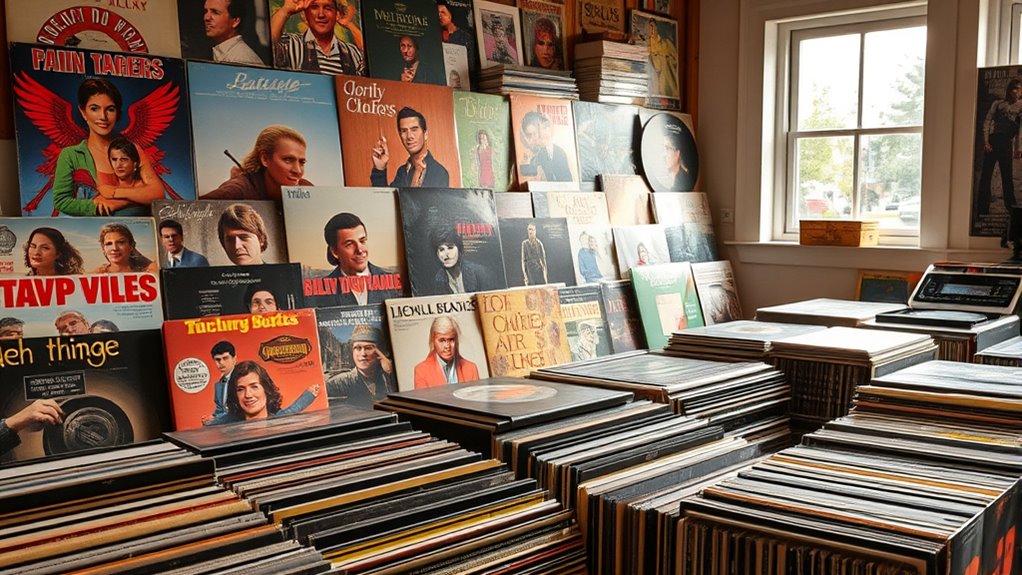
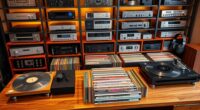
You buy multiple pressings of the same album to explore how different versions sound, as pressing variations can reveal new details and nuances. Each pressing may have unique mastering, materials, or manufacturing techniques that influence tone, dynamics, and overall listening experience. By comparing these, you can find the version that best matches your personal preferences. Keep exploring, and you’ll uncover even more about how vinyl pressing differences shape your favorite albums.
Key Takeaways
- To compare different mastering styles and identify the most natural or preferred sound quality.
- To discover subtle nuances or textures that vary between pressings, enhancing listening enjoyment.
- To find pressings with fewer surface defects or noise for a cleaner listening experience.
- To explore how physical factors like vinyl thickness or stamper quality influence audio fidelity.
- To deepen appreciation and understanding of the production, mastering, and manufacturing processes.

Many audiophiles are increasingly buying multiple pressings of the same album to experience different sound qualities and nuances. This practice stems from a desire to explore how vinyl pressing variations influence the listening experience. Each pressing can differ based on factors like the mastering process, the pressing plant’s equipment, and the materials used. These differences can subtly or considerably impact audio quality, revealing new layers or textures in familiar tracks. When you compare various pressings, you might notice that some sound warmer, while others feel more detailed or vibrant. These audio quality differences aren’t just about volume or clarity—they shape how you perceive the music emotionally and sonically.
Vinyl pressing variations are a major reason why collectors and audiophiles seek out multiple copies of the same album. Different pressings may come from different countries, studios, or even different years. For example, a U.S. pressing might sound distinct from a European one, not just because of mastering choices but also due to the quality of the vinyl and the pressing process. Limited editions or reissues often feature remastered audio, which can either enhance or alter the original sound. These variations allow you to compare and select the version that best resonates with your listening preferences. Sometimes, the differences are subtle—like a slightly richer bass or a more open stereo image—while other times, they are more pronounced, revealing nuances you might have missed before.
The quest for perfect sound quality drives many to explore these variations. You may find that a particular pressing offers a more natural tone or better dynamics, making it a preferred version for critical listening. Conversely, some pressings might introduce noise, surface defects, or other imperfections, reminding you that not all vinyl is created equal. This exploration is part of the joy, as you learn what specific factors contribute to the overall audio experience. Whether it’s the thickness of the vinyl, the type of stamper used, or the remastering techniques, each element can influence how the music feels in your space.
Understanding the mastering process and its impact on sound quality is crucial for audiophiles seeking the best listening experience. Ultimately, buying multiple pressings isn’t just about collecting; it’s about deepening your connection to the music. You get to compare, analyze, and appreciate the nuances that make each pressing unique. This pursuit not only enhances your understanding of vinyl’s complexities but also ensures that your listening experience is as rich and authentic as possible. By appreciating vinyl pressing variations and their impact on audio quality differences, you become more attuned to the subtle art of high-fidelity music reproduction.
Frequently Asked Questions
Do Different Pressings Sound Significantly Different?
Yes, different pressings can sound markedly different. Vinyl coloration and pressing plant origins influence the sound quality, with some pressings offering clearer, more detailed audio. Variations in mastering, materials, and manufacturing processes mean you might notice differences in warmth, depth, or noise levels. As an audiophile, exploring these pressings helps you find the version that best captures the album’s true essence, enhancing your listening experience.
How Do I Identify a High-Quality Pressing?
To identify a high-quality pressing, start by inspecting the vinyl coloration—look for clear, consistent color without cloudiness or streaks. Check the cover artwork for sharp, vibrant images and minimal wear. Listen for a clean, detailed sound with little surface noise. Also, research the pressing’s mastering details and label reputation. A well-made pressing enhances your listening experience, making it worth the extra effort to find the best version.
Are Limited Edition Pressings Worth Buying?
Limited edition pressings are often worth buying because they appeal to collector motivation and pressing scarcity. Did you know that only 1,000 copies might be pressed? This rarity can boost a record’s value and uniqueness. If you’re passionate about collecting, owning a limited edition gives you a sense of exclusivity and connection to the artist. Plus, the special packaging and sound quality often surpass standard editions, making it a worthwhile investment.
What Factors Influence the Value of Multiple Pressings?
The value of multiple pressings depends on pressing variations like remastering, edition, and condition, which can enhance rarity and appeal. Collector motivations drive you to seek specific pressings for better sound quality or unique artwork. Limited editions or rare pressings often increase in value over time. Your interest in these factors influences how much each pressing is worth, making careful selection a key part of collecting.
Can Digital Remasters Replace Multiple Vinyl Pressings?
Did you know that over 60% of audiophiles prefer vinyl for its superior sound quality? Digital remasters can’t fully replace multiple vinyl pressings because digital file formats and streaming quality often lack the warmth and depth of analog. While remasters improve clarity, they rarely capture the nuanced sound of original pressings. For true audiophiles, owning multiple pressings offers a tactile, authentic experience that digital formats can’t replicate.
Conclusion
So, next time you see an audiophile with a mountain of nearly identical vinyl, just remember—they’re not obsessed; they’re on a noble quest for sonic perfection. Who needs clarity when you can chase the elusive “best pressing,” right? It’s all about the thrill of the hunt—and maybe, just maybe, convincing yourself that spending a fortune on different versions makes you a true music connoisseur. Happy collecting, or should I say, endless chasing?