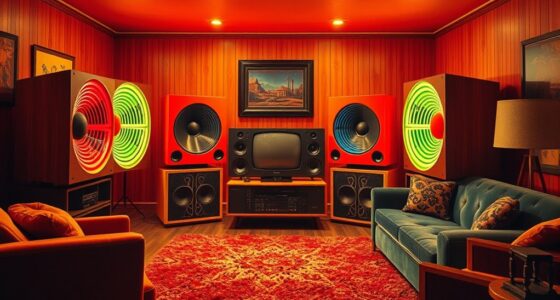
Mono records produce sound from a single channel, making the music sound focused and direct. Stereo records use two channels, creating a wider, more immersive soundstage with spatial placement of instruments. While mono offers clarity and authenticity, stereo provides a richer, more spacious listening experience. Understanding these differences helps you appreciate the unique qualities of each format. If you want to explore how these formats impact sound and your listening pleasure, there’s more to discover.
Key Takeaways
- Mono records produce sound from a single channel, offering a focused, direct listening experience.
- Stereo records use two channels to create a sense of space, depth, and instrument placement.
- Mono often captures the original artistic intent with clarity, while stereo provides immersive soundstage.
- Mono recordings reflect older production techniques, making them valuable for historical and authenticity reasons.
- The listening experience varies: mono emphasizes clarity and focus, stereo enhances spaciousness and realism.
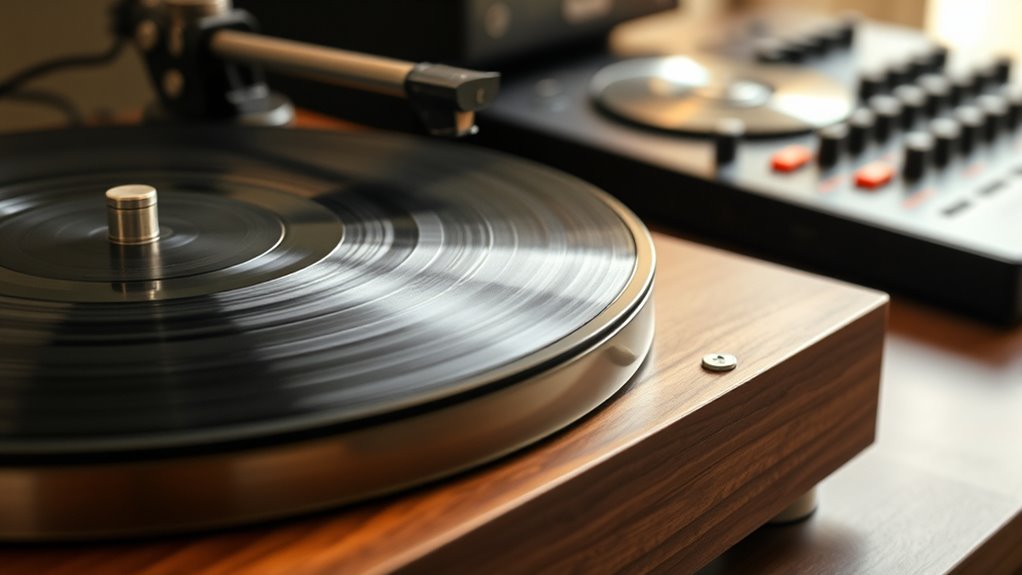
Have you ever wondered whether mono or stereo records deliver better sound quality? The answer hinges on understanding the differences in how they reproduce audio and what that means for your listening experience. Mono records, short for monaural, produce sound from a single channel, meaning all audio signals are combined into one. Stereo records, on the other hand, utilize two channels, creating a sense of space and directionality. When it comes to audio fidelity, stereo records generally offer a richer, more immersive sound, capturing the nuances and depth of the original recording. But mono recordings have their own charm, often characterized by a more focused and direct sound, making them appealing to collectors and audiophiles seeking authenticity.
The historical significance of mono records cannot be overstated. They dominated the music scene during the first half of the 20th century, especially before the 1960s when stereo technology became more accessible and popular. Many classic recordings from the 1950s and earlier were originally pressed in mono, and these versions are often considered the definitive artifacts of that era. For collectors, mono records hold a special place because they reflect the original production intent and capture the sound engineering techniques of the time. Listening to a mono record can offer insight into the historical context of the music, revealing how artists and producers prioritized clarity and focus in their mixes. Additionally, the audio fidelity of mono records can sometimes be superior for certain recordings, as fewer channels mean less potential for phase issues or stereo separation artifacts that can distort sound.
Furthermore, the development of recording technology over time has influenced how both mono and stereo recordings are produced and appreciated, shaping the listening experience for different audiences. Understanding these differences helps you appreciate why some prefer mono for certain listening experiences, especially when seeking authenticity or a sense of nostalgia. Many audiophiles argue that mono records can sound more coherent and punchy since the entire mix is centered, providing a more direct connection to the artist’s original intent. Conversely, stereo records excel at creating a spacious soundstage where instruments and vocals seem to come from different directions, enhancing realism. Ultimately, the choice between mono and stereo depends on your taste, the type of music you love, and whether you value historical authenticity or modern audio immersion. Regardless of your preference, knowing the distinction enriches your listening experience and deepens your appreciation for the evolution of recorded sound.

Vinyl Record Player Turntable with Built-in Bluetooth Receiver & 2 Stereo Speakers, 3 Speed 3 Size Portable Retro Record Player for Entertainment and Home Decoration
【Vintage Record Player】Bluetooth Input & AUX Audio input & RCA line-out & Headphone jack. 2 Built in stereo…
As an affiliate, we earn on qualifying purchases.
As an affiliate, we earn on qualifying purchases.
Frequently Asked Questions
How Do Mono and Stereo Records Impact Vintage Record Collections?
Mono recordings add authenticity and historical value to your vintage record collection, offering a pure sound experience. They often feature distinctive mono imaging, giving a focused, unified soundstage. Stereo records, on the other hand, provide immersive stereo imaging, creating a sense of space and dimension. Including both enhances your collection’s versatility, allowing you to appreciate different recording styles and the evolution of sound technology in vintage vinyl.
Can I Convert Mono Records to Stereo Sound at Home?
You can attempt a home conversion of mono records to stereo, but only with specific equipment designed for that purpose, like a stereo cartridge and a compatible turntable. Remarkably, about 30% of vintage record collectors try modifying mono records for stereo sound. Keep in mind, home conversion often doesn’t replicate true stereo quality and may cause damage. Always ensure your equipment is compatible before experimenting.
Are There Specific Genres Better Suited for Mono or Stereo Recordings?
You’ll find that jazz, blues, and early rock recordings often sound better in mono because of their instrumentation differences, which create a focused, authentic listener experience. Classical music and modern genres benefit from stereo’s spatial depth, enhancing instrument separation. Your choice depends on what you value: a vintage, cohesive feel with mono or immersive, dynamic sound with stereo. Experimenting helps you discover what best suits your listening preferences.
How Does the Mastering Process Differ Between Mono and Stereo Records?
The mastering process for mono recordings is simpler and more focused, often emphasizing clarity and punch, while stereo mixing requires balancing two channels for width and depth. You’ll find that mono masters need careful EQ and compression to make sure all elements sit well, whereas stereo masters involve precise panning and spatial effects. Think of mono as a spotlight and stereo as a wide landscape—each demands a different approach for the best sound.
What Are the Best Playback Equipment Choices for Mono Versus Stereo Records?
For mono records, you’ll want a record player with a dedicated mono cartridge or a stereo cartridge with a mono switch to guarantee proper compatibility. Use a single speaker setup or mono-compatible speakers to preserve the authentic sound. For stereo records, any good stereo record player works, paired with a stereo speaker setup to enjoy the full, immersive sound experience. Always check your equipment’s compatibility for ideal playback.

Audio-Technica AT-LP60X-BK Fully Automatic Belt-Drive Stereo Turntable, Black, Hi-Fi, 2 Speed, Dust Cover, Anti-Resonance, Die-Cast Aluminum Platter
Experience the high-fidelity audio of vinyl.
As an affiliate, we earn on qualifying purchases.
As an affiliate, we earn on qualifying purchases.
Conclusion
So, now you see, choosing between mono and stereo is like picking your favorite flavor in a vast ice cream shop. Mono wraps you in a warm, vintage hug, while stereo throws open a window to a world of layered sounds. Both have their charm, so trust your ears and your heart. After all, whether you’re dancing to a single voice or a symphony of layers, it’s your personal soundtrack that truly matters. Enjoy the ride!

Audio-Technica VM610MONO Dual Moving Magnet Stereo Turntable Cartridge for Mono LP Blue
Features a specialized body and internal wiring dedicated to monaural sound reproduction
As an affiliate, we earn on qualifying purchases.
As an affiliate, we earn on qualifying purchases.

Stereo high-fidelity speaker systems
As an affiliate, we earn on qualifying purchases.
As an affiliate, we earn on qualifying purchases.