To build a budget vintage hi-fi system, focus on sourcing affordable, well-maintained tube amplifiers from brands like Dynaco or Eico, and combine them with refurbished or vintage speakers such as Klipsch or Wharfedale. Proper placement and pairing ensure quality sound without high costs. Restoring older speakers can boost performance and save money. Keep experimenting with setup and components, and you’ll discover how to achieve warm, rich sound on a budget. Learn more to perfect your vintage setup.
Key Takeaways
- Focus on affordable vintage tube amplifiers from brands like Dynaco, Eico, or Fisher for warm sound at low cost.
- Source quality yet budget-friendly vintage speakers such as Klipsch, AR, or Wharfedale, and consider refurbishing older models.
- Match speaker size and power handling with your amplifier to prevent damage and optimize sound performance.
- Experiment with speaker placement—ear level, proper distance, and away from walls—to enhance stereo imaging and clarity.
- Prioritize component compatibility and setup adjustments over buying new gear for a cost-effective, high-quality vintage sound system.
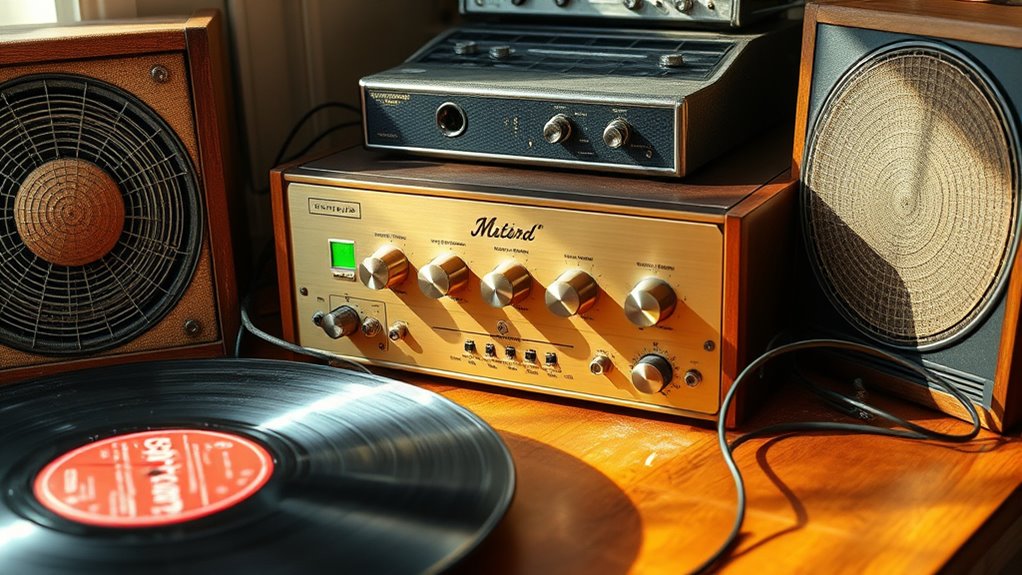
Creating a budget hi-fi system doesn’t mean you have to sacrifice sound quality. In fact, with a little know-how, you can assemble a vintage-inspired setup that sounds fantastic without breaking the bank. One of the most vital components to contemplate is the amplifier, and tube amplifiers are a great choice. They offer warm, rich tones often associated with high-end gear, yet many vintage models can be found at affordable prices. Look for well-maintained used tube amps; they often deliver superior sound compared to modern solid-state counterparts at a lower cost. Pairing this with carefully chosen speakers is essential, but equally important is your speaker placement. Proper positioning can dramatically improve sound clarity and stereo imaging, making your system more enjoyable.
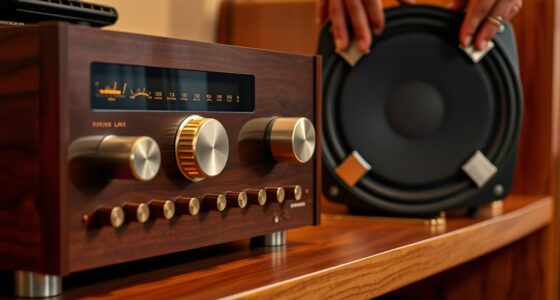
A budget hi-fi can deliver warm, rich sound with vintage tube amps and careful speaker placement.
When setting up your vintage hi-fi, start with the tube amplifier as your foundation. These amps tend to have a simpler design, which makes them easier to repair or refurbish if needed. Keep an eye out for models from brands like Dynaco, Eico, or Fisher, which are known for their durability and warm sound. Once you have your amp, focus on speaker placement. Don’t just set your speakers against the wall or on the floor; experiment with their positioning. Typically, placing them at ear level and forming an equilateral triangle with your listening position yields the best stereo image. Slight adjustments can reduce unwanted reflections and bass boom, giving you a cleaner, more balanced sound.
You don’t need to spend a fortune on speakers either. Vintage speakers from brands like Klipsch, AR, or Wharfedale often sell at reasonable prices and deliver excellent audio. When selecting speakers, consider their size and power handling — matching them well with your amp prevents distortion and damage. Additionally, refurbishing or gently restoring older speakers can be a cost-effective way to enhance their performance. Remember, the placement of your speakers influences sound quality more than many realize. Avoid placing them too close to walls or corners, which can cause bass exaggeration, and instead, experiment with distances until you find the sweet spot.
Furthermore, understanding the importance of color accuracy and how it affects the perceived quality of audio equipment can help in choosing complementary components that enhance your listening experience. Ultimately, building a budget hi-fi is about patience and a bit of experimentation. Focus on finding a good vintage tube amplifier, choose speakers that suit your taste and budget, and pay close attention to speaker placement. With these steps, you’ll create a system that delivers warm, detailed sound without draining your wallet. It’s all about making smart choices and tweaking your setup until it sounds just right. By prioritizing quality over newness, you’ll enjoy a vintage-inspired sound that rivals, if not surpasses, more expensive modern systems.
Frequently Asked Questions
How Do I Identify Authentic Vintage Audio Equipment?
To identify authentic vintage audio equipment, use collector tips like examining authenticity markers such as serial numbers, logos, and build quality. Check for consistent branding, original labels, and period-specific design features. Research the model’s history and compare it with trusted sources or collector guides. Handling the equipment and inspecting internal components can also reveal signs of age and originality, helping you confidently distinguish genuine vintage gear from reproductions or fakes.
What Are the Best Online Sources for Vintage Hi-Fi Parts?
You might stumble upon some great online sources for vintage hi-fi parts when you least expect it. Check out eBay and Reverb, where enthusiasts sell rare components and offer restoration techniques. Don’t forget specialty stores like vintageaudio.com or audiogon.com—they’re treasure troves for sourcing rare parts. Combining these with forums and social media groups can help you find exactly what you need, making your vintage sound system truly exceptional.
How Can I Test Vintage Components Before Purchasing?
To test vintage components before buying, bring a portable tester for tube amplifiers to check for shorts and proper resistance. Listen carefully for hums, crackles, or distortion, especially with tube amps, to guarantee good condition. Match speakers closely to the vintage amp’s impedance and power rating, and ask if you can test playback or compare sound quality. This way, you’ll ensure your vintage gear performs well and sounds great.
Are There Any Safety Considerations When Restoring Vintage Gear?
When restoring vintage gear, you need to prioritize electrical safety and check component insulation thoroughly. Always unplug the device before working on it, and use a multimeter to test for grounding issues and insulation breakdown. Replace any damaged or degraded wiring, especially around high-voltage areas. Wear insulated gloves and work in a dry environment to prevent shocks. Ensuring these safety measures helps protect you and preserves your vintage equipment’s integrity.
How Do I Optimize Sound Quality on a Budget?
Think of your system as a garden where sound blooms. To optimize sound quality on a budget, focus on speaker placement—position your speakers for balanced sound and minimal reflections. Keep cables tidy through good cable management to avoid interference and loss. Small adjustments like these can make a big difference, helping your vintage gear deliver richer, clearer audio without breaking the bank. Your listening experience will flourish with just a little care.
Conclusion
By carefully selecting vintage components and staying within your budget, you can create impressive hi-fi sound without breaking the bank. Imagine finding a classic receiver at a thrift store and pairing it with some well-chosen speakers; suddenly, you have a warm, rich sound system that rivals high-end setups. With patience and a bit of research, you’ll enjoy premium audio quality on a budget—proving that great sound doesn’t have to come with a hefty price tag.