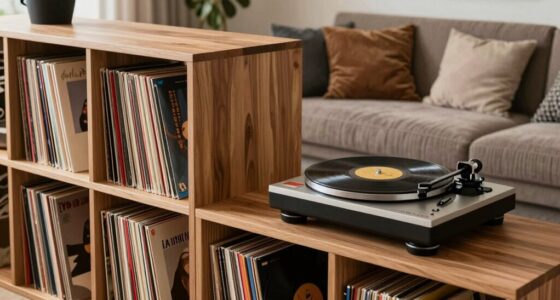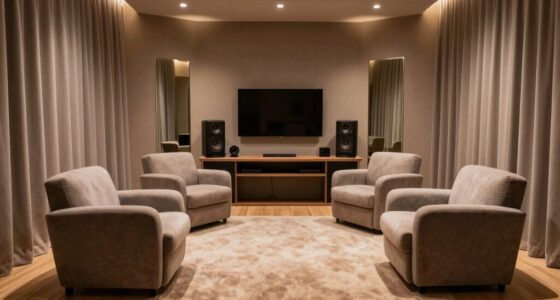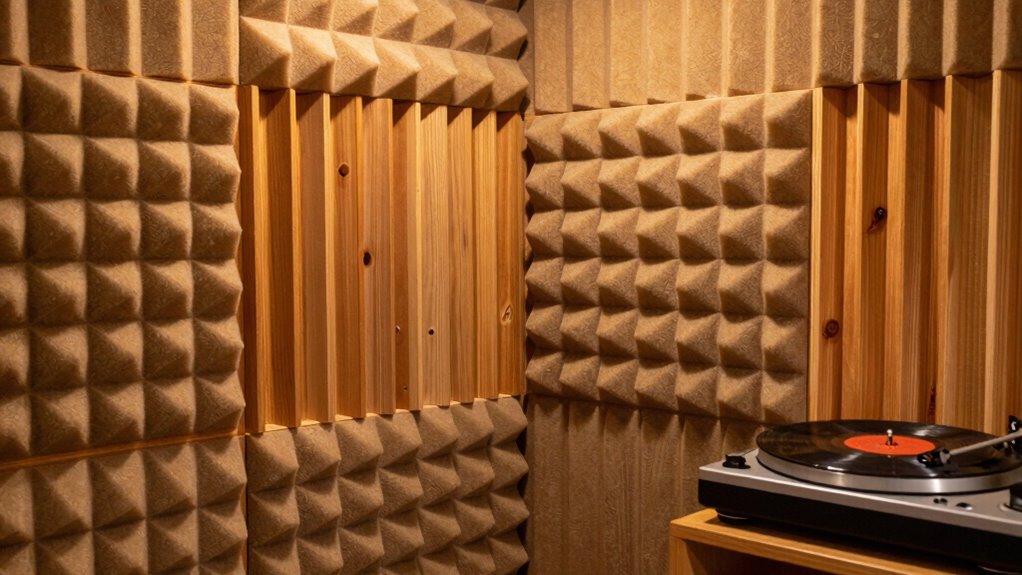

To create a warmer analog listening experience, choose wall materials that balance absorption and reflection. Wood paneling adds mild diffusion and warmth, while fabric-covered surfaces absorb high-frequency reflections, preventing harsh sounds. Avoid overly reflective or bare walls, as they can cause brightness or resonance. Combining soft, porous materials with subtle diffusion helps soften reflections while maintaining some liveliness, enhancing natural sound. Keep exploring to discover how these choices can transform your space into a richer, more authentic listening environment.

Get furniture and decor delivered free with Prime
- Fast, free delivery on millions of items
- Prime Video, Amazon Music and more included
- Member-only deals all year
Key Takeaways
- Use wood paneling to provide mild diffusion and warmth while balancing reflection and absorption.
- Incorporate fabric-covered walls to absorb high-frequency reflections and soften sound.
- Avoid overly reflective surfaces like bare drywall or glass to prevent harsh, metallic sounds.
- Combine diffusive and absorptive materials to create a natural, warm, and lively acoustic environment.
- Minimize room resonance with soft, porous materials to enhance clarity and preserve musical detail.
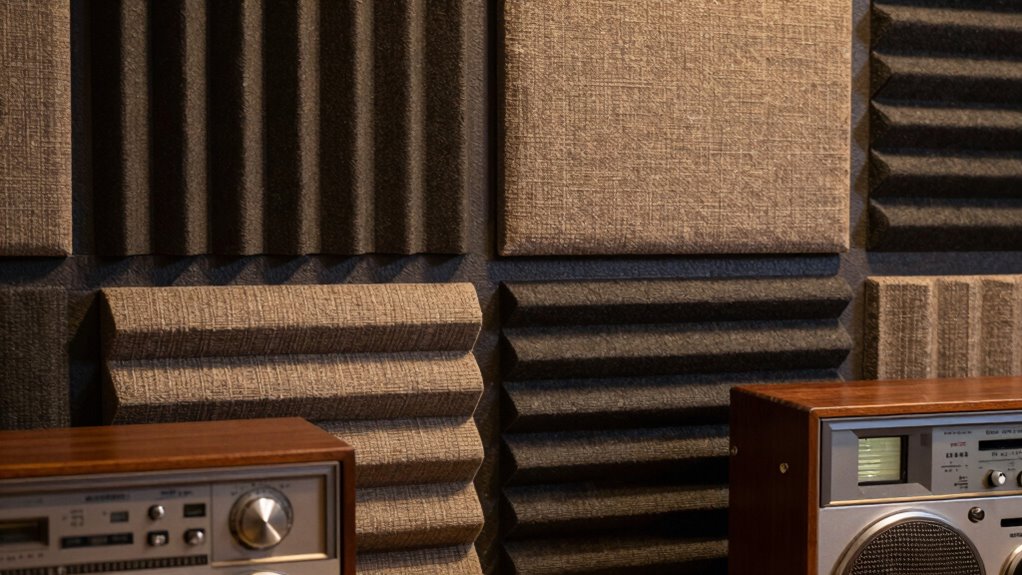
When it comes to enjoying high-quality analog listening, the materials you choose for your walls can make a vital difference. The right wall materials help create an environment where sound feels warm, natural, and immersive. One of the key factors to consider is acoustic treatment. Proper acoustic treatment involves selecting materials that absorb or diffuse sound waves, reducing unwanted echoes and minimizing room resonance. When your walls are too reflective, sound waves bounce around excessively, causing muddiness and blurring the details in your music. Incorporating materials like acoustic panels, foam, or even thick fabric-covered panels can help tame these reflections, allowing the true character of your analog recordings to shine through with clarity. Additionally, understanding how sound waves behave in enclosed spaces can guide your choices in optimizing room acoustics for a richer listening experience.
Room resonance is another essential aspect that influences your listening experience. It occurs when certain frequencies are amplified or diminished due to the size and shape of your room combined with the wall materials. Hard, reflective surfaces like bare drywall or glass tend to boost room resonance, leading to a boomy, unnatural sound. To counter this, you should opt for wall materials that help break up these standing waves. Soft, porous materials like heavy curtains, plush wall tapestries, or specially designed acoustic tiles absorb specific frequencies, preventing resonance from coloring your sound. When you balance absorption and diffusion, you create a more neutral environment, revealing the warmth and richness of your analog recordings.
The best wall materials for a warmer listening experience are those that strike a balance between absorbing excessive sound and allowing some natural reflections to add depth. Wood paneling, for example, can provide a mild diffusion effect, adding warmth without overly deadening the room. Similarly, fabric-covered surfaces help absorb high-frequency reflections, which can make your listening space feel more intimate and cozy. Avoid overly reflective surfaces or bare walls that reflect too much sound, as they can make your audio sound harsh or metallic. Instead, aim for a combination of materials that soften reflections while maintaining enough liveliness to preserve the musicality.
Ultimately, your goal is to create a space where sound is smooth, balanced, and true to the original recording. By thoughtfully selecting wall materials that support effective acoustic treatment and minimize room resonance, you can greatly enhance your analog listening experience. The right environment transforms your space into a haven for warm, detailed, and authentic sound, allowing you to enjoy your favorite records at their best.
Products Worth Considering

Samsung 48 4K OLED Smart TV (2026) with WireLogic 8ft Ultra High Speed HDMI Cable

Levoit Core 600S-P Smart Air Purifier for Large Rooms

Levoit Core 400S-P Smart Air Purifier for Large Rooms
As an affiliate, we earn on qualifying purchases.
Frequently Asked Questions
How Does Wall Material Affect Sound Reflection and Absorption?
Wall material directly impacts sound reflection and absorption, affecting your listening experience. Hard surfaces like concrete cause more sound reflection and wall resonance, leading to echo and muddiness. Softer materials like acoustic panels or plush fabrics promote sound diffusion and absorption, reducing resonance and creating a warmer, clearer sound. Choosing the right wall material balances reflection and absorption, enhancing your analog listening by minimizing unwanted echoes and enriching sound quality.
Are There Eco-Friendly Wall Materials Suitable for Acoustic Improvement?
They say, “You are what you surround yourself with.” Eco-friendly wall materials like recycled cork, reclaimed wood, and natural fiber panels are sustainable options that also enhance acoustic warmth. These materials absorb sound effectively, reducing echo and creating a cozy listening environment. By choosing sustainable options, you support the environment while improving your space’s sound quality, making your listening experience richer and more eco-conscious.
Can Wall Treatments Improve Bass Response in a Listening Room?
Yes, wall treatments like decorative panels and acoustic panels can improve bass response in your listening room. By strategically placing acoustic panels on walls, especially behind speakers and along corners, you reduce bass trapping issues and enhance clarity. Decorative panels not only add aesthetic appeal but also help absorb and diffuse low frequencies, creating a richer, warmer sound environment. Proper placement maximizes their impact on your bass response.
How Does Wall Thickness Influence Sound Quality in a Listening Space?
Wall thickness influences sound quality by controlling sound absorption, reflection, and resonance. Thicker walls reduce unwanted echoes, enhance bass clarity, and improve overall warmth in your listening space. You can complement this by choosing wall colors that absorb or reflect sound thoughtfully, and adding decorative panels that break up sound waves. Together, these elements create a cozy, immersive environment, ensuring your music feels richer, fuller, and more authentic.
What Maintenance Is Required for Acoustic Wall Materials?
You should regularly dust and vacuum your acoustic wall materials to keep them clean and effective. Check for any signs of damage or sagging, and replace or repair as needed. Consider soundproofing options that blend seamlessly with your aesthetic considerations, like fabric-covered panels or textured wood, to uphold both sound quality and visual appeal. Proper maintenance ensures your listening environment stays warm, inviting, and acoustically optimized.
Conclusion
Choosing the right wall materials can transform your listening space into a warm, immersive haven. Imagine adding dense, acoustic-friendly panels in your dedicated audio room—like a hobbyist did in their basement—significantly improving sound clarity and warmth. By selecting materials that absorb and diffuse sound effectively, you create an environment where every note feels more vibrant and genuine. Invest in the right walls, and your analog listening experience becomes richer, more intimate, and truly memorable.