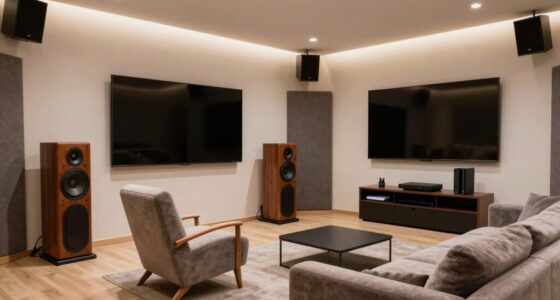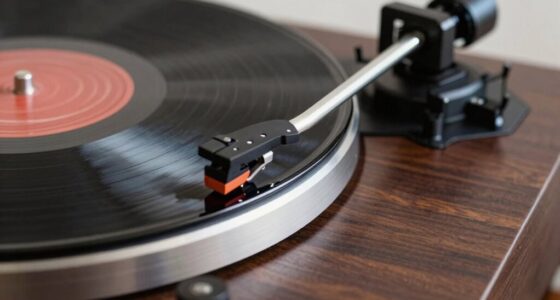

Vintage receivers changed your living room by turning a simple electronic device into a bold, stylish statement piece. With their intricate details, chrome accents, and colorful dials, they add personality, warmth, and nostalgia to your space. These receivers influence decor by blending old-world craftsmanship with modern comfort, becoming conversation starters and focal points. If you want to see how they continue to shape interior styles today, keep exploring—they hold more stories than you might expect.
Key Takeaways
- Vintage receivers serve as bold statement pieces, adding character and visual interest to living room decor.
- They reflect a bygone era of craftsmanship, enriching the room’s historical and cultural ambiance.
- Their intricate designs and colorful dials create a nostalgic, retro aesthetic that transforms space atmospheres.
- Incorporating vintage receivers enhances room personality, blending old-world charm with modern comfort.
- These devices act as conversation starters, connecting guests to the technological history of American design.
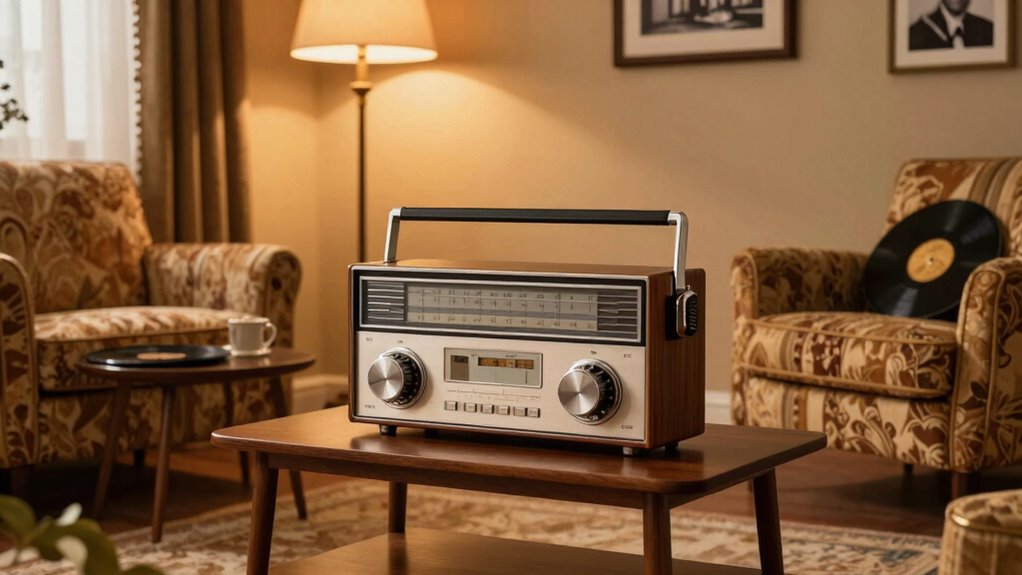
Vintage receivers have long been a centerpiece of American living room style, blending technological nostalgia with timeless design. You likely remember the charm of a vintage radio sitting proudly on a shelf or cabinet, its knobs and dials offering a tactile connection to a bygone era. These devices weren’t just about listening; they became statement pieces that defined the room’s character. Over time, vintage radios and their sleek, often wood-paneled exteriors influenced the broader aesthetic of retro interior design, transforming ordinary spaces into nostalgic retreats.
Vintage receivers serve as iconic focal points, blending nostalgia, craftsmanship, and timeless style in any living room.
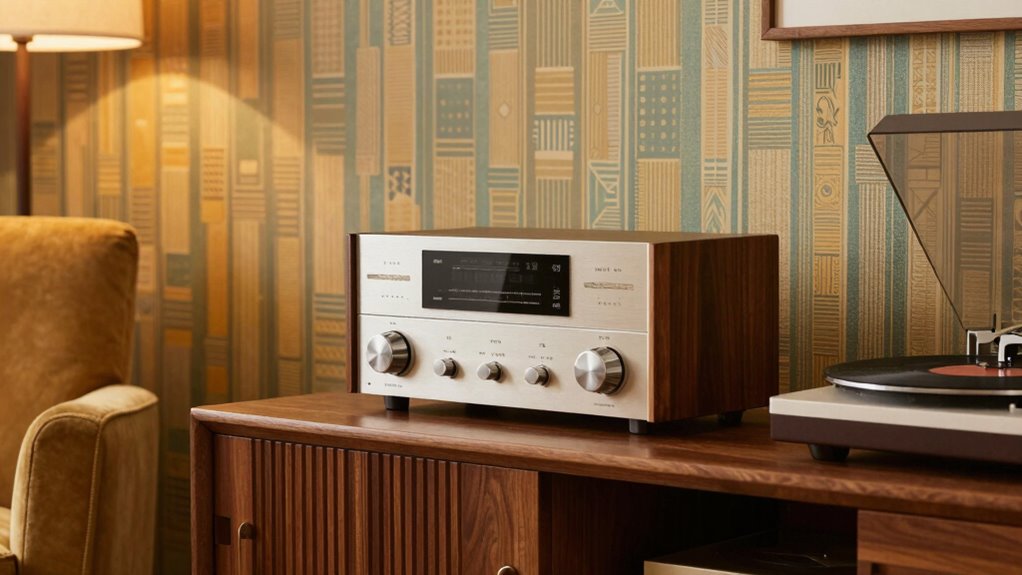
When you incorporate a vintage receiver into your living room, you’re not just adding audio equipment—you’re creating a focal point that reflects a specific era of American design. These receivers, with their bold lines and intricate details, bring a sense of authenticity and warmth. They often feature elements like chrome accents, colorful dials, and textured knobs, which contrast beautifully with modern decor. This mix of old and new helps craft a unique, layered look that is both functional and decorative.
The impact of vintage receivers extends beyond their visual appeal. They evoke a sense of history and craftsmanship that’s hard to find in contemporary electronics. When you set one up as part of your retro interior design, you’re making a statement about your appreciation for quality, style, and the stories embedded in these devices. Many enthusiasts collect vintage radios, appreciating their mechanical complexity and the way they encapsulate moments of technological innovation. Restoring or displaying a vintage radio becomes an act of preservation, connecting you to the early days of electronic entertainment and the culture that surrounded it. Additionally, the integration of vintage fire pits or other outdoor elements can enhance the nostalgic atmosphere, creating a cohesive space that celebrates both indoor and outdoor vintage appeal.
In a living room styled with vintage receivers, you’ll notice how they influence the overall ambiance. They serve as conversation starters, inviting guests to ask about their history and significance. These pieces often pair well with other retro elements—think mid-century furniture, bold textiles, and curated memorabilia. The aesthetic created is one that balances nostalgia with contemporary comfort, making the space both inviting and visually captivating. The result is a cohesive look that celebrates nostalgia without feeling outdated. You get to enjoy the warm, inviting atmosphere that vintage radio-inspired decor creates, blending function with style in a way that’s both charming and timeless.
Ultimately, vintage receivers changed the look of the American living room by turning electronic appliances into artful focal points. They helped shift interior design toward a nostalgic aesthetic that emphasizes personality, craftsmanship, and historical significance. Incorporating electronic devices like vintage radios into your space highlights the importance of preserving technological history and craftsmanship. When you choose to incorporate a vintage radio into your space, you’re not just accessorizing; you’re creating a living tribute to the golden age of American design, where technology and style went hand in hand.

Sony STRDH190 2-ch Home Stereo Receiver with Phono Inputs & Bluetooth Black
Amplify and enjoy your home audio experience in the comfort of your home.Frequency band : 2,400 MHz –…
As an affiliate, we earn on qualifying purchases.
As an affiliate, we earn on qualifying purchases.
Frequently Asked Questions
How Did Vintage Receivers Influence Modern Home Decor Trends?
Vintage receivers influence modern home decor by inspiring a nostalgic yet stylish vibe. You notice how their sleek designs and retro accents shape your space, making speaker placement both functional and aesthetic. Their impressive power output becomes a statement piece, blending form and function seamlessly. These receivers encourage you to mix vintage charm with contemporary decor, creating a unique environment that celebrates history while staying modern.
What Materials Were Commonly Used in Vintage Receiver Manufacturing?
Imagine holding a vintage receiver from the 1960s; it’s often built with materials like metal chassis, wood veneer, and plastic knobs. The materials origin comes from metal ore mines, wood forests, and petroleum sources, while manufacturing processes involve casting, veneering, and molding. These durable materials guaranteed longevity and style, reflecting the era’s craftsmanship values. Such choices made vintage receivers both functional and visually appealing, shaping the nostalgic charm of retro home decor.
Are Vintage Receivers Still Functional With Today’s Technology?
Vintage receivers can still be functional with today’s technology, especially if you’re willing to do some maintenance or upgrades. Their collector’s value and unique audio quality make them desirable, even if they lack modern features. You might need adapters or repairs to connect them to current devices, but their warm sound and nostalgic appeal often outweigh these challenges. So, yes, many vintage receivers remain a practical and charming choice today.
How Did the Design of Vintage Receivers Reflect Cultural Shifts?
You see, the design of vintage receivers reflects cultural symbolism and technological evolution. Their bold, angular shapes and shiny dials symbolize post-war optimism and the rise of consumer electronics. As technology advanced, designs shifted to sleek, minimalist styles, mirroring changing societal values. These receivers became more than just audio equipment; they embodied a cultural shift towards modernity, innovation, and a desire for stylish, functional home entertainment.
What Are the Best Ways to Restore or Maintain Vintage Receivers?
Imagine your vintage receiver as a cherished garden needing gentle care. Use restoration techniques like cleaning contacts, replacing worn parts, and polishing surfaces to revive its charm. Regular maintenance tips include avoiding dust buildup, keeping it in a stable environment, and inspecting connections. Treat it with patience and respect, much like tending a delicate plant, ensuring your vintage receiver stays vibrant and functional for years to come.
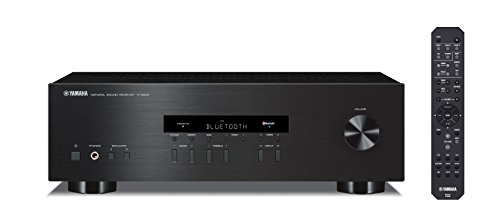
YAMAHA R-S202BL Stereo Receiver
Advanced circuitry design.Speaker selector for 2 systems. Input Sensitivity (CD): 500 MV/47k ohmsHead phone terminalAuto power standby functionSpeaker…
As an affiliate, we earn on qualifying purchases.
As an affiliate, we earn on qualifying purchases.
Conclusion
Vintage receivers don’t just amplify sound—they amplify the spirit of an era, transforming your living room into a living museum. Like a well-worn record, they carry stories of design, innovation, and nostalgia, weaving history into your modern space. By choosing these timeless pieces, you’re not just decorating; you’re creating a symphony of style that echoes through time. Embrace the vintage, and let your living room sing with the echoes of the past.

Antique Radio Restoration Guide
Used Book in Good Condition
As an affiliate, we earn on qualifying purchases.
As an affiliate, we earn on qualifying purchases.

BAXTON STUDIO Haversham Mid-Century Retro Modern TV Stand Entertainment Center and Display Unit
Mid-century modern design to stand and display unit
As an affiliate, we earn on qualifying purchases.
As an affiliate, we earn on qualifying purchases.