
To combine Victorian elegance with industrial ruggedness, focus on balancing ornate furniture with raw textures like exposed brick walls. Use contrasting colors such as deep jewel tones alongside neutral grays and metallic accents to unify the look. Incorporate layered lighting and statement pieces to create harmony between the styles. This thoughtful blend highlights both eras’ character while ensuring a cohesive space. Keep exploring to discover more design strategies that beautifully fuse these distinctive styles.
Key Takeaways
- Balance ornate Victorian furniture with raw industrial elements like exposed brick for visual harmony.
- Use layered lighting—warm chandeliers and vintage fixtures—to soften raw textures and enhance ambiance.
- Incorporate deep, jewel-toned colors and metallic accents to unify the elegant and rugged styles.
- Focus on contrast—pair intricate carvings with textured brick to create a cohesive, balanced space.
- Select large statement pieces and thoughtful decor to blend eras while maintaining a timeless, inviting atmosphere.
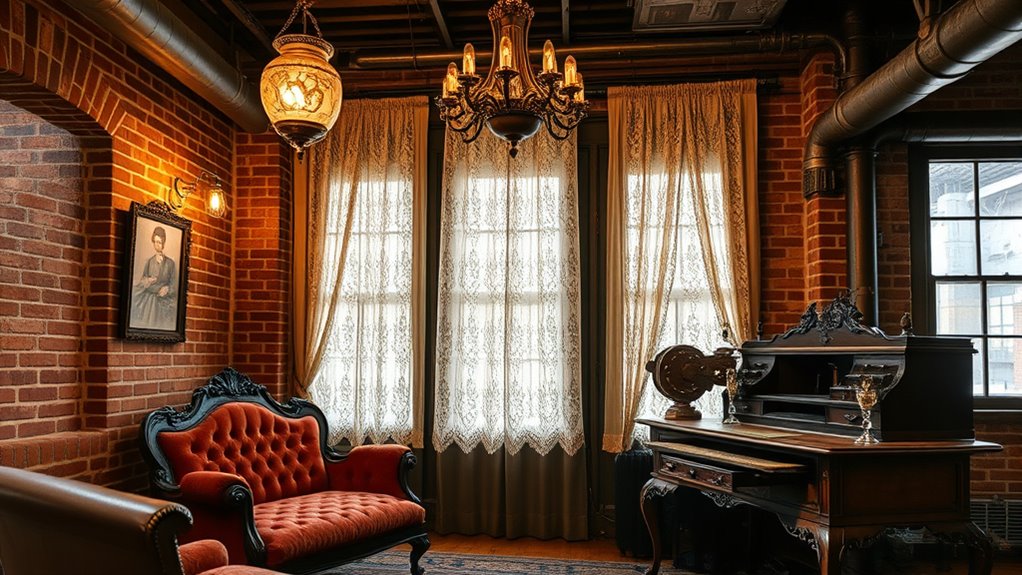
The Victorian and Industrial eras represent two distinct periods that markedly shaped modern society, yet they often intersect in history and design. When you combine elements from both in a single room, you create a space that’s rich in character and contrast. Think about incorporating ornate furniture, a hallmark of Victorian style, with the raw, unfinished appeal of exposed brick from the Industrial age. This pairing allows you to blend elegance with ruggedness, resulting in a look that’s both sophisticated and edgy.
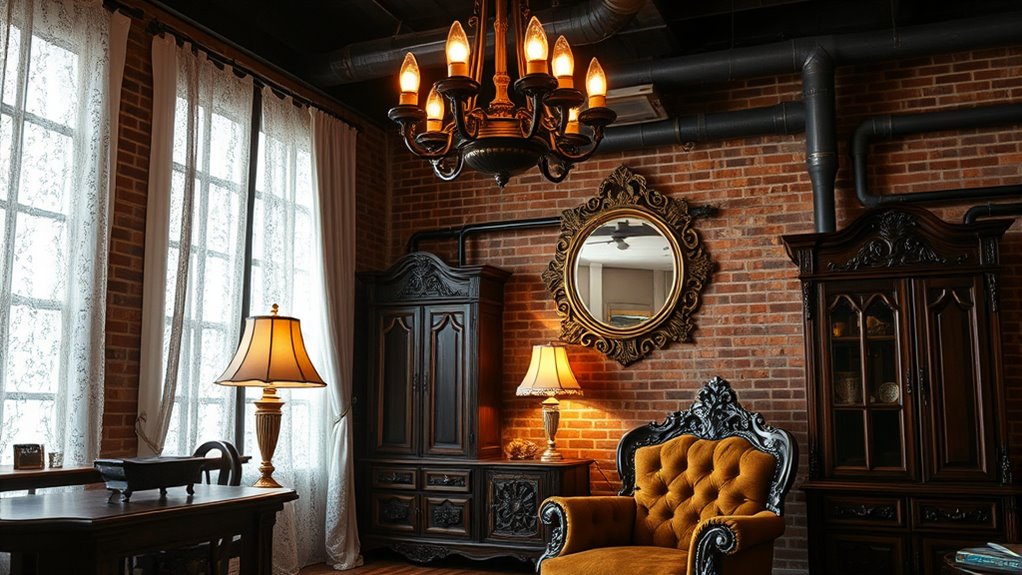
Victorian furniture is known for its intricate carvings, plush upholstery, and opulent details. You might choose a grand, upholstered armchair with carved wooden accents or a heavy, ornate sideboard that immediately commands attention. These pieces bring a sense of luxury and history into your space, but they can feel out of place if not balanced properly. That’s where exposed brick comes in. Its rough texture and earthy tone provide a perfect backdrop that grounds the ornate furniture, creating a visual balance between refinement and industrial grit. You can use a large, exposed brick wall as a focal point behind a Victorian-style bed or seating area to emphasize this contrast.
Victorian ornate furniture pairs beautifully with textured exposed brick for balanced elegance and industrial charm.
When you mix these eras, consider how lighting plays a role. Victorian interiors often feature chandeliers, wall sconces, and warm, ambient lighting, which can soften the rawness of exposed brick. Opt for vintage brass fixtures or Victorian-inspired stained glass lamps to tie the two styles together. The key is to avoid overwhelming the space with too many ornate details or too much rawness. Instead, aim for a layered look where each element complements the other, highlighting their differences without clashing.
Color choices also matter. Victorian decor tends toward deep, rich hues like burgundy, emerald, and gold, while the industrial look benefits from neutral tones—gray, black, and metallics. You can marry these palettes by choosing ornate furniture in dark woods or jewel tones and pairing them with exposed brick walls in shades of red or gray. Add touches of metallic accents—brass or iron—to reinforce the industrial vibe while echoing Victorian opulence. Incorporating lighting design that balances both styles can set the perfect mood and enhance the overall aesthetic.
In the end, your goal is to create a space that celebrates both eras through thoughtful contrast. Use ornate furniture to add elegance, and let exposed brick provide a raw, textured backdrop. With a balanced approach, you’ll craft a room that’s timeless, inviting, and uniquely yours—an ideal combination of Victorian refinement and Industrial authenticity.
Frequently Asked Questions
How Can I Balance Victorian Elegance With Industrial Ruggedness?
To balance Victorian ornate elegance with Industrial rawness, start by choosing furniture that blends both styles, like a Victorian tufted sofa paired with exposed steel accents. Use rich fabrics and intricate details alongside raw metal fixtures and concrete elements. Incorporate Victorian patterns in textiles and contrast them with industrial lighting or reclaimed wood. This mix highlights the sophistication of Victorian design while embracing the rugged charm of Industrial rawness.
What Color Schemes Work Best for Blending These Two Eras?
Imagine mixing a vintage vinyl record with a sleek smartphone—your room should have a balanced color scheme. You’ll want to use color contrast wisely, like pairing dark industrial tones with soft Victorian pastels. Accent accessories in metallics or rich jewel tones add drama and cohesion. Keep a neutral base to unify the space, then layer in pops of color to highlight the melding of eras without overwhelming the eye.
Are There Specific Furniture Pieces That Suit Both Styles?
You should look for furniture pieces that blend antique accents with sleek, modern accessories. For example, a vintage wooden armchair with contemporary metal legs works well, as does a Victorian-style side table paired with minimalist lamps. Mixing ornate details with clean lines creates harmony between the eras. Opt for versatile pieces that can be dressed up with antique accents or toned down with modern accessories to suit your style.
How Do Lighting Choices Influence the Victorian-Industrial Aesthetic?
Lighting choices set the mood, blending Victorian elegance with industrial ruggedness like two sides of the same coin. You can use ornate chandeliers or vintage lamps to highlight Victorian charm, while exposed Edison bulbs or metal fixtures add industrial grit. Your lighting acts as a bridge, emphasizing contrasts yet uniting the space. By balancing warm, soft glows with sharper, raw tones, you create a harmonious room that celebrates both eras effortlessly.
What Are Common Mistakes to Avoid When Combining These Styles?
Avoid overdecorating, which can clutter your space and dilute the blend of Victorian and industrial styles. Be mindful of neglecting scale; mixing oversized furniture with delicate Victorian pieces can look awkward. Keep a balanced approach by choosing statement items that complement both eras. Focus on harmony, and don’t forget to leave room for breathing. This ensures your room feels cohesive, stylish, and true to both vintage charm and industrial edge.
Conclusion
You now see how blending Victorian elegance with Industrial edge transforms your space into something truly extraordinary—like a masterpiece painted with history and grit. When you combine ornate details with raw, unfinished elements, you create a room that’s both timeless and daring. It’s a style that’s so mesmerizing, it’ll turn your home into a showstopper, capturing hearts and leaving visitors breathless. Embrace the fusion, and watch your space come alive with unmatched character and charm.