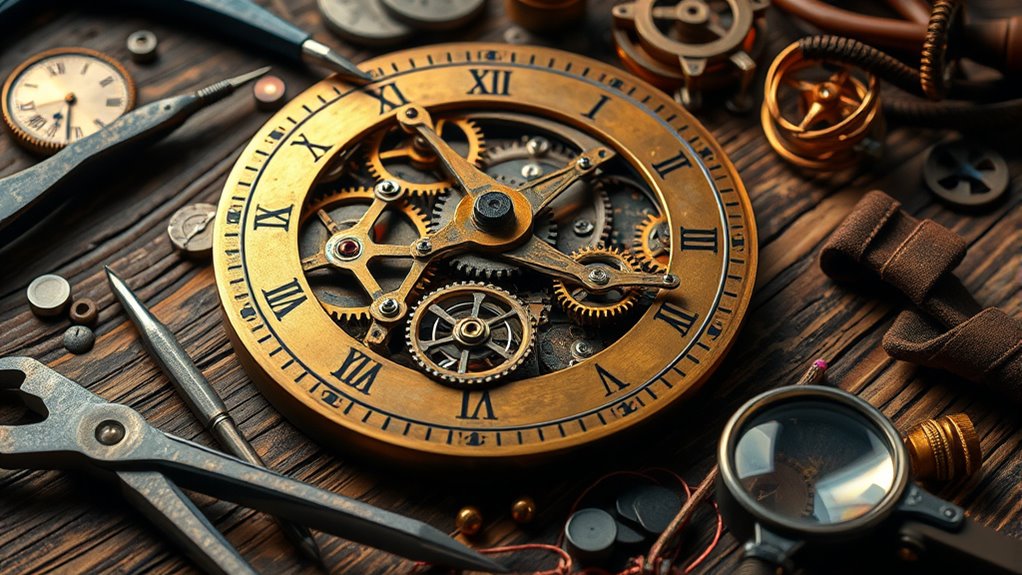

To craft a stunning steampunk clock, start by selecting a reliable mechanical movement—either vintage wind-up or modern exposed-gear quartz—so the gears become both functional and decorative. Use reclaimed wood, brass, or iron for the body, emphasizing aged finishes and riveted accents for authenticity. Focus on precise assembly, ensuring all mechanical parts are visible and harmoniously arranged. Adding tiny pipes, retro numerals, and vintage details enhances the industrial charm. Keep exploring to discover more tips for creating your unique steampunk masterpiece.
Key Takeaways
- Select a vintage or modern quartz movement with visible gears to serve as the clock’s mechanical heart.
- Use reclaimed wood, brass, or iron with aged finishes to build the clock body, emphasizing industrial authenticity.
- Mount the movement securely, ensuring precise alignment and exposure of mechanical components for visual impact.
- Incorporate steampunk embellishments like rivets, tiny pipes, vintage clock hands, and pressure gauges for added detail.
- Finish with antique patinas and decorative accents to enhance the vintage industrial look, balancing functionality and style.

Have you ever wanted to craft a clock that combines vintage industrial style with intricate mechanical detail? If so, you’re in the right place. When building a steampunk clock, your focus should be on the mechanical movement—this is the heart of your creation. Choosing a reliable mechanical movement ensures your clock keeps accurate time and adds to the authentic industrial aesthetic. You might opt for a vintage wind-up mechanism or a modern quartz movement with exposed gears for a more mechanical feel. Incorporating visible gears and cogs isn’t just functional; it’s a core decorative embellishment that transforms your clock into a piece of art. These elements give your project that rugged, industrial charm that defines steampunk style.
Next, consider the materials you’ll use for your clock’s body. Reclaimed wood, brass, copper, and iron are popular choices for their vintage appeal and durability. As you assemble your clock, think about how to expose and highlight its mechanical movement — this will be the centerpiece. Use screws, rivets, or brackets with an aged finish to add authenticity. Decorative embellishments can include riveted metal panels, gear-shaped accents, and ornate dials. These details not only enhance visual interest but also reinforce the steampunk theme. You might also add small decorative elements like vintage clock hands, retro-style numerals, or even tiny steam pipes to give it that industrial flair.
Choose reclaimed wood, brass, and iron; expose mechanical movement with vintage accents for authentic steampunk appeal.
When it comes to the actual build, precision matters. Carefully align the mechanical movement within your clock’s frame, making sure it’s securely mounted and visible if desired. The way you display these components impacts the overall aesthetic—whether you want a fully exposed setup or a partially concealed movement behind a decorative cover. Be deliberate with your choice of embellishments; they should complement the mechanical parts without overwhelming the design. Think of your clock as a miniature steampunk machine—every bolt, gear, and embellishment should work together harmoniously to evoke that vintage industrial vibe.
Finally, finishing touches can make your clock stand out. Apply antique finishes or patinas to metal parts, and consider adding small decorative elements like chains or pressure gauges. These details breathe life into your design and emphasize the mechanical movement’s complexity. Utilizing authentic materials and traditional techniques can further elevate your craftsmanship, making your steampunk clock truly unique. Remember, the goal is to craft a functional piece that also serves as a statement of craftsmanship and style. With patience and attention to detail, you’ll end up with a stunning steampunk clock that beautifully blends vintage industrial aesthetics with intricate mechanical embellishments.
Top picks for "diyer steampunk clockmak"
Open Amazon search results for this keyword.
As an affiliate, we earn on qualifying purchases.
Frequently Asked Questions
What Are the Best Materials for Authentic Steampunk Clock Parts?
You should use brass fittings and gear mechanisms for authentic steampunk clock parts. Brass offers that vintage, industrial look and is easy to work with, making it perfect for clock components. Gear mechanisms, especially those with visible teeth and intricate designs, add to the steampunk aesthetic. Combining these materials creates a genuine, mechanical feel, giving your clock an authentic steampunk vibe that’s both functional and visually striking.
How Do I Ensure My Clock Keeps Accurate Time?
Imagine your clock is a vintage smartphone—precision matters. To guarantee it keeps accurate time, regularly perform clock calibration and pendulum adjustments. Check that the pendulum swings evenly and make small tweaks if it’s off. Use a reliable time source to compare and fine-tune your clock’s accuracy. Consistent maintenance and careful calibration will keep your steampunk masterpiece running smoothly and precisely, just like a finely tuned machine from an alternate Victorian era.
Can I Incorporate Digital Elements Into a Steampunk Clock?
Yes, you can incorporate digital elements into a steampunk clock by blending modern technology with vintage design. Use digital integration to add LED displays, sensors, or microcontrollers, creating a unique fusion of old and new. To do this, hide the electronic components within the clock’s steampunk aesthetic, ensuring they complement the aesthetic while functioning seamlessly. This approach enhances functionality without compromising the clock’s vintage charm.
What Safety Precautions Should I Take During Assembly?
Safety is your foundation, like the gears turning smoothly in your clock. Always wear safety gear—gloves, goggles, dust masks—to protect yourself from sharp edges, dust, and fumes. Keep your workspace organized to prevent accidents and misplaced tools. Remember, a well-ordered space and proper precautions turn chaos into craftsmanship, ensuring your steampunk clock comes together safely and beautifully, ticking precisely in harmony with your creative vision.
How Do I Restore or Repair an Antique Steampunk Clock?
To restore or repair an antique steampunk clock, start with gentle cleaning to preserve its original features. Use proper restoration techniques like lubrication for moving parts and replacing worn components carefully. Focus on antique preservation by avoiding harsh chemicals and preserving patina. If needed, consult a professional for intricate repairs, especially for delicate mechanisms, ensuring your clock maintains its vintage charm while functioning properly.
Conclusion
Now, as you wind the gears and set the cogs in motion, your steampunk masterpiece comes alive. Feel the cool metal against your fingertips, hear the ticking heartbeat echo through your creation, and watch as it captures the essence of a bygone era. With each carefully placed piece, you’ve crafted more than a clock—you’ve built a steampunk dream. Let your clock serve as a timeless reminder of your craftsmanship, a ticking tribute to your ingenuity and imagination.