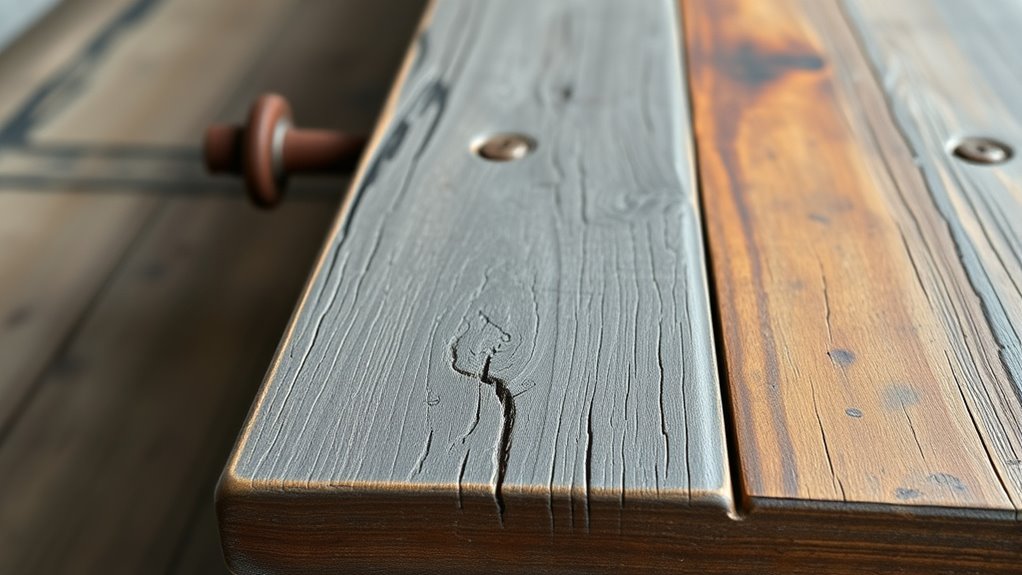

To create an industrial look, start by layering weathered paint with darker bases and lighter shades on top, then distress it using sandpaper or scraping tools to reveal underlying colors. Add metal accents with rust or patina effects and use wire brushes or steel wool to scratch surfaces for authenticity. Subtle imperfections like dents and scratches help mimic long-term use. Keep these techniques balanced for a realistic finish—continue exploring ways to bring out that rugged industrial charm.
Key Takeaways
- Use layered paint techniques with dark base coats and lighter top layers, then sand and scrape to reveal aged, weathered surfaces.
- Add rust or patina effects on metal components using paint, dark wax, or tarnish solutions for an industrial feel.
- Create intentional imperfections like dents, scratches, or gouges with tools to mimic long-term use and wear.
- Distress metal surfaces with wire brushes or steel wool, and incorporate metal accents with a worn, aged finish.
- Focus on subtle, strategic distressing and layering to achieve a realistic, authentic industrial look without overdoing it.

Achieving an authentic industrial look often involves incorporating weathered and distressed furniture pieces that exude rugged charm. To do this effectively, you need to focus on creating finishes that look naturally aged and worn. Metal finishes are a pivotal element in this process, as they add an industrial edge that feels raw and utilitarian. Start by selecting furniture with metal components or adding metal accents, such as piping, handles, or brackets, which can be distressed to look aged. You can enhance the metal’s rugged appeal by applying paint techniques like dry brushing or using a metal-specific paint that mimics rust or patina. These techniques give the surface a layered, textured appearance, making it seem weathered over time.
Enhance industrial charm with distressed metal accents and layered paint techniques for a naturally weathered look.
When working with metal finishes, it’s essential to keep in mind that the goal is to simulate years of wear. You might use a wire brush or steel wool to scratch and scuff the surface, revealing underlying metal or paint layers. Applying a dark wax or patina solution can further enhance the aged look by creating subtle discolorations and tarnished effects. These strategies give your furniture an authentic, distressed metal surface that feels like it’s been through years of use.
Paint techniques play a crucial role in weathering furniture for the industrial aesthetic. One popular method involves layering paint colors—starting with a base coat of a dark, muted hue, then adding lighter or contrasting shades on top. Once dry, you use sandpaper or a scraping tool to gently remove sections of the top coat, revealing the underlying color and giving the piece a naturally distressed look. You can also use sponging or stippling to create irregular patterns that mimic wear and tear. Applying a glaze or wash over the painted surface can add depth, making the finish appear aged and weathered.
Distressing isn’t just about removing paint; it’s about creating a sense of history. Use tools like chisels, hammers, or even chains to make intentional dents, scratches, or gouges. These imperfections, combined with strategic paint techniques, help you craft furniture that looks like it’s been part of a bustling workshop or warehouse for decades. It’s also important to understand the significance of metal finishes in achieving an authentic industrial style. Remember, less is more—aim for subtle imperfections rather than overdoing it, so the weathered look remains believable. When you combine well-executed metal finishes with expert paint techniques, your furniture will embody the rugged, industrial charm that defines this style perfectly.
Top picks for "weather distres furniture"
Open Amazon search results for this keyword.
As an affiliate, we earn on qualifying purchases.
Frequently Asked Questions
What Tools Are Best for Distressing Furniture?
You should use a variety of tools for distressing furniture, like sandpaper, wire brushes, and chisels, to achieve different textures and effects. Compare techniques such as sanding, scraping, and staining to find what suits your style. Always prioritize safety precautions by wearing gloves, goggles, and a mask. This way, you protect yourself while creating authentic, industrial-looking distressed furniture that adds character to any space.
How Long Does Weathering Furniture Typically Last?
Weathered furniture typically lasts several years, but its longevity depends on weathering durability and how well you care for it. If you choose quality finishes and protect the piece from excessive moisture or sunlight, it can retain its industrial charm for 5 to 10 years or more. Regular maintenance, like sealing and cleaning, helps preserve the distressed look and extends furniture longevity, ensuring your piece remains stylish and durable over time.
Can I Mix Distressed and New Furniture Styles?
You can absolutely mix distressed and new furniture styles! Imagine the stunning vintage charm of aged pieces contrasting with sleek modern designs, creating a breathtaking modern juxtaposition. By blending these styles, you craft a space that’s rich in history yet fresh and vibrant. Don’t hold back—combine the old with the new to evoke emotion and make your home uniquely yours. It’s a bold, beautiful statement waiting to happen!
Is Weathering Suitable for All Types of Wood?
Weathering works well on most wood types, especially those with natural grains like oak, pine, or cedar, enhancing their vintage charm and rustic appeal. However, softer woods may dent or scratch more easily, so handle them gently. You’ll find that weathering adds character, giving your furniture an authentic, aged look. Just test on a small area first, ensuring the process complements your piece’s unique beauty and style.
How Do I Prevent Over-Distressing My Furniture?
To prevent over-distressing your furniture, start with light paint techniques and gradually add distressing details. Use sandpaper or tools sparingly, checking frequently to avoid removing too much paint or exposing bare wood. Once you’re satisfied, apply a protective finish like wax or polyurethane to seal your work. This approach guarantees your furniture maintains an authentic industrial look without excessive distressing, keeping it durable and visually appealing.
Conclusion
Now that you’ve learned how to weather and distress furniture, your pieces will transform into stories of resilience and character. Imagine your furniture as a vintage sailor, bearing the marks of countless adventures on stormy seas, each scratch and stain a badge of honor. With patience and care, you craft a timeless industrial masterpiece that whispers tales of grit and grace. Your space becomes a rugged sanctuary, where history and style seamlessly collide in perfect harmony.