
TL;DR

Get furniture and decor delivered free with Prime
- Fast, free delivery on millions of items
- Prime Video, Amazon Music and more included
- Member-only deals all year
A Hunker gardening report recommends Smokehouse apple trees as a living alternative to backyard fences and screens. The heritage variety can grow 10 to 15 feet tall and produce fruit, but it needs full sun, spacing, and a compatible pollinator tree; how well it screens a yard depends on growing conditions and planting layout.
Smokehouse apple trees are being presented as a living alternative to backyard fences and screens, offering homeowners a natural privacy hedge that can also produce fruit. A report by Hunker says the heritage variety typically reaches 10 to 15 feet, though its screening value depends on sunlight, planting space and how many trees a yard needs.
Smokehouse apples, botanically identified as Malus domestica ‘Smokehouse,’ are a heritage variety dating to the early 1800s, according to Hunker. The report describes their branches as dense enough to help screen a property while retaining a softer, less built-up look than a fence or manufactured screen. It suggests smaller trees for living privacy barriers so branches remain low enough to provide coverage without blocking all views.
The trees are reported to grow in USDA hardiness zones 3 through 9 and do best in full sun and rich, well-draining soil. They may grow in shade, but Hunker cautions that they are likely to be weaker there, potentially reducing the dense branching that makes them useful for privacy. The report gives a typical tree price of $25 to $60 and says one tree may cover a gap of roughly 10 to 15 feet; those figures are estimates, not a guarantee for every seller, location or planting.
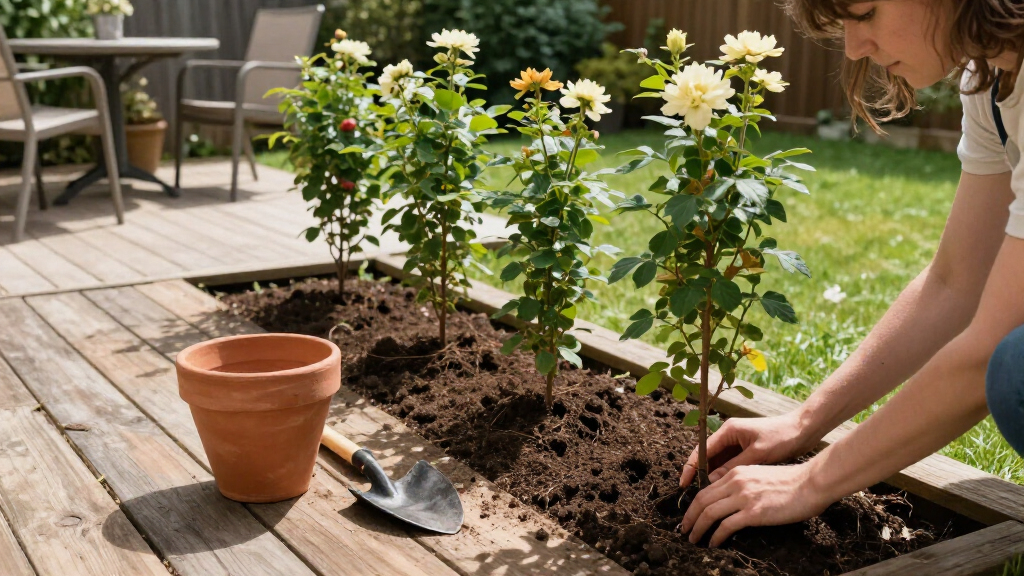
Hunker advises planting trees about 15 to 20 feet apart to limit tangled branches. That spacing can leave openings while young trees grow. The report says Smokehouse apples typically begin bearing fruit in three to five years, and a second apple variety that blooms at about the same time is needed for pollination. A row planted for privacy could yield a substantial harvest, which the report says can be stored for weeks after picking.
A Privacy Screen That Also Bears Fruit
For homeowners who want backyard screening but do not want a solid barrier, an apple-tree hedge offers a different trade-off: it can add greenery and fruit, but takes time to establish and requires care. Unlike a fence, it will not provide immediate, continuous coverage. Initial gaps are likely at the recommended spacing, and the quality of the screen depends in part on sun exposure and how the trees grow.
Cost comparisons also need care. Hunker cites trees at $25 to $60 each and says one may fill about 10 to 15 feet, while the report puts privacy fencing at a minimum of about $25 per linear foot. Those are source estimates, not a full project-cost analysis: they do not establish comparable installation, maintenance, soil preparation or replacement costs. The figures help explain why the planting could appeal to homeowners covering a long boundary, but they do not prove it will be cheaper in every case.
Smokehouse apple trees for privacy
As an affiliate, we earn on qualifying purchases.
As an affiliate, we earn on qualifying purchases.
How the Apple Hedge Would Grow
Hunker frames Smokehouse apples as an option for people who find fences expensive or visually unsuitable. Its report is a gardening recommendation, not a report of a new product, policy or scientific finding. The proposed hedge relies on planting multiple trees where a wider area needs screening, while leaving enough space for their branches to develop.
The timeline is central to the suggestion. The trees may need several growing seasons before fruiting, and the report acknowledges that a newly planted row will have privacy gaps. The fruiting estimate of three to five years concerns bearing apples; it does not specify how long a hedge takes to provide the level of visual coverage a particular homeowner wants.
“Smokehouse apple trees are a beautiful alternative to fences and screens.”
— Hunker report
heritage apple trees for backyard screening
As an affiliate, we earn on qualifying purchases.
As an affiliate, we earn on qualifying purchases.
Coverage Depends on Yard Conditions
The report does not provide a tested measurement of how much visual privacy a Smokehouse tree provides, how quickly a hedge closes its gaps, or how its growth varies across the stated hardiness zones. Its estimates for tree prices and coverage are not tied to a named retailer, region or measurement method. Local climate, shade, soil and care could affect results, and the report does not identify specific pollinator varieties or give a detailed maintenance schedule.
It is also unclear how the suggested tree spacing compares with the layout of any individual yard. Homeowners would need to check mature size, local growing conditions and the desired degree of screening before treating the recommendation as a planting plan.
As an affiliate, we earn on qualifying purchases.
Plan for Pollination and Growth
Anyone considering the trees would need to measure the boundary, assess how much direct sun it receives and check that the soil drains well. They would also need to confirm a suitable second apple variety with overlapping bloom time if they want fruit, then account for the space required between trees. Privacy will build gradually, rather than appear as soon as the trees are planted.
The source does not announce a follow-up study or a new planting program. The practical next step for readers is to verify local availability, current prices and regional growing advice with a nursery or local horticultural service before buying. Those checks can help determine whether a living apple hedge suits the yard better than a fence or screen.
full sun apple trees for zones 3-9
As an affiliate, we earn on qualifying purchases.
As an affiliate, we earn on qualifying purchases.
Key Questions
How tall do Smokehouse apple trees grow?
Hunker says they average 10 to 15 feet tall. Actual growth can vary with site and care.
Can one Smokehouse apple tree produce fruit?
The report says a second apple variety that blooms around the same time is needed for pollination. It does not name a specific compatible variety.
How long does it take to get apples?
Hunker says Smokehouse trees typically bear fruit in three to five years. That estimate does not state when a hedge will provide substantial privacy.
Will Smokehouse apples grow in a shaded yard?
The report says the trees do best in full sun. They may grow in shade, but weaker growth could make their branches less effective for screening.
How far apart should the trees be planted?
Hunker recommends spacing them about 15 to 20 feet apart to reduce branch tangling, while noting that gaps may remain as the trees grow.
Source: rss
Halloween Picks
halloween
As an affiliate, we earn on qualifying purchases.