
Before restoring an old arcade machine, start by learning its history to guarantee authenticity and guide your choices. Gather essential tools like screwdrivers, multimeters, and cleaning supplies, then thoroughly assess the condition of the cabinet, wiring, and internal electronics. Carefully document any damage or missing parts to plan repairs efficiently. Focus on cleaning, testing components, and sourcing authentic replacement parts. If you keep these key steps in mind, you’ll be well on your way—more details will help you succeed.
Key Takeaways
- Conduct a thorough assessment of the machine’s condition, noting damage, missing parts, and wiring issues.
- Gather essential tools like screwdrivers, multimeters, and cleaning supplies for safe and effective restoration.
- Document existing components and decide whether to restore authentically or customize based on history.
- Carefully clean internal and external parts, inspecting circuit boards for corrosion or damage.
- Test and repair electronics, sourcing authentic parts to maintain historical accuracy and ensure functionality.
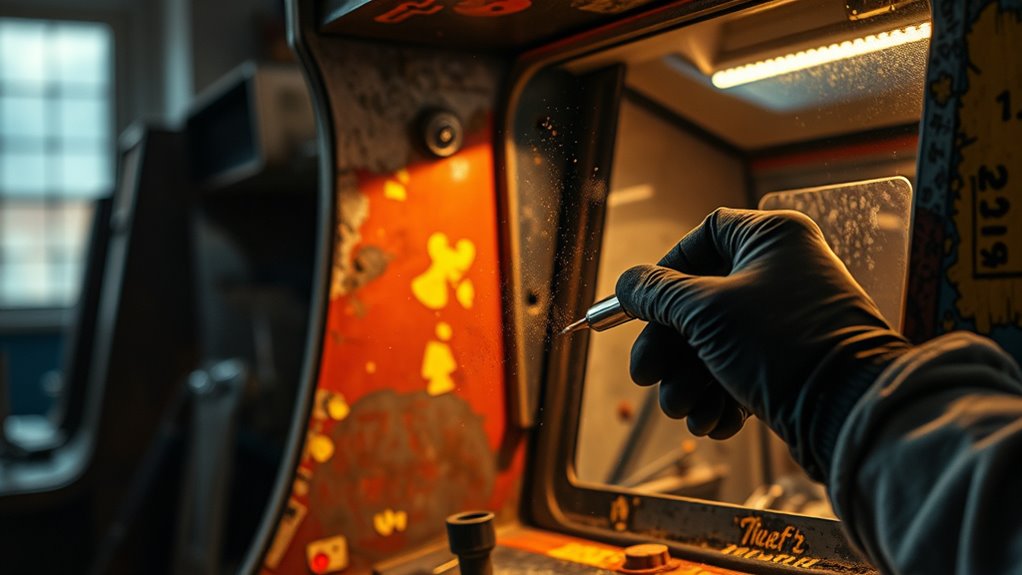
Restoring an old arcade machine can be a rewarding project that brings a classic piece of gaming history back to life. Before diving in, it’s essential to understand the significance of arcade history and how these machines fit into the evolution of gaming. Knowing the background not only fuels your motivation but also guides your restoration choices to preserve authenticity. To get started, gather the right restoration tools—screwdrivers, multimeters, soldering iron, cleaning supplies, and replacement parts. Having the proper tools on hand makes the process smoother and helps prevent accidental damage.
Restoring arcade machines preserves gaming history and requires proper tools and knowledge of their background.
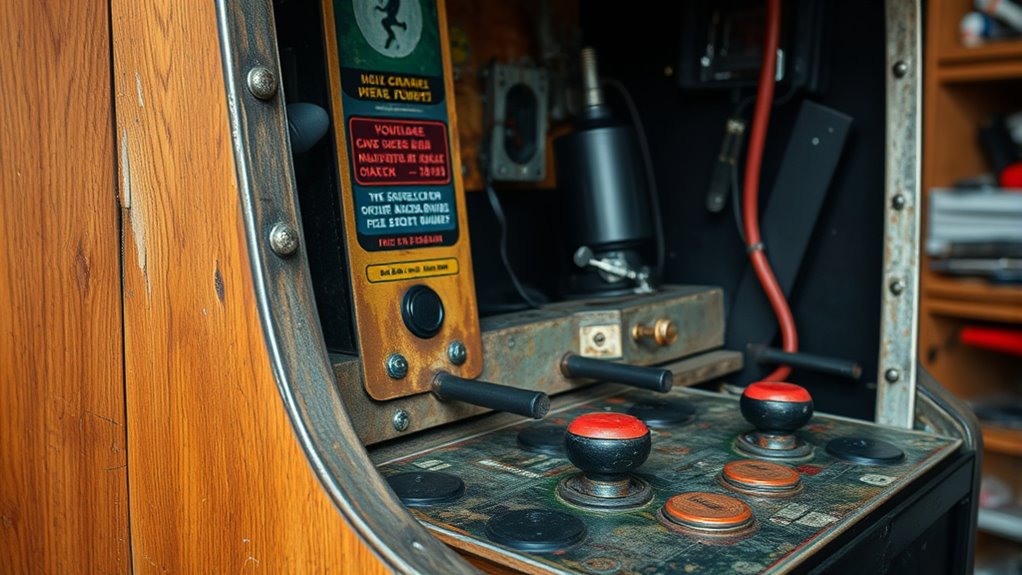
You should begin with a thorough assessment of the machine’s condition. Check for physical damage, missing parts, and issues with the display, controls, or internal wiring. When inspecting, pay attention to the wiring harnesses, as old wiring can be brittle or corroded, which may cause electrical faults. Carefully documenting what’s broken or missing allows you to plan your repairs efficiently. In this stage, understanding the arcade’s history can guide your decisions—whether you aim for a full restoration to original specifications or a more personalized approach.
Cleaning is an essential step. Use appropriate cleaning agents and gentle brushes to remove dirt, dust, and grime from the cabinet, control panel, and internal components. Be cautious around electronic parts; avoid excessive moisture that could cause shorts. During cleaning, inspect circuit boards for corrosion or burnt components. If you’re unfamiliar with electronics, consider consulting a professional or referencing repair guides to avoid damaging delicate parts. Restoring the display might involve replacing or repairing the monitor or LCD, depending on the unit. For the controls, replacing worn joysticks, buttons, or wiring ensures a responsive gaming experience.
When it comes to internal electronics, testing and repairing the power supply, control boards, and wiring is vital. Use your multimeter to check continuity and voltage levels. If you notice faulty components, sourcing authentic replacements keeps the machine true to its original arcade history. Additionally, understanding basic electronics repair concepts can help you troubleshoot more effectively. For parts that are hard to find, online communities and specialty suppliers can be invaluable resources. This phase requires patience and precision, as a well-functioning internal system is key to making the game playable once restored.
Ultimately, restoring an arcade machine is a blend of technical skill, respect for arcade history, and creativity. With the right restoration tools, a good understanding of the machine’s background, and careful work, you’ll bring a beloved piece of gaming history back to life, providing joy for future players and preserving a classic era of entertainment.
Top picks for "restor arcade machine"
Open Amazon search results for this keyword.
As an affiliate, we earn on qualifying purchases.
Frequently Asked Questions
What Are the Common Costs Involved in Arcade Machine Restoration?
You’ll find that the common costs in arcade machine restoration include parts, labor, and tools. Cost estimates vary depending on the machine’s condition and rarity, so budget planning is essential. Expect to spend on replacing monitors, wiring, and buttons, plus possible custom paint or artwork. By understanding these expenses upfront, you can better manage your project budget and guarantee a successful restoration without surprises.
How Long Does a Typical Restoration Project Take?
Think of your restoration project as a journey—usually, it takes anywhere from a few weeks to several months, depending on your project’s complexity. A well-structured restoration timeline and project planning help you stay on track. If you’re meticulous, like someone restoring a rare vintage game, expect extra time for parts sourcing and fine-tuning. Being patient and organized guarantees a successful, rewarding restoration experience.
Do I Need Special Tools or Skills to Restore an Arcade Machine?
You’ll need some basic restoration skills, like cleaning, wiring, and troubleshooting, but you don’t need advanced expertise. For tool requirements, gather screwdrivers, pliers, a multimeter, and possibly a soldering iron. Most tools are common household items or affordable specialty tools. While some tasks might be tricky, plenty of tutorials and guides are available online to help you learn as you go. With patience, you’ll handle the restoration confidently.
Are There Safety Considerations When Working With Old Electronics?
Like a modern-day Indiana Jones, you must prioritize safety when working with old electronics. Always check for electrical safety hazards, such as frayed wires or faulty connections, before starting. Be mindful of fire hazards caused by aged components or dust buildup. Use insulated tools, wear protective gear, and unplug the machine when not in use. Taking these precautions helps prevent accidents and keeps your restoration adventure safe and fun.
How Can I Find Original Parts for Vintage Arcade Machines?
You can find original parts for vintage arcade machines through online marketplaces like eBay or specialized forums dedicated to arcade restoration. Check vintage parts sourcing websites and attend arcade expos or swap meets for rare components. Restoration techniques often involve refurbishing existing parts or fabricating replacements, but sourcing authentic vintage parts guarantees your machine stays true to its original design. Patience and thorough research will help you locate those key components.
Conclusion
Restoring an old arcade machine is like gently guiding a forgotten treasure back to life, where every tweak breathes new energy into its vintage soul. With patience and care, you’ll help this relic shine once more, revealing its hidden stories and vibrant spirit. Embrace the journey, knowing that your attentive touch transforms the worn and weathered into a gleaming centerpiece of nostalgia. In doing so, you preserve a piece of history for generations to come.