Inside an antique radio, you find mechanical tuning that adjusts the circuit’s resonant frequency, helping it pick up specific stations. Vacuum tubes amplify weak radio signals, making them strong enough to hear with richness and warmth. You can see these components working together as you turn the dial, offering a hands-on experience of how resonance and amplification create sound. Keep exploring to discover how these vintage parts shape the unique voice of old radios.
Key Takeaways
- Tuning involves adjusting a variable capacitor to match the radio’s resonant frequency with broadcast signals.
- Vacuum tubes amplify weak radio signals received by the antenna, enhancing sound clarity and volume.
- Mechanical tuning knobs physically change capacitor plates, enabling hands-on control of station selection.
- Inside components like resistors, capacitors, and transformers shape the audio quality and filter signals.
- The vintage sound character comes from tube amplification and the unique circuitry of antique radios.
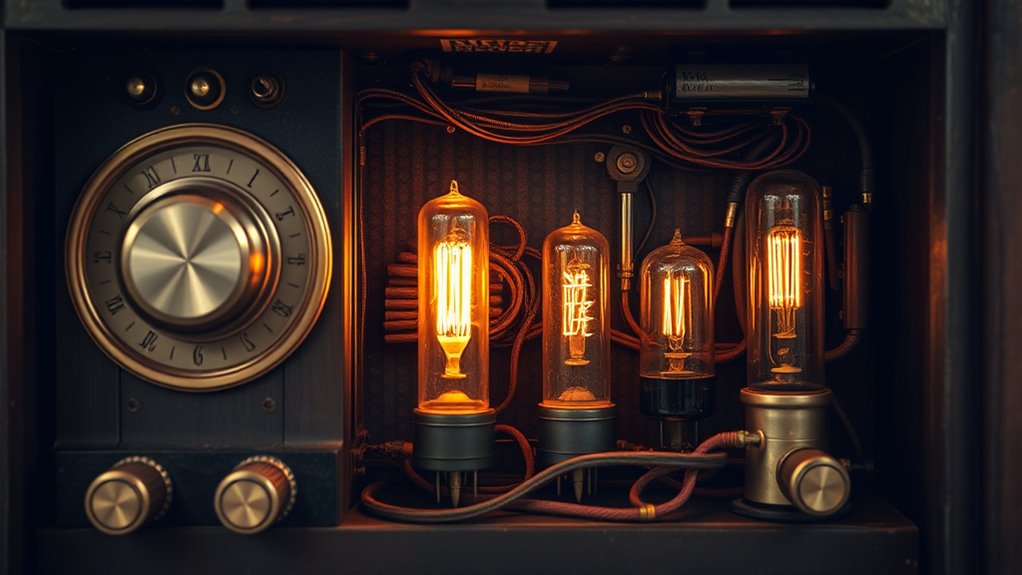
Stepping inside an antique radio reveals a fascinating world of vintage craftsmanship and intricate components. As you examine its interior, you’ll notice the tuning mechanisms, which are essential for selecting different radio stations. Unlike modern digital tuners, these old devices often use a variable capacitor or a dial connected to a tuning capacitor. When you turn the tuning knob, it moves the capacitor plates closer or farther apart, changing the circuit’s resonant frequency. This adjustment allows the radio to pick up specific radio waves, enabling you to tune into your favorite broadcasts. The tuning process is tactile and mechanical, giving you a direct sense of control that modern electronics tend to lack. Understanding the principles of resonance helps explain why these tuning methods work so effectively. Beyond the tuning mechanisms, you’ll find the vacuum tubes—crucial to how these radios operate. These glass cylinders contain electrodes that amplify radio signals received by the antenna. When a radio wave hits the antenna, it induces a tiny electrical signal that travels through the circuit. The vacuum tubes then serve as amplifiers, boosting these faint signals to levels that can be converted into sound. You might notice the tubes glow faintly, a sign they’re functioning correctly. The vacuum tube’s function is essential because, without amplification, the weak radio signals wouldn’t produce audible sound through the speakers. Working with vacuum tubes requires an understanding of their specific voltage and current needs, which is why many antique radios include power supplies designed to match these requirements. As you listen to the radio, it’s worth appreciating the role of these vacuum tubes in shaping the vintage sound. The amplification process adds a characteristic warmth and richness to the audio, distinct from digital clarity. The circuitry around these tubes is carefully designed to filter and refine the signal, ensuring you get clear, strong audio once the signal is amplified. Many antique radios also feature resistors, capacitors, and transformers that work together to shape the sound quality and frequency response, all working in harmony to bring music and broadcasts to life. In essence, inside an antique radio, the tuning mechanisms and vacuum tube functions combine to create a seamless experience of selecting and amplifying radio signals. The mechanical tuning gives you a direct, hands-on feel, while the vacuum tubes provide the warmth and character of vintage sound. Understanding these components helps you appreciate the craftsmanship and technological ingenuity that made these radios timeless pieces of communication history.
Top picks for "radio inside antique"
Open Amazon search results for this keyword.
As an affiliate, we earn on qualifying purchases.
Frequently Asked Questions
How Do Vintage Radios Tune Into Different Stations?
You tune into different stations by adjusting the radio’s dial to change the radio frequency tuning. When you turn the dial, it moves a variable capacitor or inductor that shifts the tuning circuit’s resonant frequency, allowing it to pick up specific signals. This station selection process lets you find and lock onto your desired station’s frequency, ensuring clear reception of the broadcast you want to listen to on your vintage radio.
What Causes Crackling or Poor Sound Quality in Old Radios?
Like a ghost from the past, crackling or poor sound in old radios often comes from capacitor degradation or loose connections. Over time, capacitors dry out or break down, causing static and distortion. Loose connections, much like a tangled web, interrupt the signal flow, resulting in crackling sounds. Regular maintenance and careful repairs can bring back that vintage clarity, letting you enjoy the nostalgic tunes without interruption.
Can Antique Radios Be Converted to Modern Bluetooth Devices?
Yes, you can convert antique radios to modern Bluetooth devices. With Bluetooth integration, a simple modification allows you to stream music wirelessly. Professionals or DIY enthusiasts perform a modern conversion by installing a Bluetooth receiver inside the radio, often connecting it to the existing speaker system. This preserves the vintage look while adding the convenience of wireless audio, making your antique radio both functional and nostalgic.
How Do Vacuum Tubes Amplify Audio Signals in Antique Radios?
Vacuum tube operation in antique radios amplifies audio signals by controlling electron flow. When a weak audio signal reaches the tube’s control grid, it modulates the flow of electrons between the cathode and anode. This process boosts the signal strength, enabling audio signal amplification. You can see how the vacuum tube acts as an electronic amplifier, making the sound louder and clearer for your listening pleasure.
What Safety Precautions Are Needed When Repairing Vintage Radios?
Think of repairing vintage radios like walking a tightrope—you need balance and caution. Always unplug the radio before working on it to avoid electrical hazards. Use insulated tools and wear rubber gloves for extra safety. Be mindful of capacitors, which can hold a charge even when unplugged. Follow proper radio safety procedures to protect yourself from electrical hazards and prevent damage to the antique. Safety first keeps your repair journey smooth.
Conclusion
So, next time you marvel at your sleek digital device, remember that old radios, with all their fragile tubes and tangled wires, once brought the world into your ears. Ironically, their complex simplicity allowed them to create timeless sound, while today’s tech relies on tiny chips that barely hum. Maybe the real magic isn’t in the latest gadgets but in the nostalgic charm of a vintage radio’s imperfect, warm embrace—proving that sometimes, old school truly wins.