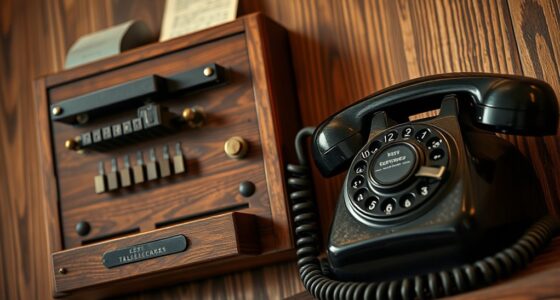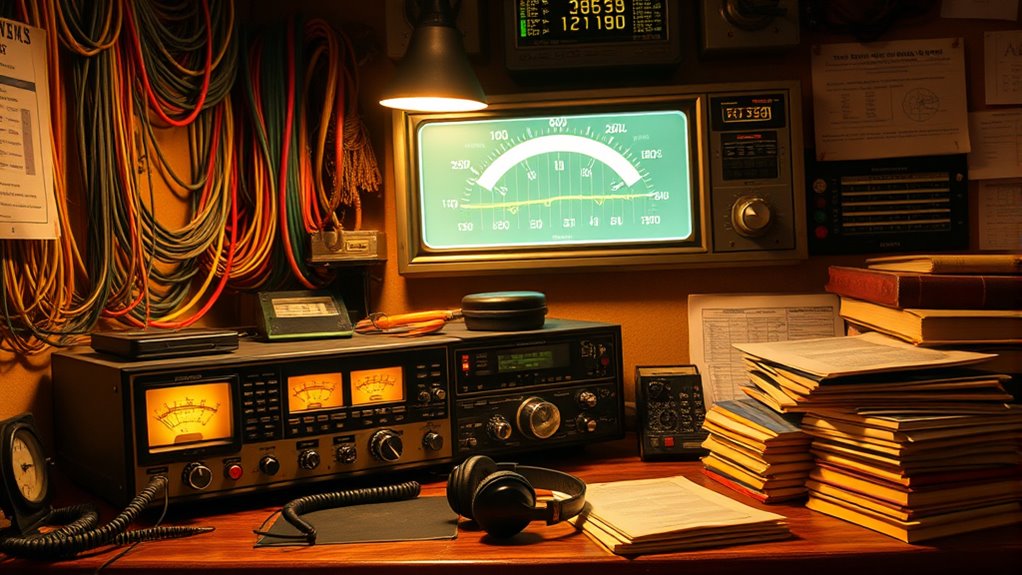

Ham radio is the original social network for geeks, allowing you to connect with others worldwide without relying on the internet or cell phones. It uses simple radio signals and technical skills like antenna tuning to guarantee clear communication. Digital modes like FT8 and PSK31 let you transmit text, images, and data. Mastering proper tuning improves signal strength and reliability, making ham radio a powerful, tech-driven community. Keep exploring to discover how you can become part of this global network.
Key Takeaways
- Ham radio connects enthusiasts worldwide, enabling social interaction without internet or cell phones.
- It combines technical skills like antenna tuning with community-building aspects.
- Digital modes facilitate text, images, and data sharing, enhancing ham radio’s social and practical uses.
- Operators often participate in contests and events, strengthening the global amateur radio community.
- Ham radio serves as a reliable backup communication network, fostering collaboration among geeks and hobbyists.
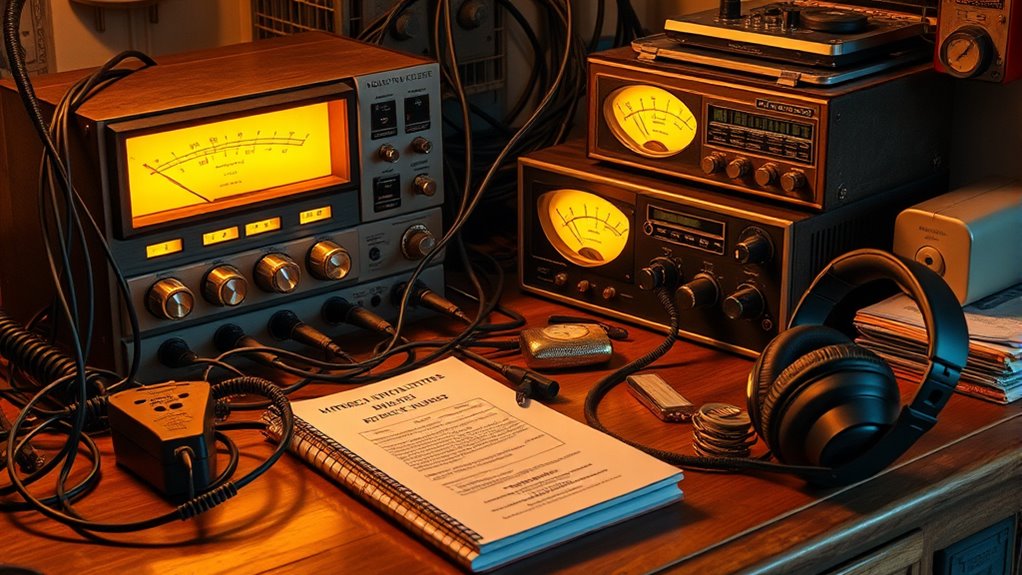
Have you ever wondered how amateur radio operators communicate across long distances without the internet or cell phones? It’s pretty fascinating—your voice, a simple radio signal, and a bit of technical know-how can connect you with someone thousands of miles away. The key to making those long-distance connections is understanding antenna tuning. When you set up your antenna, you need to guarantee it’s properly tuned to match your radio’s frequency. This process involves adjusting the antenna’s length or adding components so that it resonates at the desired frequency, minimizing power loss and maximizing signal strength. Proper antenna tuning isn’t just about getting a clear signal; it’s vital for efficient operation, especially when working with digital modes or voice transmissions. Digital modes—like FT8, PSK31, or RTTY—allow you to send text, images, and other data via radio waves. These modes rely on precise tuning because they require stable, predictable signals to decode successfully. If your antenna isn’t tuned correctly, your digital signals may become garbled or unreadable, making it frustrating to communicate effectively.
Getting your antenna tuned might seem intimidating at first, but it’s a straightforward process once you understand the basics. You’ll use an SWR (Standing Wave Ratio) meter to check how well your antenna is matched to your transmitter. An SWR meter measures the power reflected back from the antenna—low readings indicate a good match, while high readings suggest you need to make adjustments. By tweaking the length or adding matching devices, you’ll bring the SWR down to an ideal level, ensuring your radio transmits clean, strong signals. This tuning process is essential whether you’re chatting with friends locally or reaching out across continents using digital modes.
Additionally, understanding the importance of support for different antenna types can help optimize your setup for various environments and frequencies. Once your antenna is properly tuned, you’ll notice a significant improvement in your ability to send and receive digital signals. These modes are especially popular among hams for their efficiency and ability to operate under weak signal conditions. Digital modes also open up a world of possibilities—like participating in contests, experimenting with data transmission, or simply having a reliable backup when voice communications are challenging. As you become more familiar with antenna tuning and digital modes, you’ll find that ham radio transforms from a hobby into a powerful tool for global communication. It’s a perfect blend of technical skill and social connection, making ham radio truly the original social network for geeks and tech enthusiasts alike.
Frequently Asked Questions
What Are the Best Beginner Ham Radio Models?
For beginners, handheld radios like the Baofeng UV-5R are excellent choices because they’re affordable and versatile. They support various antenna types, which helps you learn about signal propagation. Look for models with simple controls, good battery life, and clear audio. These radios are portable, easy to operate, and a great way to get started with ham radio, whether you’re experimenting indoors or out in the field.
How Do I Get Licensed for Ham Radio?
Getting licensed for ham radio isn’t rocket science, but it’s almost as exciting. You’ll need to study the licensing requirements, which cover basic radio theory, regulations, and operating practices. After passing an exam, you’ll receive your license. As for antenna types, choose one suited to your needs and location. So, immerse yourself in study materials, take the test, and start exploring the world of amateur radio!
Can Ham Radio Be Used in Emergencies?
Yes, ham radio is excellent for emergency communication. During disasters, it can provide crucial links when cell networks fail, helping you stay connected and relay information quickly. By practicing disaster preparedness with your ham radio, you guarantee you’re ready to assist or communicate in emergencies. Its reliability and independence from traditional infrastructure make it an indispensable tool for safe, effective emergency communication in any crisis situation.
What Are Common Ham Radio Operating Frequencies?
Imagine the thrill of connecting across distances — that’s what common ham radio frequencies offer. You’ll find HF bands like 3.5-4.0 MHz for long-distance, VHF from 144-148 MHz for local comms, and UHF around 430-450 MHz. Your choice depends on antenna types and propagation conditions, which influence signal reach. Embrace these frequencies to stay connected, whether during emergencies or just for fun, across a spectrum of possibilities.
How Do I Join Local Ham Radio Clubs?
To join your local ham radio club, start by searching online or asking at your local amateur radio store. Once you’re in, you’ll learn about different antenna types and radio maintenance tips from experienced members. Attend meetings, participate in events, and volunteer for projects. This hands-on approach helps you build skills, expand your network, and stay updated on the latest in radio technology and operating practices.
Conclusion
Now that you know the basics of ham radio, it’s clear why it’s called the original social network for geeks. With its rich history and global community, you’ll find endless opportunities to connect, learn, and share your passion. So, are you ready to tune in and become part of this vibrant world? Remember, whether you’re troubleshooting or chatting, every signal brings you closer to a community that truly understands your love for radio.