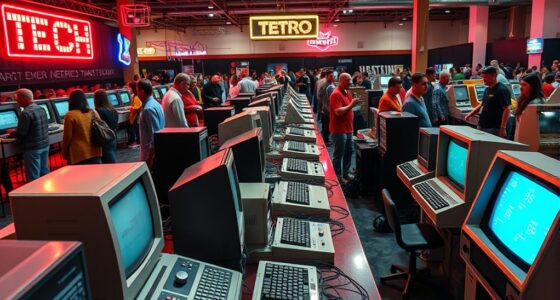
CRT technology still impresses because it uses a vacuum tube with electron guns that create detailed, vivid images. These tubes produce richer blacks, more natural colors, and smoother motion compared to many modern screens. Their precise control over electron streams results in higher contrast and better color gradations. Despite their size, CRTs offer a unique visual quality that’s hard to replicate today. If you’re curious about how they achieve this, there’s more to uncover behind their timeless appeal.
Key Takeaways
- CRTs produce richer blacks and more natural color gradations due to their phosphor-based image creation.
- They offer smooth motion and high refresh rates, making them ideal for gaming and video playback.
- The precise electron beam control results in sharp images with excellent contrast and color accuracy.
- CRTs handle rapid image changes better, reducing motion blur and flickering effects.
- Their unique visual qualities and durability continue to impress despite their bulky size and weight.
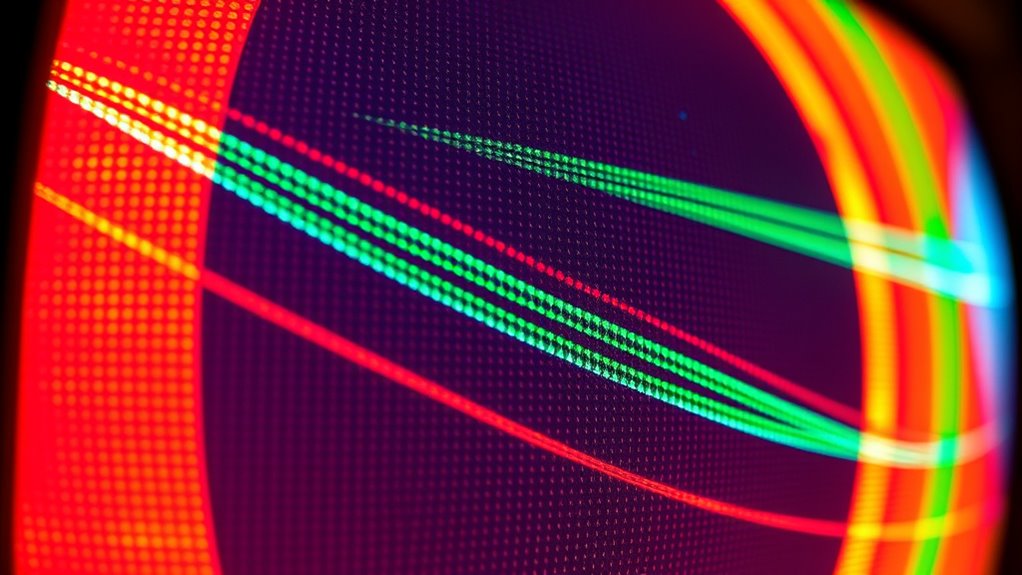
Ever wondered how CRT (cathode ray tube) technology works to display images on your screen? It’s a fascinating process that relies on cathode ray tubes, a foundational component of early display technology. When you look at an old TV or monitor, you’re seeing the result of precise electron beams projected onto a phosphorescent screen inside the CRT. These tubes are fundamentally glass cylinders filled with a vacuum, with electron guns at the back that generate streams of electrons. The display technology then directs these electrons towards the front of the tube, where tiny phosphor dots or stripes glow when struck by the electron beams. By controlling the intensity and position of these beams, the CRT creates the images you see on the screen.
The core of CRT technology is how it manipulates electron streams with magnetic or electrostatic deflection systems. You might think of these as invisible hands steering the electron beams across the screen at incredible speeds. As the beams scan across the phosphor-coated surface in a precise, rapid pattern, they activate specific areas to produce bright colors and detailed images. The process is so fast that your brain perceives a steady, moving picture rather than a series of flickering dots. This rapid refresh rate is a key reason why CRTs can deliver smooth motion and vibrant colors, making them stand out even today.
Display technology has come a long way, but CRTs hold a special place because of their unique qualities. They tend to produce richer blacks and more natural color gradations compared to some modern digital displays. The way CRTs handle motion and contrast often results in images that feel more lifelike, especially to those who grew up with these screens. Despite their bulky size and weight, CRTs are praised for their durability and excellent color accuracy. Many enthusiasts and professionals still prefer them for specific tasks, such as classic gaming or video editing, because of these qualities.
Understanding how cathode ray tubes work gives you an appreciation for the engineering behind vintage displays. While modern display technology like LCDs and OLEDs are more compact and energy-efficient, CRTs excel in delivering a certain visual experience that’s hard to replicate. The way they manipulate electron streams within the vacuum, directing them precisely to produce sharp, vivid images, is a tribute to innovative display technology. Even decades after their peak popularity, CRTs remain impressive, reminding you of a time when technology prioritized detailed, high-quality image rendering through a fascinating combination of physics and engineering.
Top picks for "tech explain monitor"
Open Amazon search results for this keyword.
As an affiliate, we earn on qualifying purchases.
Frequently Asked Questions
How Does a CRT Monitor Create Color Images?
A CRT monitor creates color images by directing electron beams at phosphor coatings inside the screen. When these beams hit the phosphors, they glow in red, green, or blue, producing the colors you see. By precisely controlling the electron beams’ position and intensity, the monitor mixes these primary colors to form a full range of images. This process results in vibrant, sharp visuals that have a unique, nostalgic quality.
What Are the Main Differences Between CRT and LCD Displays?
You’ll notice that CRT displays have a curved screen, which enhances image depth, whereas LCDs have flat screens. CRT tubes tend to last longer, providing consistent performance over time, unlike LCDs that can suffer from backlight issues. Additionally, CRTs use electron guns for image creation, offering rich colors and deep blacks. These differences make CRTs appealing for certain uses, despite the modern preference for slim, flat LCD screens.
Can CRTS Be Safely Used With Modern HDMI Devices?
You can use CRTs with modern HDMI devices, but safety considerations and compatibility issues matter. For example, if you connect a CRT to an HDMI source without a proper converter, you risk damage or safety hazards. Always guarantee you use a reliable HDMI-to-analog converter and check for proper grounding. This prevents electrical issues and ensures safe, functional use, preserving the vintage display’s charm without compromising safety.
Why Do CRTS Sometimes Display Flickering or Ghosting?
You might notice flickering or ghosting on your CRT because of the screen refresh rate, which controls how often the electron beam updates the display. If it’s too low, flickering becomes noticeable. Ghosting happens when the electron beam doesn’t clear the previous image quickly enough, causing a lingering shadow. Adjusting the refresh rate or ensuring your electron gun is functioning properly can reduce these issues and improve your viewing experience.
Are There Any Health Concerns Associated With CRT Usage?
You might wonder if using CRTs poses health risks. While some worry about eye strain from prolonged viewing, modern CRTs emit minimal radiation exposure, making them relatively safe. To protect your eyes, take regular breaks and adjust the brightness. Although concerns about radiation exist, current evidence indicates that with proper use, CRTs don’t pose significant health hazards. So, enjoy your vintage tech without undue worry.
Conclusion
So, savvy about CRT tech, you see its stunning simplicity still surpasses sleek, shiny screens. Old-school CRTs captivate with their crisp clarity, classic charm, and mesmerizing color. Don’t dismiss the device’s durability, detail, and depth just yet—delight in its distinctive design and dedication to detail. Whether for nostalgia or necessity, CRTs continue to charm, challenge, and champion the charm of classic technology—proving that sometimes, the simplest solutions stand the strongest.