To keep rare objects safe at home, control the environment by maintaining stable temperature and humidity, and keep items away from sunlight and drafts. Store them in secure, lockable display cases made of tempered glass and regularly check security features. Position cases in less accessible areas and attach them securely to walls or floors. Use acid-free supports and monitor conditions to prevent deterioration. Want to learn more about protecting your valuables? Keep exploring for expert tips to preserve their value.
Key Takeaways
- Store rare objects in lockable, tempered glass display cases to prevent theft and accidental damage.
- Maintain stable temperature and humidity levels to prevent deterioration.
- Position display cases away from high-traffic areas and secure them to walls or floors.
- Protect items from direct sunlight and UV exposure to prevent fading and damage.
- Regularly inspect security features and environmental controls for ongoing protection.
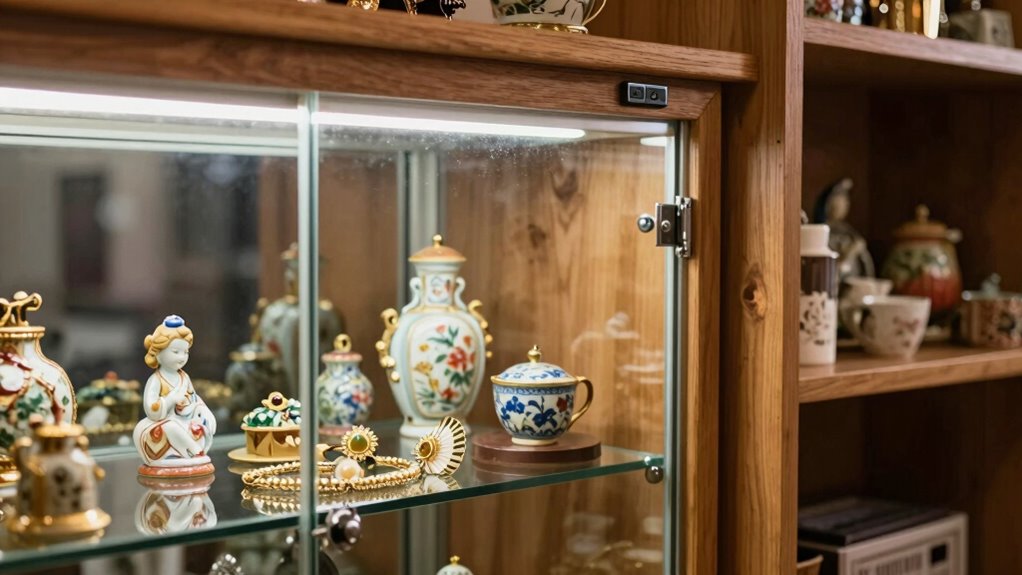
Have you ever wondered how to protect your rare objects from accidental damage or theft in a busy family home? It’s a common concern, especially if you’ve invested time and money into collecting antiques or other valuable items. You want them to stay in pristine condition and safe from curious little hands or careless accidents. The key lies in a combination of antique preservation techniques and smart display case security.
Antique preservation starts with understanding the specific needs of each item. Many antiques are sensitive to temperature fluctuations, humidity, and light exposure. You should store them in a stable environment, avoiding places with direct sunlight, drafts, or high humidity. Using acid-free tissue and proper supports can help prevent deterioration caused by handling or environmental stress. When displaying your collectibles, choose display cases that are designed to safeguard against dust, dirt, and accidental knocks. A well-made display case not only showcases your items beautifully but also acts as a barrier to prevent accidental damage. Additionally, using environmental controls can further help maintain ideal conditions for your collectibles. Proper placement and climate regulation are essential components of preservation. Regularly checking these controls ensures your objects remain protected over time. Incorporating humidity monitoring devices can also help maintain consistent conditions and prevent deterioration.
Protect your antiques by controlling light, temperature, and humidity, and using acid-free supports for lasting preservation.
Security is just as essential as preservation. Display case security is often overlooked, but it’s fundamental if your collection is valuable or irreplaceable. Investing in a lockable display case adds an extra layer of protection. Look for cases with sturdy locks and tempered glass, which is harder to break. For even greater security, consider cases with alarm systems or sensors that alert you if someone tries to open them without permission. This discourages theft and gives you peace of mind, especially if you have children or frequent visitors. Additionally, some electric lock systems can be remotely monitored, providing an added layer of security for your treasured items.
You should also think about where you place your display cases. Position them in areas that are less accessible or visible to everyone. Avoid spots near entrances or high-traffic zones where accidental bumps are more likely. Attaching cases to the wall or floor can provide additional stability, reducing the chance of tipping or knocking over your valuable objects. If you’re concerned about accidental spills or damage, keep your rare objects out of reach of pets and young children, who might unknowingly cause harm. Additionally, understanding the science behind sound vibrations can be beneficial, as some protective techniques involve sound-based methods to detect or deter potential threats. Regularly monitoring the security features of your display cases ensures they remain effective over time.

Dystler Glass Display Cabinet with Doors and RGB LED Lights
- RGB Lighting Modes: 5 dynamic modes and 7 static colors
- Smart Sensor Illumination: Auto lights when approached at night
- Tempered Glass Doors: Explosion-proof for safety and clarity
As an affiliate, we earn on qualifying purchases.
As an affiliate, we earn on qualifying purchases.
Frequently Asked Questions
How Do I Identify Truly Rare Objects in My Home?
You identify truly rare objects by researching their historical context and understanding their significance. Check for provenance verification, which confirms their authenticity and origin. Look for unique markings, signatures, or distinctive features that set them apart from common items. Consult experts or appraisers if you’re unsure. By verifying provenance and understanding their history, you can confidently determine which objects are genuinely rare and valuable in your home.
What Are the Best Materials for Storing Delicate Collectibles?
Did you know that 80% of delicate collectibles suffer damage from improper storage? For ideal preservation, use display cases made of inert materials like glass or acrylic, which prevent chemical reactions. Combine them with climate control systems that regulate humidity and temperature, minimizing deterioration. This approach keeps your collectibles safe and pristine, ensuring they retain their value and beauty for years to come.
How Often Should I Inspect My Rare Objects for Damage?
You should inspect your rare objects at least once every three to six months. During these checks, look for signs of damage or deterioration, especially if they’re in display cases with humidity control. Humidity fluctuations can cause warping or mold, so maintaining a stable environment is essential. Regular inspections help catch issues early, allowing you to take swift action to preserve your collectibles and keep them in pristine condition.
Are There Specific Insurance Policies for Rare Household Items?
Yes, there are specialized coverage options for your rare household items. You should consider acquiring valuable appraisals to accurately determine their worth, then explore insurance policies tailored to protect these unique possessions. These policies offer peace of mind, ensuring your cherished items are covered against unexpected mishaps. By investing in specialized coverage, you safeguard your treasures, allowing you to enjoy them without worry, knowing they’re protected by policies designed specifically for their rarity and value.
How Can I Educate Children About the Value of Rare Objects?
You can teach children about the value of rare objects by involving them in collectible care and valuation techniques. Show them how to handle items gently, explaining their significance and history. Use age-appropriate language to discuss why these objects matter, emphasizing respect and responsibility. Encourage curiosity and questions, making the learning interactive. This approach helps them appreciate the importance of preserving these treasures and instills lifelong respect for valuable items.

LFT HUIMEI2Y 4-Tier Glass Display Cabinet with Lock, Display Case Black
- Quick Assembly: Assembles in 30 minutes with upgraded structure
- Secure & Safe: Includes anti-tip device and lockable door
- Dust-Free Display: Keeps collectibles stable and dust-free
As an affiliate, we earn on qualifying purchases.
As an affiliate, we earn on qualifying purchases.
Conclusion
Protecting your rare objects is like tending a delicate garden—you need patience, care, and a watchful eye. By implementing secure storage, controlling environmental conditions, and staying vigilant, you create a sanctuary where these treasures can flourish. Remember, safeguarding them isn’t just about preservation but about nurturing their story for generations to come. With a little effort, you’ll keep your precious possessions safe, ensuring they remain vibrant and resilient, like a well-loved piece of art in a cherished gallery.

Dunuo 4-Inch Brass Outdoor Thermometer & Humidity Gauge, Tabletop
- All-in-One Indoor/Outdoor Monitor: Tracks temperature and humidity accurately
- Vintage Copper Decor: Elegant retro design with brass stand
- Large Easy-to-Read Dial: Provides clear, timeless display
As an affiliate, we earn on qualifying purchases.
As an affiliate, we earn on qualifying purchases.

Acrylic Display Case with Lock Key 4 Tier Clear Display Case Locking Cabinet for Collectibles Figure Knife Rock Perfume Countertop Retail Showcase Display Box Wall Mount with Shelves 11.8×5.9×15.7 in
- Size and Storage Capacity: 11.8×5.9×15.7 inches with 4 removable shelves
- Secure Locking System: Includes lock and 2 keys for safety
- Magnetic Door Design: Easy to open and close magnetic door
As an affiliate, we earn on qualifying purchases.
As an affiliate, we earn on qualifying purchases.