
Reviving grandma’s recipes with vintage appliances lets you reconnect with your culinary heritage in an authentic, meaningful way. Using old tools like cast iron pans or hand-crank mixers adds unique flavors and textures that modern appliances can’t match. These appliances also bring a tactile, nostalgic feel that enhances your cooking experience. By restoring and using these cherished items, you’ll preserve family traditions and create new memories that honor your roots. Keep exploring for tips on embracing this nostalgic journey.
Key Takeaways
- Using vintage appliances authentically recreates grandma’s flavors and textures in traditional recipes.
- Preserving and sharing recipes with vintage tools keeps family culinary heritage alive.
- Incorporating antique equipment adds nostalgic charm and sensory depth to homemade dishes.
- Learning the history behind recipes and tools deepens appreciation and connection to family traditions.
- Combining old appliances with modern techniques revitalizes cherished recipes for future generations.
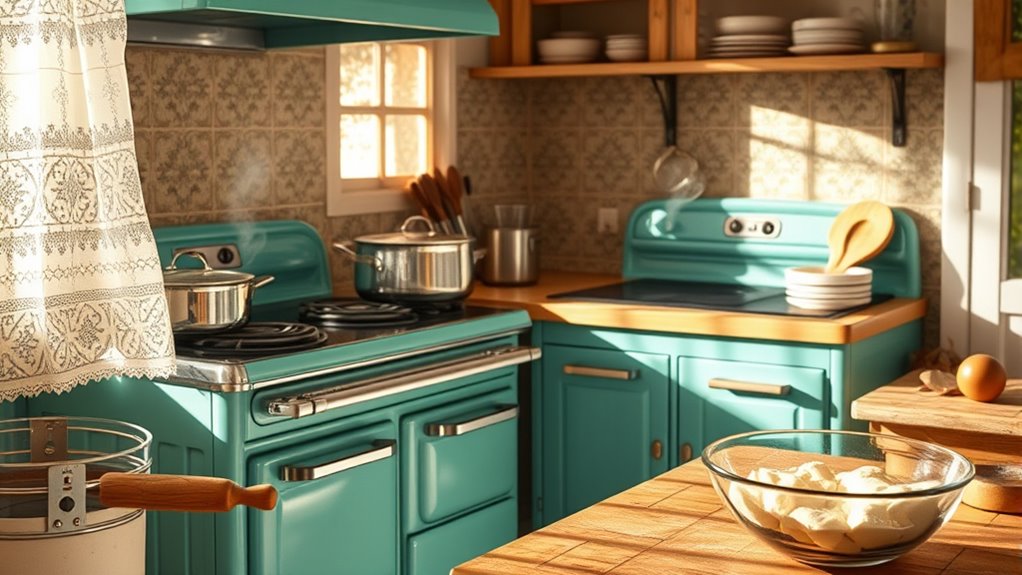
Many of us have cherished recipes passed down from our grandmothers, yet over time, these treasured dishes often fade into memory. Preserving family traditions and capturing the essence of those special moments in the kitchen becomes a heartfelt mission. Reviving grandma’s recipes isn’t just about cooking; it’s about reconnecting with the past and creating new memories rooted in kitchen nostalgia. When you set out to recreate those beloved dishes, you’re not only honoring your family’s heritage but also passing on stories and customs that define your identity.
Revive cherished family recipes to honor tradition and create lasting memories in the kitchen.
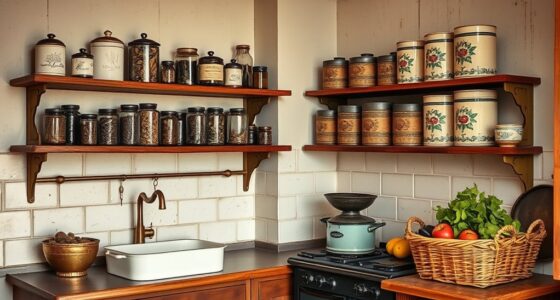
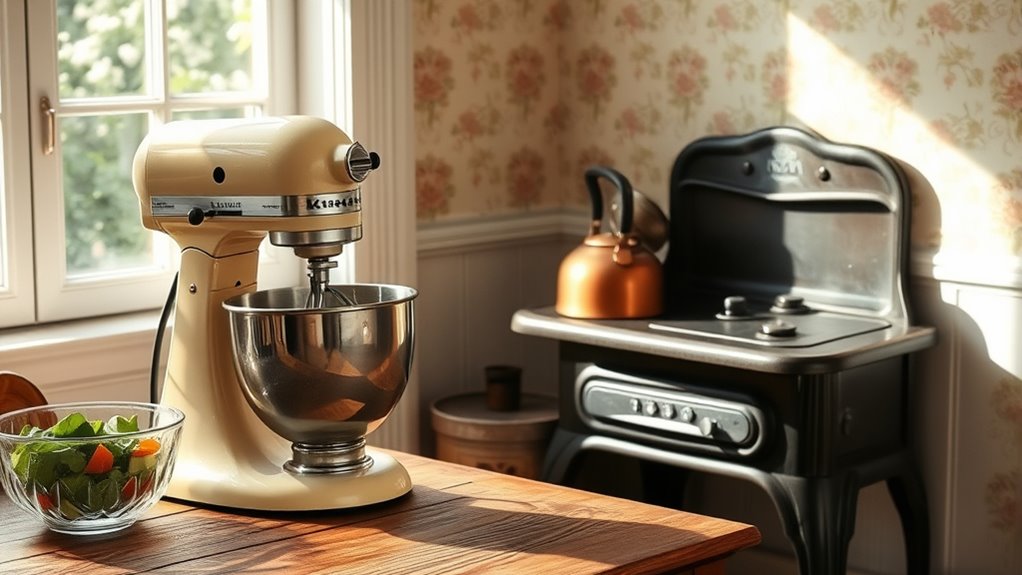
Using vintage appliances can transform this experience into something truly authentic. Many older stoves, mixers, and cookware carry a unique charm and character that modern appliances often lack. These tools can influence the flavors and textures of your dishes, giving them a distinctive touch that respects tradition. For example, a well-worn cast iron skillet might produce a cornbread with a crispy crust that no new non-stick pan can replicate. Similarly, an antique hand-crank mixer can help you achieve the perfect batter while connecting you to the hands that once used it decades ago. Incorporating these vintage appliances into your cooking process brings a sense of nostalgia, making each step feel like a continuation of your family’s culinary story.
To truly honor family traditions, take the time to learn about the history behind each recipe and appliance. Often, these dishes were crafted with love and passed down through generations, each alteration or addition adding a layer of meaning. When you cook with vintage appliances, you’re not just preparing food—you’re channeling the spirit of those who came before you. This can deepen your appreciation for the effort and care that went into each dish, reinforcing the emotional connection to your roots. Plus, using classic tools can inspire you to experiment and adapt recipes in ways that modern gadgets might hinder, encouraging creativity as you honor the old ways.
Reviving grandma’s recipes with vintage appliances also offers a tactile experience that engages your senses more fully. The feel of a heavy, aged pot, the sound of a hand-crank mixer, or the aroma of a seasoned cast iron pan roasting garlic—all these elements heighten your kitchen nostalgia. They serve as reminders that cooking is more than just sustenance; it’s a ritual that binds families and preserves traditions. By blending old tools with new techniques, you ensure these recipes and memories are not lost but revived, celebrated, and passed on to future generations.
Top picks for "reviv grandma recip"
Open Amazon search results for this keyword.
As an affiliate, we earn on qualifying purchases.
Frequently Asked Questions
How Do I Find Vintage Appliances in Good Condition?
To find vintage appliances in good condition, start by exploring online marketplaces, antique stores, and estate sales. Look for restoration tips to assess their functionality and condition. Check for signs of wear, rust, and missing parts. Keep in mind the collectible values, so choose appliances that are well-preserved or easily restorable. Always ask for detailed photos and history, and consider consulting a vintage appliance expert for advice.
Are Vintage Appliances Safe to Use With Modern Foods?
Using vintage appliances is like opening a time capsule, but safety concerns and food compatibility matter. You might wonder if they’re safe to use with modern foods; the answer isn’t straightforward. Some appliances may have outdated wiring or materials that aren’t food-safe by today’s standards. Always inspect for damage, and consider testing or updating components to guarantee they’re compatible with your current kitchen safety guidelines.
What Are Some Common Repairs for Vintage Kitchen Equipment?
You’ll often find that common repairs for vintage kitchen equipment include restoring electrical wiring, replacing worn-out seals, and fixing mechanical parts like gears and levers. Focus on restoration techniques and vintage appliance maintenance to keep your appliances running smoothly. Regularly inspecting for rust, lubricating moving parts, and testing safety features help prevent major issues, ensuring your vintage appliances stay functional and safe for use in your modern kitchen.
How Can I Modify Recipes for Vintage Appliances?
Imagine you’re a retro cooking enthusiast, ready to bring vintage appliances into modern kitchens. To modify recipes for vintage appliances, you should adjust cooking times, temperatures, and ingredient quantities to match their capabilities. Embrace appliance customization by experimenting with settings or using digital thermometers. This approach guarantees your recipes turn out perfectly, blending nostalgic charm with contemporary convenience. Your kitchen becomes a unique space where old-school meets modern culinary creativity.
Where Can I Find Authentic Vintage Appliance Parts?
You can find authentic vintage appliance parts at specialized restoration shops, online marketplaces like eBay, and vintage appliance shows. To guarantee authenticity, research the appliance’s history and use restoration techniques that preserve original parts. These sources help you maintain the appliance’s vintage charm while restoring functionality. By understanding the appliance’s history, you’ll better identify genuine parts, making your restoration efforts more successful and preserving a piece of culinary history.
Conclusion
Bringing grandma’s recipes back to life isn’t just about nostalgia—it’s a delicious journey through time. As you sizzle and stir with vintage appliances, you reconnect with traditions that taste like a warm hug. Who knew that by flipping a switch on that retro toaster, you’d be creating memories as timeless as your favorite vinyl record? So keep the spirit alive, and let these classic flavors remind you that sometimes, the best recipes are the ones that never go out of style.