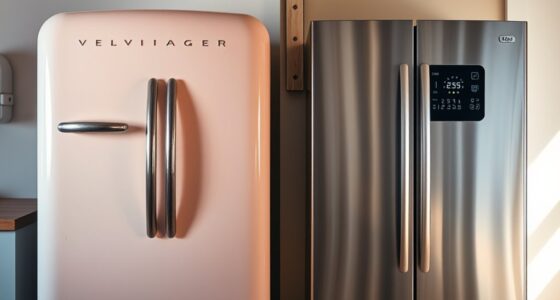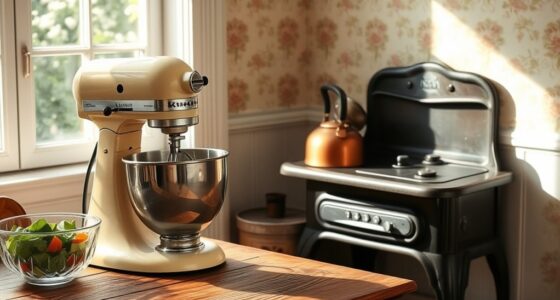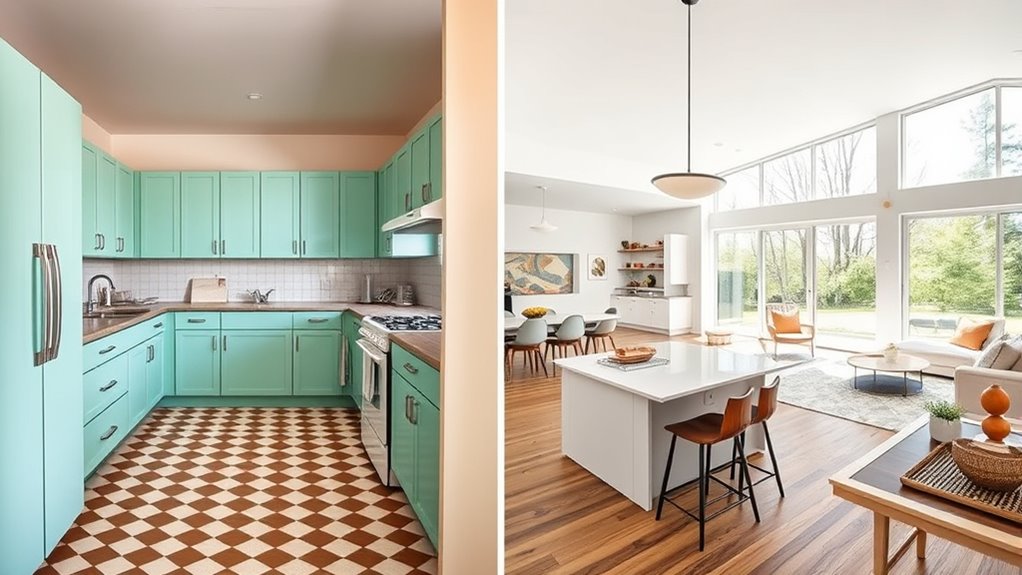

Before the mid-century, kitchens were closed-off, separate rooms focused on practicality. Then came the open-plan movement, emphasizing spacious, connected areas for socializing and entertaining—an often noisy and exposed setup. Post-mid-century designs introduced strategies like islands and partial walls to balance openness with privacy, making spaces more versatile. If you want to see how these layouts evolved and the clever ways designers created private zones, keep exploring the transformation of kitchen spaces over time.

Get furniture and decor delivered free — and shop member deals
- Fast, free delivery on millions of items
- Access to Prime Big Deal Days deals on October 6–7
- Prime Video, Amazon Music and more included
Key Takeaways
- Pre-mid-century kitchens were often enclosed, private spaces separate from living and dining areas.
- The mid-century open-plan movement prioritized large, unobstructed spaces for social interaction and entertainment.
- Early open kitchens sacrificed privacy, exposing cooks to noise and activity across combined zones.
- Modern designs incorporate zoning elements like islands and partitions to balance openness with privacy.
- Technological advancements enable flexible, soundproofed layouts that adapt open spaces for both socializing and retreat.
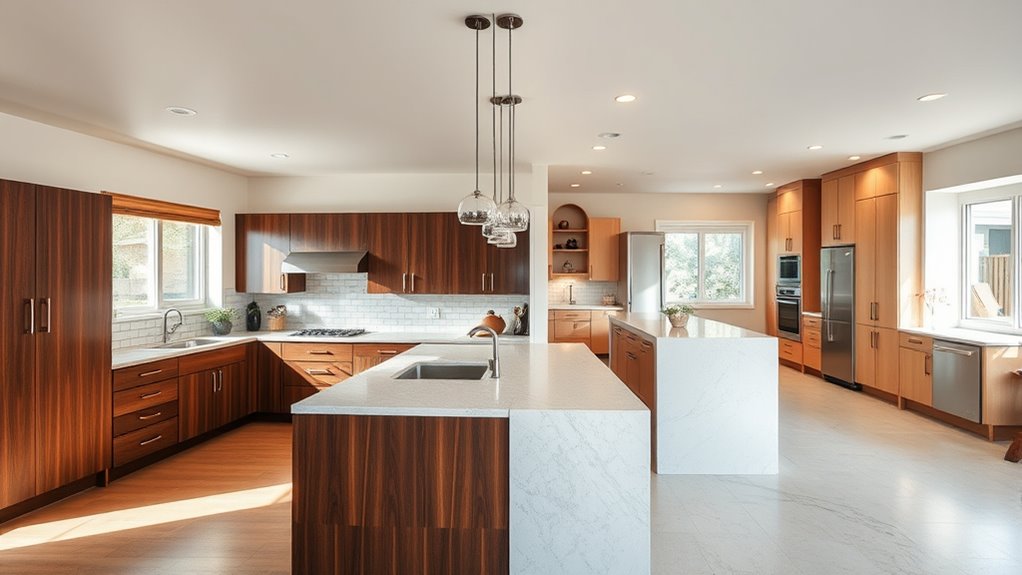
Open-plan kitchens have undergone a remarkable transformation from their mid-century origins to today’s modern designs. Back then, these spaces were often about openness and social connection, but they also brought challenges that homeowners now actively address. When you look at the spatial layouts of early open kitchens, they typically featured large, unobstructed areas that blended cooking, dining, and living spaces into one expansive zone. This design aimed to foster interaction, making it easy to entertain guests while preparing meals. However, these layouts often sacrificed privacy, leaving cooks exposed and sometimes overwhelmed by noise and activity from the adjoining areas.
Today, you have more options to balance openness with privacy concerns. Modern open-plan kitchens still emphasize spaciousness, but they incorporate clever zoning strategies. For example, you might see islands, partial walls, or raised counters that define different areas without fully enclosing them. These elements help you create visual boundaries, giving you a sense of separation when needed, whether you’re cooking, working, or relaxing. This approach allows you to maintain the social benefits of an open layout while also providing some refuge for privacy. You no longer have to feel like you’re on display every time you’re in the kitchen.
Modern open kitchens use islands and partial walls for privacy without sacrificing openness
Another key change in spatial layouts is the integration of technology and design features that enhance privacy. For instance, soundproofing materials and strategic furniture placement can minimize noise transfer, so conversations or activities in the kitchen don’t disturb others in the living or dining areas. You can also incorporate sliding doors or bi-fold partitions if you need a quick, temporary retreat from the open space. These options give you control over your environment, allowing you to create a quieter, more private zone when necessary, without sacrificing the overall openness you want. Additionally, spatial flexibility has become an important aspect of modern open kitchens, enabling homeowners to adapt the space to their evolving needs.
As an affiliate, we earn on qualifying purchases.
Frequently Asked Questions
How Did Open-Plan Kitchens Influence Social Interactions at Home?
Open-plan kitchens boost social cohesion and family bonding by creating a shared space where everyone can interact easily. You find it easier to chat, cook, and spend quality time together without walls dividing you. This layout encourages more natural conversations and teamwork, making your home feel more connected. As a result, your family develops stronger bonds and feels more involved in each other’s daily lives.
What Materials Were Commonly Used in Mid-Century Open Kitchens?
You’ll notice that mid-century open kitchens commonly featured sleek countertop materials like laminates and Formica, which offered durability and affordability. Cabinet finishes often included wood veneers, painted surfaces, or laminate coverings, adding a modern yet warm touch. These choices made the space functional and stylish, blending practicality with aesthetic appeal. The emphasis was on clean lines and simple materials that complemented the open, airy design of the era.
How Did Lighting Design Change With Open-Plan Kitchen Layouts?
Imagine a sunrise spreading warmth across your space—that’s how lighting design evolved in open-plan kitchens. You now focus on creating a balanced lighting ambiance, blending task, ambient, and accent lighting. Fixture styles shifted from simple pendant lights to sleek, integrated fixtures that highlight the room’s flow. You can tailor your lighting to enhance social interactions and functionality, transforming your kitchen into a harmonious, inviting environment where every glow symbolizes connection and comfort.
Were There Any Notable Architects or Designers Behind the Open-Plan Trend?
You’ll find architectural pioneers like Frank Lloyd Wright and Charles and Ray Eames behind the open-plan trend, shaping modern living spaces. These design innovators championed layouts that promote flow and connection, breaking down traditional barriers. Their revolutionary ideas transformed kitchens into integrated hubs, emphasizing openness and functionality. By pushing boundaries, they revolutionized residential design, inspiring countless architects and homeowners to embrace open-plan layouts that foster social interaction and versatile living.
How Do Modern Open-Plan Kitchens Compare to Mid-Century Designs in Functionality?
You might think modern open-plan kitchens are just bigger, but they’re smarter. With sleek appliance integration and clever storage solutions, you get a space that’s functional yet stylish. Unlike mid-century designs that prioritized form over function, today’s kitchens let you cook, entertain, and relax seamlessly. It’s like having your cake and eating it too—efficient, beautiful, and perfectly suited for modern living’s demands.
soundproof sliding door for kitchen
As an affiliate, we earn on qualifying purchases.
As an affiliate, we earn on qualifying purchases.
Conclusion
Today’s open-plan kitchens are like vibrant symphonies, blending space and light into a harmonious masterpiece. They’ve evolved from cozy, enclosed spaces into lively, inviting heartbeats of the home. You now stand at the crossroads of tradition and innovation, where design flows seamlessly like a river, guiding you toward comfort and connection. Embrace this revolution, and let your kitchen become the stage where family and friends dance together in warmth and laughter.
As an affiliate, we earn on qualifying purchases.
modern open-plan kitchen furniture
As an affiliate, we earn on qualifying purchases.
As an affiliate, we earn on qualifying purchases.
Fall Picks
fall essentials
As an affiliate, we earn on qualifying purchases.