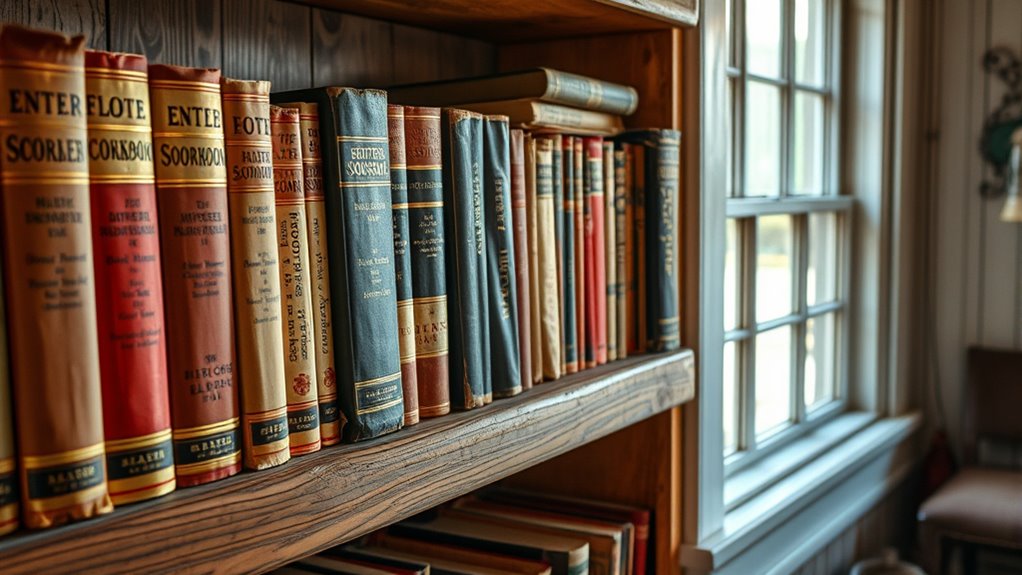

Collectible vintage cookbooks give you a unique glimpse into past kitchens, revealing cherished recipes, design trends, and preservation methods used before modern technology. They show how households stored food and reflected societal values through decoration and layout. These treasures capture evolving culinary techniques and kitchen aesthetics from different eras. Exploring them offers insight into everyday life and culinary heritage. Keep exploring to discover more about the fascinating history these cookbooks hold.
Key Takeaways
- Vintage cookbooks reveal historical kitchen design, aesthetics, and technological advancements of past eras.
- They showcase traditional preservation techniques like curing, pickling, and drying, reflecting resourcefulness.
- Illustrations and decorative elements offer insights into the visual style and utensils of previous times.
- These cookbooks provide cultural insights into societal values, daily routines, and culinary traditions.
- Collecting them preserves culinary heritage, highlighting the evolution of kitchen practices and design.

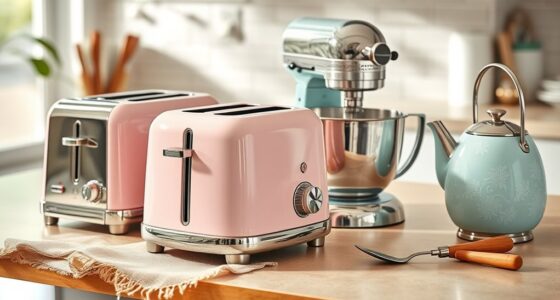
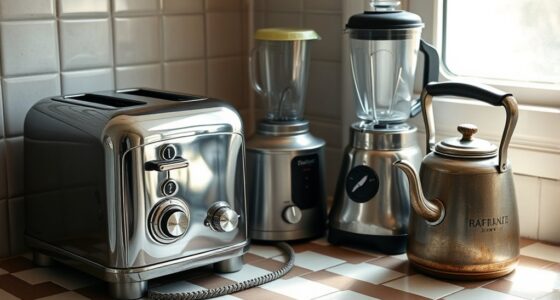
Have you ever wondered what kitchens looked like decades ago? Stepping into the world of vintage cookbooks offers a fascinating glimpse into those bygone eras. These books aren’t just collections of recipes; they’re windows into how people preserved their culinary traditions and how kitchens were designed to reflect the aesthetics of their time. When you browse through a vintage cookbook, you’re not only discovering old recipes but also understanding the methods of recipe preservation that kept dishes fresh and edible before modern refrigeration. Many older cookbooks emphasize techniques like curing, pickling, and drying, which were essential for storing ingredients and leftovers safely. These preservation methods reveal a lot about the resourcefulness of past households, especially before the era of convenience foods. As you flip through pages filled with hand-written notes or pressed flower decorations, you get a sense of how cooks valued keeping their recipes alive across generations. This act of recipe preservation was often a family affair, with recipes passed down and carefully guarded, sometimes marked with personal touches that made each cookbook unique. Additionally, the cultural significance of these preservation practices provides insight into the societal values and daily routines of earlier times. Beyond the recipes themselves, vintage cookbooks also showcase the kitchen aesthetics of their time. They often feature illustrations, elegant typography, and decorative borders that reflect the design sensibilities of the period. These visual elements give you clues about the overall style and atmosphere of past kitchens—whether it was the cozy, farmhouse charm of the early 20th century or the sleek, modern lines of mid-century design. The type of cookware, utensils, and even the layout hinted at in these cookbooks provides insight into the priorities and tastes of home cooks from different eras. They serve as a reminder that kitchens weren’t just functional spaces but also reflections of personal and societal values, emphasizing beauty, order, or practicality depending on the period. When you collect vintage cookbooks, you’re holding onto more than just recipes; you’re preserving a snapshot of history, capturing the aesthetic trends, technological advances, and cultural shifts that shaped how kitchens looked and functioned. In essence, these books allow you to connect with the past in a tangible way, appreciating how culinary traditions and kitchen design have evolved while still honoring the timeless art of cooking.
Top picks for "collectible vintage cookbook"
Open Amazon search results for this keyword.
As an affiliate, we earn on qualifying purchases.
Frequently Asked Questions
How Can I Determine the Value of a Vintage Cookbook?
To determine the value of a vintage cookbook, start with book value estimation by researching similar items online and in auction sites. Consider antique cookbook grading, evaluating condition, rarity, and historical significance. Check for any unique features or signatures that could boost its worth. Consulting with antique appraisers or collecting experts can also provide accurate assessments. This approach helps you understand its true value in the collectible market.
What Are the Best Ways to Preserve Old Cookbooks?
Think of your vintage cookbooks as treasures in a time capsule. You can preserve them by using gentle paper preservation methods, like storing in acid-free covers and avoiding direct sunlight. Reinforce fragile pages with careful bookbinding techniques, and keep humidity low to prevent mold. Handling with clean hands and keeping them flat prevents further damage. Protecting your collection guarantees these culinary stories last for generations to come.
Are There Specific Editions That Are More Collectible?
You’ll find first editions and limited print runs are the most collectible vintage cookbooks. These editions often feature unique covers, signatures, or rare content that collectors prize. To identify them, check for original publishing details and special markings. Keep in mind, well-preserved copies with minimal wear increase their value. So, focus on finding those first editions or limited prints, and verify you handle them carefully to maintain their condition.
How Do I Authenticate Vintage Cookbooks?
To authenticate vintage cookbooks, start by examining the paper quality; older books often have thin, slightly yellowed pages. Look at the cover design—authentic editions usually feature original artwork or printing styles from their era. Check for signs of aging, such as wear or fading, and compare with known authentic copies. Research publication details and publisher marks to verify origin, ensuring your cookbook is genuine and valuable.
Where Can I Find Rare or Out-Of-Print Vintage Cookbooks?
You can find rare or out-of-print vintage cookbooks at antique bookstores and estate sale finds. These spots often carry unique and hard-to-find editions that aren’t available elsewhere. Keep an eye out for local estate sales or visit specialty antique stores, as they frequently have hidden gems. Networking with collectors or joining online forums can also help you discover where others have uncovered valuable vintage cookbooks.
Conclusion
As you explore vintage cookbooks, remember that old recipes often hold timeless wisdom. They offer a glimpse into past kitchens and culinary traditions worth preserving. Collecting these treasures isn’t just about aesthetics; it’s about connecting with history and stories worth sharing. As the saying goes, “A thing of beauty is a joy forever.” So, keep uncovering those hidden gems, and let your kitchen adventures continue to inspire and delight.