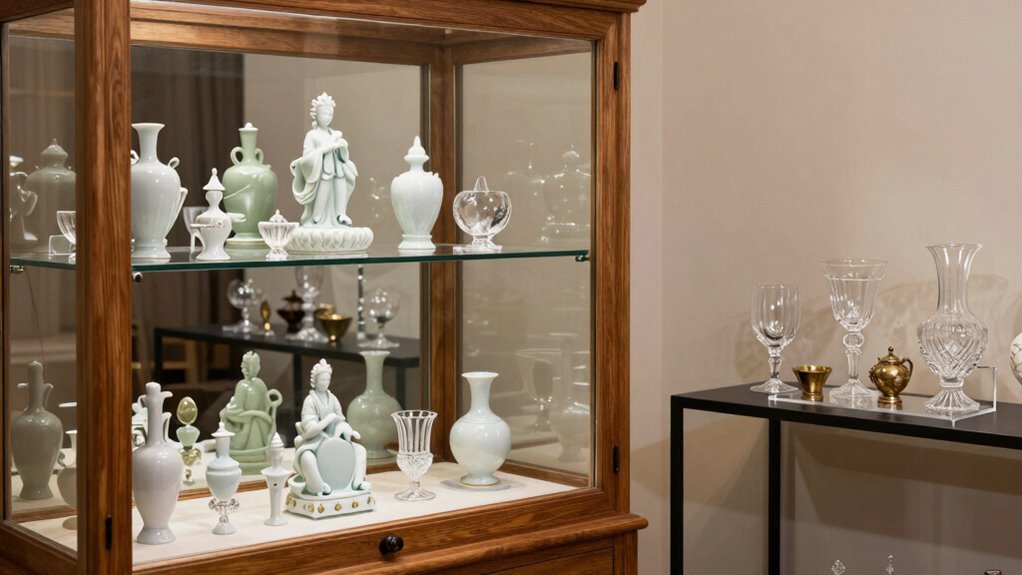

To protect delicate objects, choose cases, cabinets, and shelves made from durable, non-reactive materials like tempered glass, high-quality wood, or stainless steel. Use adjustable shelves, padded surfaces, and soft liners to prevent damage. UV-protective glass and proper lighting help preserve colors and details, while maintaining a controlled environment prevents deterioration from humidity and temperature fluctuations. Keep in mind the best practices to guarantee long-term preservation—more tips await if you continue your exploration.

Get furniture and decor delivered free with Prime
- Fast, free delivery on millions of items
- Prime Video, Amazon Music and more included
- Member-only deals all year
Key Takeaways
- Choose materials like tempered glass, seasoned wood, or stainless steel for durability and non-reactivity.
- Use adjustable, padded, or lined shelves to protect delicate objects from scratches and physical damage.
- Incorporate UV-protective glass or coatings to minimize light damage and preserve colors over time.
- Maintain a controlled environment with stable temperature and humidity to prevent deterioration.
- Ensure proper ventilation and spacing for air circulation, reducing mold risk and promoting preservation.

When it comes to protecting delicate objects, choosing the right case, cabinet, or shelf is essential. The first step is understanding that your primary goal is to prevent damage while maintaining the object’s integrity and aesthetic appeal. Whether you’re safeguarding antique jewelry, fragile collectibles, or priceless artifacts, your choice of storage plays a crucial role. The right enclosure should not only shield items from dust, moisture, and environmental fluctuations but also promote antique preservation. This means selecting materials that won’t react adversely over time or cause deterioration.
Choosing the right storage protects delicate objects and preserves their beauty over time.
Material durability is a key consideration here. You want your storage solution to stand the test of time, resisting warping, corrosion, or discoloration. For example, well-constructed glass cabinets with tempered glass panels offer clear visibility and are highly durable, making them ideal for display purposes while protecting objects from physical contact and dust. Wooden cabinets, if made from seasoned, high-quality wood like oak or maple, provide excellent durability and a classic look. However, avoid cheaper, particleboard options that can warp or degrade quickly. Metal cabinets, especially those made from stainless steel or powder-coated steel, offer robust protection and are resistant to corrosion, making them suitable for environments with higher humidity.
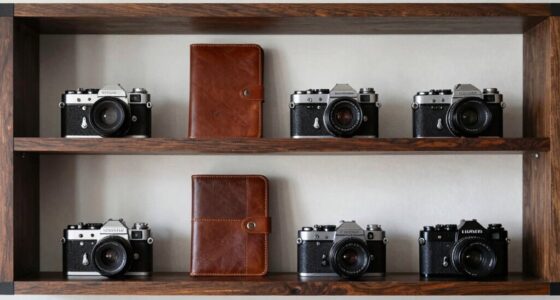
When selecting shelves within these cabinets, consider adjustable options so you can customize the space according to the size and fragility of your objects. Proper spacing ensures air circulation, which is essential for antique preservation, preventing mold and deterioration. For delicate items, padded or lined shelves are preferable to prevent scratching or other physical damage. Also, opt for non-reactive materials, such as acid-free tissue paper or soft cloth liners, to avoid chemical reactions that could harm sensitive items over time. Additionally, understanding color accuracy and appropriate lighting can help maintain the visual integrity of your displayed objects over time. To further protect your collection, consider UV-protective glass or coatings that minimize light damage and preserve color fidelity over the years.
The environment surrounding your storage solution matters just as much as the case itself. Keep your display in a controlled climate—away from direct sunlight, fluctuating temperatures, and high humidity—to further enhance antique preservation. UV-protective glass or coatings on display cases can help minimize light damage, ensuring your objects retain their original colors and details.
Products Worth Considering

Dyson V8 Cordless Vacuum

Philips Hue Secure Wired Video Doorbell, 2K, Black

Philips Hue Bridge Pro Smart Lighting Hub
As an affiliate, we earn on qualifying purchases.
Frequently Asked Questions
How Do I Clean Delicate Display Cases Without Damage?
To clean delicate display cases without damage, use gentle cleaning techniques like soft microfiber cloths to wipe surfaces. Avoid harsh chemicals; instead, opt for a mild soap solution if needed. Before cleaning, consider applying protective coatings if the case allows, which can help prevent scratches and damage. Always test cleaning methods on a small, hidden area first, and avoid excessive moisture to preserve the case’s integrity.
What Materials Are Safest for Fragile Object Storage?
You should opt for materials that gently embrace your fragile treasures, like acrylic or tempered glass, known for their durability and clarity. To keep things safe, add protective padding such as soft foam or felt lining, which cushions and prevents scratches. These materials are both gentle on delicate objects and sturdy enough to withstand handling, ensuring your collection stays pristine over time while maintaining visibility and elegance.
How Do Temperature Fluctuations Affect Delicate Items?
Temperature fluctuations can seriously damage delicate items by causing expansion and contraction, which may lead to cracks, warping, or other deterioration. To protect your objects, focus on temperature regulation and humidity control within their storage space. Keeping the environment stable minimizes stress on fragile materials, preserving their integrity. Regularly monitor temperature and humidity levels to guarantee consistent conditions, preventing potential damage caused by sudden changes.
Can I Customize Shelving for Odd-Shaped Objects?
Yes, you can definitely customize shelving for odd-shaped objects. Custom shelving allows you to tailor storage solutions to fit each unique item perfectly. You can create compartments, add adjustable shelves, or use flexible materials to accommodate irregular shapes. Custom shelving guarantees your delicate objects are supported, protected, and displayed beautifully, giving you a practical and personalized way to organize odd-shaped objects effectively.
What Security Features Are Available for Valuable Displays?
You can enhance security for your valuable displays with features like security alarms that alert you to unauthorized access and locking mechanisms that keep your items safe. Choose cabinets with tamper-proof locks or electronic locking systems for added protection. Installing security alarms connected to your display cases acts as a deterrent and provides peace of mind, ensuring your delicate objects stay secure and protected at all times.
Conclusion
So, next time you carefully choose a case, cabinet, or shelf for your fragile treasures, remember—it’s almost ironic how a simple enclosure can make or break their safety. After all, what’s more delicate than trusting something so sturdy? But don’t worry, with the right storage, you’ll keep those precious objects safe, even if it’s just from your own clumsiness. Because sometimes, the best protection is just a well-chosen display—who knew?