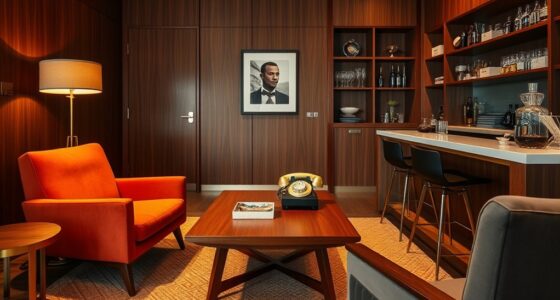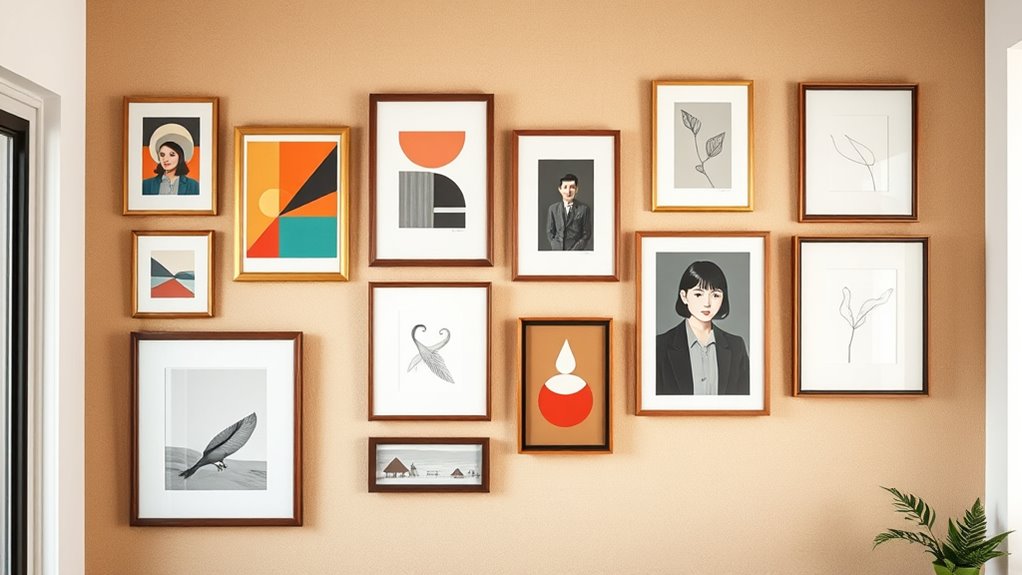

To create a mid-century gallery wall, start by selecting vintage-inspired artwork with bold graphics, abstract shapes, or vintage photos, keeping a cohesive color palette with earthy tones or primary colors. Choose sleek, simple frames in wood or metal and arrange a mix of sizes for visual interest. Use templates to plan your layout, hang pieces at eye level with even spacing, and keep the look relaxed yet balanced. If you continue, you’ll find tips to perfect your arrangement.
Key Takeaways
- Select vintage-inspired artwork with abstract shapes, bold graphics, or black-and-white photos that evoke mid-century style.
- Use sleek, simple frames in wood or metal to enhance the artwork without overpowering it.
- Coordinate pieces with a cohesive color palette of earth tones, primary hues, or subtle accents for visual harmony.
- Plan your layout using paper templates, mixing large and small pieces for a balanced, asymmetrical arrangement.
- Hang artwork at eye level with consistent spacing, ensuring a relaxed, curated look that highlights your vintage art collection.

A mid-century gallery wall brings a timeless, stylish vibe to any space, and creating one is easier than you might think. The key lies in choosing the right artwork and arranging it thoughtfully. Start by selecting pieces that evoke the mid-century aesthetic—think abstract shapes, bold graphics, and vintage photography. Once you’ve gathered your art, focus on artistic framing. Opt for sleek, simple frames in materials like wood or metal, which complement mid-century design. Avoid ornate or overly decorative frames; instead, choose clean lines that highlight the artwork without overpowering it. This approach keeps the display cohesive and refined.
Color coordination is another vital aspect. A successful mid-century gallery wall often features a curated palette of colors—muted earth tones, bold primary hues, or a mix of both. To achieve a balanced look, consider selecting artwork that shares a common color theme or complement each other. For example, if you have pieces with warm oranges and browns, add a few with mustard yellow or soft beige to tie everything together. You don’t need every piece to match perfectly, but maintaining some harmony in colors helps create visual flow. You can also incorporate artwork with black-and-white elements or subtle pops of color for contrast and interest.
When arranging your gallery, start by laying out templates on the floor. Use paper cutouts to mimic the size and shape of your frames, and move them around until you find a pleasing composition. Aim for a balanced mix of larger and smaller pieces, spacing them evenly but avoiding strict symmetry. A common technique is to keep the layout centered around a focal point or a main piece, then build outward. Keep in mind that mid-century design favors asymmetry and a bit of spontaneity, so don’t be afraid to experiment. Additionally, consider the lighting in your space to ensure your artwork is showcased effectively.
Hang your artwork at eye level for the best visual impact, and maintain consistent spacing—around 2 to 4 inches—between frames. Use a level to ensure everything hangs straight, and double-check your spacing as you go. As you assemble your gallery wall, remember that the goal is to create a curated yet relaxed look. Mix and match different sizes and styles, but keep your color palette and framing choices consistent to avoid visual chaos. With a little planning and attention to detail, you’ll have a stunning mid-century gallery wall that elevates your space with vintage charm and modern sophistication.
Top picks for "create century gallery"
Open Amazon search results for this keyword.
As an affiliate, we earn on qualifying purchases.
Frequently Asked Questions
What Are the Best Vintage Art Sources for a Mid-Century Gallery Wall?
You should explore antique print sources like local thrift stores, estate sales, and online marketplaces such as eBay or Etsy for authentic vintage pieces. Additionally, check out vintage poster collections from archives or specialized shops to find bold, iconic artwork. These sources offer a wide variety of mid-century styles, helping you create a cohesive and stylish gallery wall that truly captures the vintage vibe you want.
How Do I Choose Frame Styles That Match Mid-Century Aesthetics?
Imagine your gallery wall as a sleek, vintage spaceship. Choose frame styles with clean lines and minimal ornamentation—think slim metal or light-colored wood—to match mid-century aesthetics. Opt for frame materials like matte black or natural wood, and stick to colors like white, black, or warm wood tones. These choices create harmony, allowing your vintage art to shine while maintaining that iconic mid-century modern vibe.
What Color Schemes Work Best for Mid-Century Gallery Arrangements?
You’ll want to stick to color schemes that emphasize color harmony, such as neutral backgrounds with bold accent colors like mustard yellow, teal, or burnt orange. These palettes highlight mid-century style’s vibrancy while keeping the arrangement cohesive. Incorporate accent colors sparingly to add visual interest without overwhelming the vintage aesthetic. By balancing these hues, your gallery wall will evoke that classic, stylish mid-century vibe.
How Can I Incorporate Modern Pieces Into a Vintage Gallery Wall?
You can incorporate modern pieces into a vintage gallery wall by mixing styles thoughtfully. Start by balancing proportions, placing larger modern art alongside smaller vintage pieces to create visual harmony. Use similar color palettes to unify diverse pieces and avoid clutter. Incorporate sleek, minimalist frames with vintage artwork for contrast, and arrange the modern pieces strategically so they complement rather than overpower your vintage collection.
What Are Common Mistakes to Avoid When Designing a Mid-Century Gallery Wall?
Think of your gallery wall as a symphony—every piece needs harmony and balance. Avoid common mistakes like uneven spacing or overcrowding, which can disturb the flow. Don’t neglect mixing frame styles or sizes thoughtfully, as this can create visual discord. Keep your focal points clear and consider symmetry or intentional asymmetry. By maintaining harmony and balance, your vintage art will sing beautifully on your wall.
Conclusion
Now that you’ve arranged your vintage art, your wall becomes a vibrant tapestry telling a story. Think of it as a carefully curated garden, where each piece blossoms in harmony, creating a stunning visual landscape. With your eye for style and a touch of patience, your mid-century gallery wall will stand as a timeless masterpiece—proof that the art of arrangement is truly an art form itself. Enjoy your beautifully curated space!