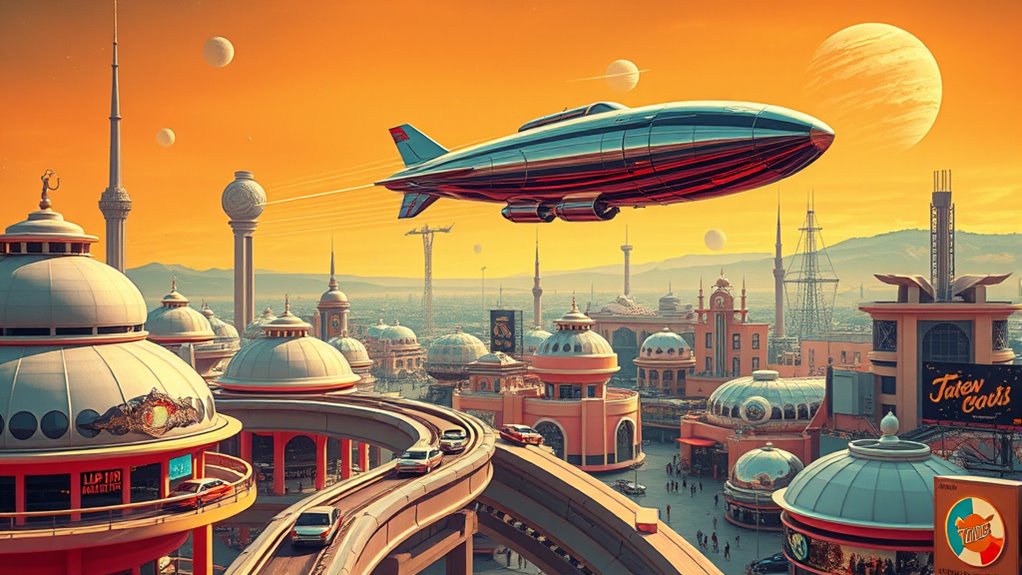

In the 1960s, retro futurism shaped how you see the future through sleek synthetic designs, shiny chrome finishes, and bold geometric shapes. It exudes optimism with visions of space-age cities, floating habitats, and advanced gadgets that seem magical. These styles blend imagination with practicality, influencing everything from cars to TV sets. If you explore further, you’ll discover how this vintage aesthetic continues to inspire modern interpretations of the future.
Key Takeaways
- The 1960s envisioned the future through sleek, shiny chrome surfaces and rounded, minimalistic forms symbolizing advanced technology.
- Space age aesthetics featured bold geometric shapes and bulbous designs inspired by rockets and space exploration.
- Future habitats, floating cities, and futuristic gadgets reflected a blend of imagination, practicality, and optimism about progress.
- These design ideas influenced 1960s cars, electronics, architecture, and continue to inspire modern retro-futuristic styles.
- The era’s visuals embodied hope, limitless possibilities, and humanity’s destiny among the stars, shaping cultural and technological visions.
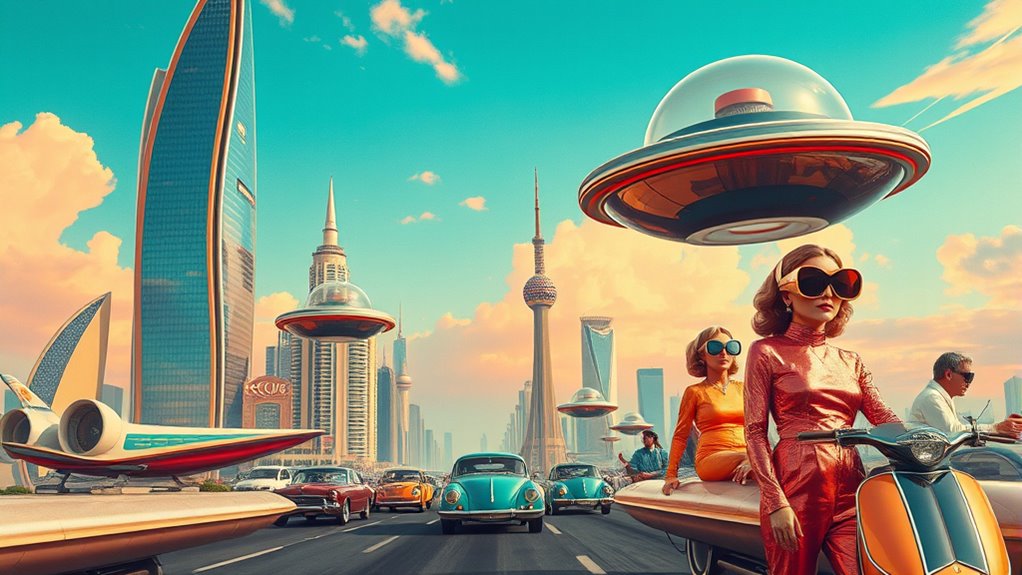
Have you ever wondered what the future looked like in the minds of people from the past? During the 1960s, that vision was vividly shaped by a fascination with space age aesthetics and vintage sci-fi concepts. Designers, architects, and artists imagined a future where technology and exploration would redefine everyday life. They envisioned sleek, streamlined structures, metallic finishes, and bold geometric shapes that seemed to leap straight from a science fiction movie. This era’s aesthetic was all about optimism and the belief that humanity’s destiny was among the stars, which was reflected in everything from household appliances to fashion.
Space age aesthetics played a central role in how the future was portrayed. Think shiny chrome surfaces, rounded forms, and minimalistic designs that evoke the idea of advanced technology. These elements were not just functional but symbolic, representing progress and the limitless possibilities of science and exploration. The influence of vintage sci-fi concepts is evident in the way buildings, cars, and even furniture looked like they belonged in a rocket ship or a space station. Curves and bulbous shapes became popular because they conveyed a sense of movement and innovation, breaking away from the traditional straight lines and ornate details of earlier eras.
The visions of the future from that time were ambitious, often depicting a world where humans traveled to distant planets, lived in floating cities, or used gadgets that seemed magical. These ideas weren’t just fantasies—they influenced real-world design and technology. For example, the streamlined design of the 1960s cars, the bulbous television sets, and the futuristic interiors all echoed these vintage sci-fi concepts. Designers aimed to create environments that felt like stepping into the future, blending imagination with practicality. The optimism of that time was contagious, fueling innovations and inspiring artists to push boundaries.
Looking at retro-futuristic designs today, you can see how these visions continue to influence modern aesthetics. Many contemporary pieces pay homage to that era’s space age aesthetics, blending old-school sci-fi charm with new technology. Whether it’s in movie set designs, architecture, or fashion, the spirit of the 1960s future remains alive. It’s a reminder of how deeply our imaginations can shape reality, and how the dreams of yesterday continue to inspire the innovations of tomorrow. That era’s blend of hope, technology, and style created a unique visual language — one that remains enthralling and endlessly inspiring even decades later. Additionally, these designs often incorporate energy-efficient principles, reflecting a modern commitment to sustainability while celebrating the retro-futuristic aesthetic.
Top picks for "retro futurism 1960"
Open Amazon search results for this keyword.
As an affiliate, we earn on qualifying purchases.
Frequently Asked Questions
How Did 1960S Pop Culture Influence Retro Futurism?
You see, 1960s pop culture heavily influenced retro futurism through space exploration and sci-fi aesthetics. The era’s fascination with moon landings and futuristic movies inspired bold, sleek designs that embody optimism and innovation. You notice this in the shiny, streamlined shapes and bold colors, reflecting dreams of a high-tech future. This cultural enthusiasm shaped retro futurism, making it a vivid blend of imagination and technological aspiration.
What Materials Were Commonly Used in Retro Futurism Designs?
You’ll notice that retro futurism designs often use plastic innovations like molded plastics and acrylics, making furniture and decor look sleek and futuristic. Metallic finishes are also common, giving surfaces a shiny, space-age feel. These materials helped create the bold, optimistic look of the era’s vision of the future, blending technology and style seamlessly to evoke a sense of progress and innovation in every piece.
Did Retro Futurism Influence Modern Sustainable Design?
You might not realize it, but retro futurism’s wild visions have dramatically shaped modern sustainable design. Its obsession with sleek, futuristic shapes and bold colors inspired designers to prioritize eco-friendly aesthetics and renewable materials. This influence pushes you to embrace innovative solutions, merging style with sustainability. As a result, retro futurism fuels your desire to create environmentally responsible designs that look forward while honoring the past’s visionary spirit.
How Did Technological Advancements of the 1960S Shape Visions of the Future?
You see, the technological advancements of the 1960s fueled space age optimism, inspiring visions of a future with sleek, innovative designs. You’re drawn to the futuristic aesthetics that emerged, like shiny metallic surfaces and bold geometric shapes, reflecting excitement for space exploration and new tech. This era’s innovations sparked a sense of limitless possibilities, influencing how you imagine future technology and design even today.
Are There Any Iconic Retro Futurism Artworks or Movies?
You’ll recognize famous artworks like Syd Mead’s futuristic concept art and movies such as “2001: A Space Odyssey” and “Thoroughly Modern Millie.” These iconic movies and artworks define retro futurism, showcasing visions of the future from the 1960s. They blend sleek designs with optimistic ideas about technology, inspiring today’s sci-fi aesthetics. Immerse yourself in these classics to see how the past imagined the future vividly and creatively.
Conclusion
So, next time you marvel at sleek, shiny gadgets or sleek flying cars, remember—you’re living in a 1960s sci-fi fantasy. They envisioned a future of endless optimism, space-age glam, and maybe even robot butlers. Instead, you get buffering Wi-Fi and endless emails. But hey, at least you can still dream of jetpacks and hoverboards—just don’t hold your breath. Retro futurism reminds you that sometimes, the future’s biggest joke is the one we’re still waiting to see unfold.