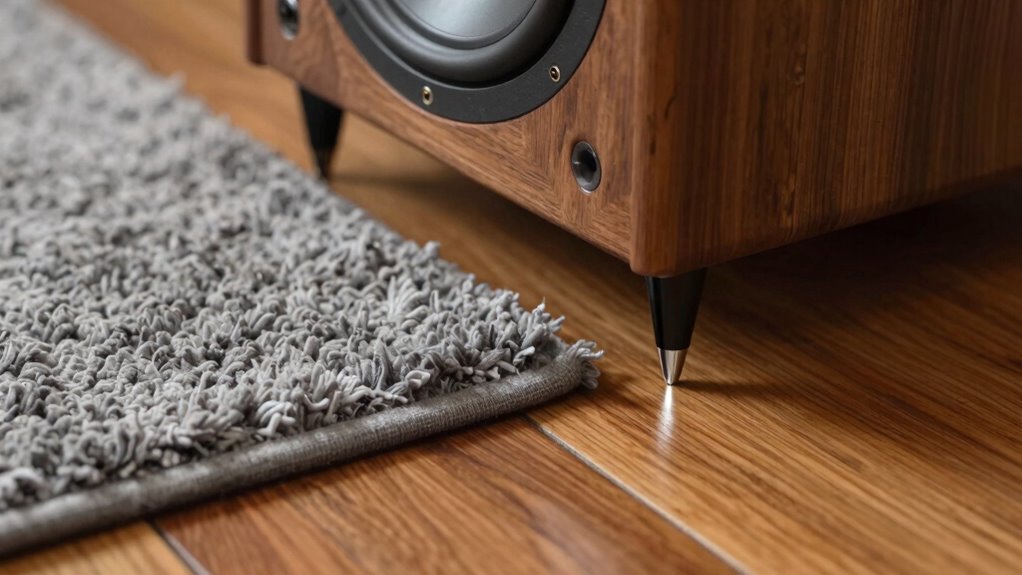

Using speaker spikes or feet on hard floors helps you reduce vibrations and prevent sound distortion, leading to clearer, more accurate audio. They channel vibrations away from the speaker into the floor, minimizing resonance and muddied sound. Choosing the right material—metal for conducting or rubber for absorbing—can dramatically improve your sound quality. Proper installation and the right combination of spikes and damping materials make a big difference in achieving peak performance. Keep exploring to discover how to optimize your setup even further.

Get furniture and decor delivered free with Prime
- Fast, free delivery on millions of items
- Prime Video, Amazon Music and more included
- Member-only deals all year
Key Takeaways
- Speaker spikes and feet reduce vibrations, preventing sound distortion and improving overall audio clarity on hard flooring.
- Properly chosen materials like metal or rubber optimize vibration absorption and conduction for better sound performance.
- Installing spikes creates a stable platform, minimizing speaker movement and maintaining consistent sound quality.
- Combining spikes with damping pads enhances acoustic insulation and vibration control.
- Correct installation and material selection are crucial for maximizing the benefits of speaker spikes on hard floors.
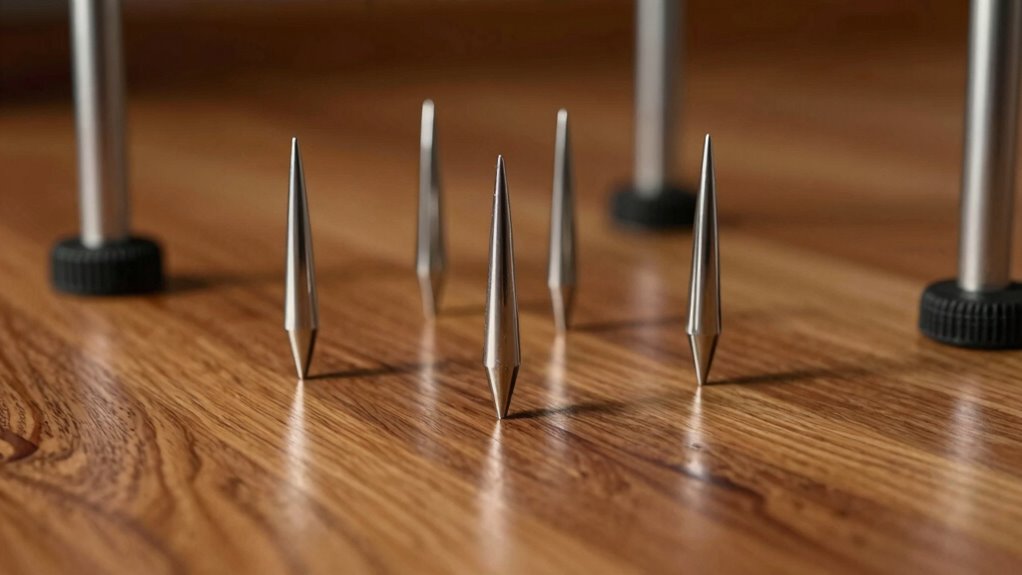
If you have hardwood, tile, or other hard flooring, using speaker spikes or feet can considerably improve your sound quality. These accessories help reduce unwanted vibrations and sound distortions, creating a clearer, more precise listening experience. When properly installed, speaker spikes act as a direct conduit for vibrations, channeling them away from your speakers and into the floor. This process enhances acoustic insulation, preventing vibrations from bouncing back into the speaker cabinet and affecting the sound. Without spikes, vibrations can travel through the floor and walls, muddying the audio and diminishing clarity. By elevating your speakers with spikes, you’re effectively isolating them from the floor, reducing the transfer of vibrations, and enhancing overall sound fidelity.
Vibration absorption is a critical benefit of using speaker spikes or feet. Hard floors tend to transmit vibrations more readily than carpeted surfaces, which can cause resonance and muddle the audio you hear. Spikes help absorb and redirect these vibrations, preventing them from interfering with the speaker’s internal components. When vibrations are absorbed, the speaker’s movements become more controlled, resulting in tighter bass and more defined midrange and treble. This process also minimizes the risk of your speakers “walking” or shifting over time, which can happen if vibrations cause them to slide or wobble. Properly chosen spikes and feet create a stable platform, ensuring your speakers stay in the best position for sound performance. Additionally, selecting the right materials for your spikes can further optimize vibration control and improve overall sound quality. Using material composition that effectively dampens vibrations can significantly enhance your listening experience. Moreover, considering the installation method can ensure that your setup remains stable and effective over time.
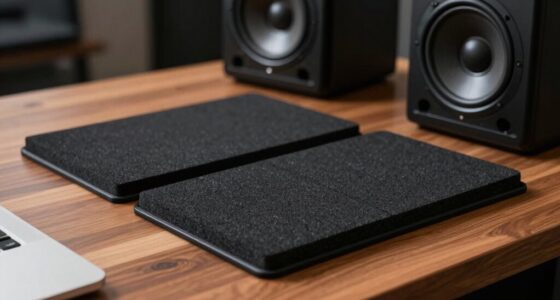
Furthermore, the design and material of speaker spikes influence how well they perform regarding acoustic insulation and vibration absorption. Metal spikes, such as those made of brass or steel, are excellent for conducting vibrations away from the speaker. Rubber or isolating feet are better suited for absorbing vibrations, reducing their transmission into the floor. Many audiophiles combine spikes with damping pads or isolation mats to maximize vibration control. This layered approach enhances acoustic insulation by preventing floor-borne vibrations from reaching your listening area, resulting in a more immersive sound experience. A thoughtful selection of spike materials can help you customize your setup for optimal sound quality.
As an affiliate, we earn on qualifying purchases.
Frequently Asked Questions
Do Speaker Spikes Improve Sound Quality?
Yes, speaker spikes can improve sound quality by enhancing speaker isolation, which reduces unwanted vibrations. When you use spikes on hard floors, you often notice clearer vocals and more defined bass, thanks to better bass enhancement. By minimizing floor vibrations, spikes help your speakers produce cleaner sound, making your listening experience more immersive. So, if you’re after improved clarity and punch, speaker spikes are a worthwhile upgrade.
Are Speaker Spikes Suitable for All Types of Hard Floors?
Speaker spikes aren’t suitable for all hard floors—they can damage delicate surfaces if you’re not careful. For hardwood or tile, you need proper speaker floor protection to avoid scratches and dents. Aesthetic considerations also matter; some spikes look stark and clash with your decor. Always check your floor type and use appropriate protection to guarantee your speakers sound great without risking damage or sacrificing style.
Can Speaker Spikes Damage Delicate Flooring Materials?
Speaker spikes can damage delicate flooring materials if you’re not careful, especially without proper floor protection. They can scratch or dent surfaces like hardwood, tile, or laminate. To protect your floors and maintain aesthetic considerations, use pads or isolation feet designed for delicate surfaces. This way, you get the benefits of enhanced sound quality without risking damage, ensuring your floors stay pristine and visually appealing.
How Do I Choose the Right Speaker Feet?
To choose the right speaker feet, prioritize speaker isolation and floor compatibility. Consider your flooring type—hardwood, tile, or carpet—and select feet that prevent damage while minimizing vibrations. Look for options with adjustable height or soft pads for added stability. Properly chosen speaker feet help improve sound clarity by reducing unwanted vibrations and protecting your floor, ensuring your setup performs at its best without risking damage.
Are There Alternatives to Spikes for Stability?
Yes, there are alternatives to spikes for stability that still promote speaker isolation and vibration control. You can use rubber or silicone feet, which absorb vibrations and prevent slipping on hard floors. IsoAcoustics stands out with their specialized stands designed for vibration damping. Additionally, dense mats or pads made from materials like sorbothane can effectively reduce vibrations, helping you achieve stability without risking floor damage or sacrificing audio clarity.
As an affiliate, we earn on qualifying purchases.
Conclusion
While some might worry that speaker spikes could damage your hard floors, the truth is, when used properly, they actually protect your surfaces. They prevent unwanted vibrations and keep your speakers stable, improving sound quality. If you’re concerned about scratches, simply add a felt pad underneath. Don’t let the fear of floor damage hold you back—using speaker spikes thoughtfully can enhance your listening experience without harming your floors. Trust the process, and enjoy better sound clarity today.
As an affiliate, we earn on qualifying purchases.
As an affiliate, we earn on qualifying purchases.
Halloween Picks
halloween
As an affiliate, we earn on qualifying purchases.