
TL;DR

Get furniture and decor delivered free with Prime
- Fast, free delivery on millions of items
- Prime Video, Amazon Music and more included
- Member-only deals all year
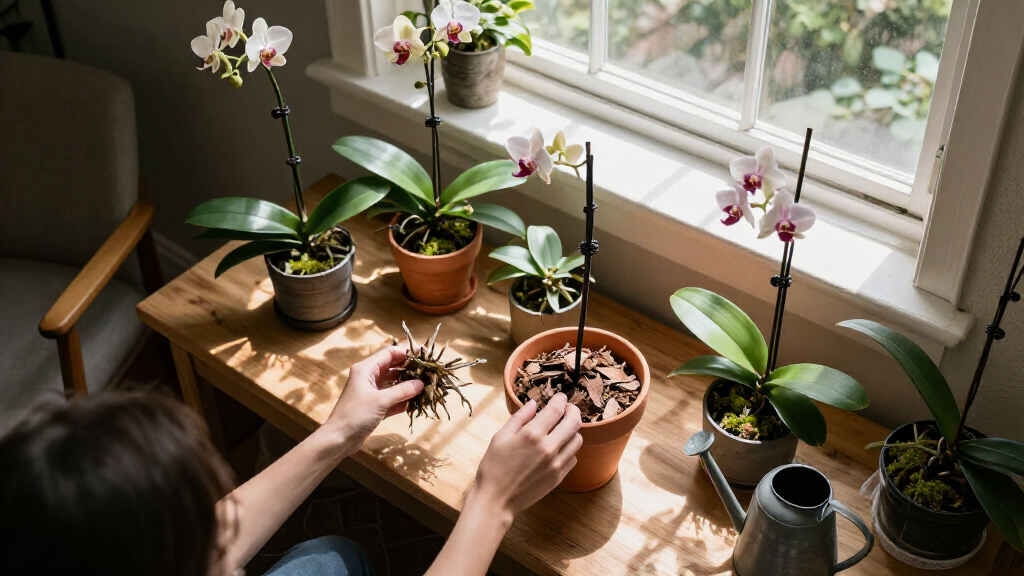
A Livingetc writer says growing dozens of orchids has taught her to value patience, observation and restraint in both plant care and home design. Her advice for Phalaenopsis orchids includes bright light, watering based on root color, diluted fertilizer and cooler nights to encourage a new flower spike.
Livingetc has published a first-person report on how caring for dozens of orchids has changed one writer’s approach to plant care and decorating. The writer says her current collection includes about 60 houseplants, mostly orchids, and describes patience, observation and restraint as central to keeping them and enjoying their gradual growth.
The writer says that at the height of her plant collecting she had an estimated 300 to 400 houseplants in her home, a 1930s semi-detached house. She later reduced the collection, keeping plants that brought her joy and giving away those she felt indifferent about. Orchids were exempt from that test, she writes, and remain the main part of her smaller collection.
Her central point is that an orchid’s appeal is not limited to the period when it is flowering. The writer says waiting for a plant to bloom again, and seeing it respond to care, can be a source of pride and enjoyment. She argues that the slow process encourages people to pay closer attention rather than treating a plant as disposable once its flowers fade.
For indoor Phalaenopsis orchids, the report lists four care practices: provide bright light, water when the roots change from green to silvery gray, use orchid fertilizer at one-quarter of the recommended dose once or twice monthly, and allow a modest fall in night-time temperatures. The writer says cooler nights can help prompt a new flower spike. These are the author’s practical recommendations, not a guarantee that an orchid will rebloom on a set schedule.
Patience Shapes Plant Care
The report frames orchid care as a lesson in slowing down and observing. Rather than expecting continuous flowers or replacing a plant after its bloom ends, the writer encourages readers to notice root color, light and temperature and to give the plant time to respond. That approach may help readers understand why orchids can remain worthwhile houseplants between flowering periods.
There is also a home-design point: the writer says a smaller, more considered collection can be more satisfying than filling every available space. She recommends displaying an orchid where its form can be appreciated, such as a windowsill, and choosing a decorative pot that adds visual interest even when the plant is not in bloom. Her account connects plant care and restrained decorating, but it is a personal perspective rather than a reported survey or expert study.
Products Worth Considering

Samsung 65-Inch The Frame Pro Neo QLED 4K TV (2026) Bundle with Modern Brown Bezel, HDMI Cables, and Home Theater Guide

Dyson Big Ball Multi Floor Canister Vacuum, Yellow

Bose TV Speaker Compact Soundbar with Bluetooth and HDMI-ARC, Black
As an affiliate, we earn on qualifying purchases.
From Plant Abundance to Orchids
The writer describes an earlier period of collecting plants without much restraint, when she believed she could never have too many. Managing an estimated 300 to 400 plants in a family home eventually prompted her to cut back. She says the change let her appreciate each remaining plant’s color, shape and detail more fully.
The source identifies Sarah Gerrard-Jones as the author of Love Your Orchid: An Inspirational Guide to Keep Your Plants Blooming, a DK Books title described in the report as a new release for autumn 2026 and available at the time of publication. The article’s recommendations and reflections are presented in the writer’s own voice. Its focus is household orchid care, especially Phalaenopsis, rather than a broad assessment of orchid-growing methods.
“I will never understand the people who throw an orchid away after it flowers. They’re missing the best part: the wait.”
— The Livingetc writer
Reblooming Depends on Conditions
The report does not provide a publication date, measurements for ideal light or temperature, or details about how long a plant should experience cooler nights. It also does not say that its care steps will work for every orchid variety or home environment. The guidance is specifically framed around indoor Phalaenopsis orchids, and flowering can vary with a plant’s condition and its growing conditions.
The article presents the collection size and care experience as the writer’s account. It does not independently verify the number of plants she has grown or offer comparative evidence on the effectiveness of the listed practices. The timing and frequency of any future blooms for her collection are not stated.
Care Continues Between Blooms
The practical next step for readers following the report is continued observation: check root color before watering, provide suitable bright light, use fertilizer sparingly and watch for seasonal changes in night-time temperature. The writer also recommends taking time to find a pot that suits the plant and its display location.
The source does not announce a scheduled follow-up or a specific milestone for the writer’s orchids. Whether and when an individual plant produces another flower spike remains dependent on its condition and environment; the article’s emphasis is on maintaining care through the waiting period.
Key Questions
What is the main lesson the writer says orchids have taught her?
She says growing orchids has taught her patience, observation and restraint, including the value of waiting for a plant to bloom again rather than discarding it after flowering.
How many houseplants does the writer say she has now?
The writer says her current collection is about 60 plants, most of them orchids. She estimates that she once had between 300 and 400.
When does the report recommend watering an orchid?
For the orchids discussed in the article, the writer recommends watering when the roots shift from green to silvery gray. The advice is not presented as a universal rule for every orchid species or growing setup.
What conditions does the writer say may help a Phalaenopsis rebloom?
The report recommends bright light, restrained feeding and a slight drop in night-time temperatures. It says cooler autumn nights may help signal that it is time for a new flower spike, but does not promise a particular bloom schedule.
Does the article say an orchid will definitely flower again?
No. It shares the writer’s care practices and experience but does not guarantee reblooming. The report does not give a fixed timeline, and flowering may depend on the plant and its conditions.
Source: livingetc.com