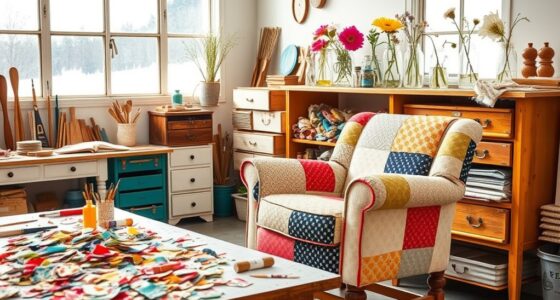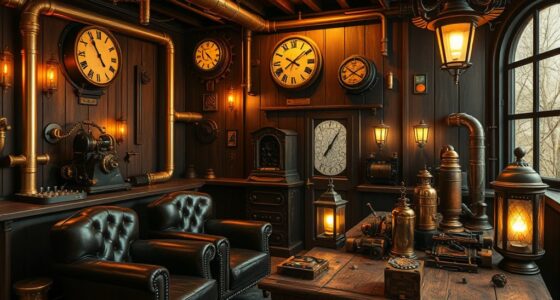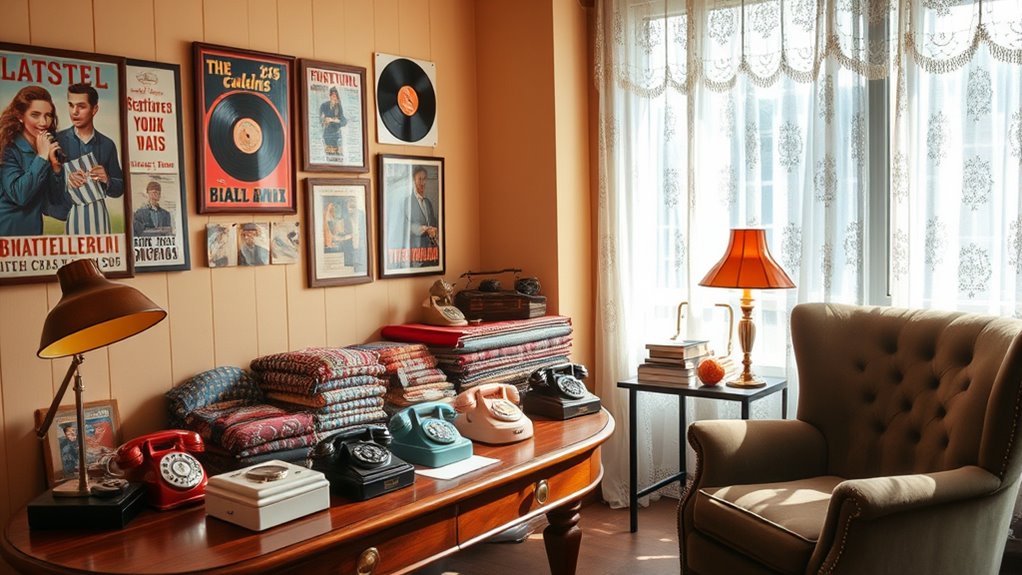

To find your retro style, start by exploring different vintage eras like the bold Art Deco of the 1920s or the pastel tones of the 1950s. Identify key design elements such as color palettes, patterns, and furniture styles that resonate with you. Mix authentic vintage pieces with modern touches for a cohesive look. Keep personal details and nostalgic touches in mind to create a space that truly reflects your personality—more tips await to help you craft your perfect vintage aesthetic.
Key Takeaways
- Identify your preferred era (1920s, 1950s, 1960s, etc.) by exploring their signature color palettes, patterns, and design motifs.
- Recognize vintage elements like authentic labels, craftsmanship, and age-related wear to source genuine retro pieces.
- Mix vintage and modern items cohesively through a unified color scheme and balanced placement for an authentic look.
- Personalize your space with nostalgic touches such as DIY decor, retro accessories, and era-specific textures to reflect your style.
- Study different vintage styles to determine which aesthetic resonates most with your personality and design preferences.
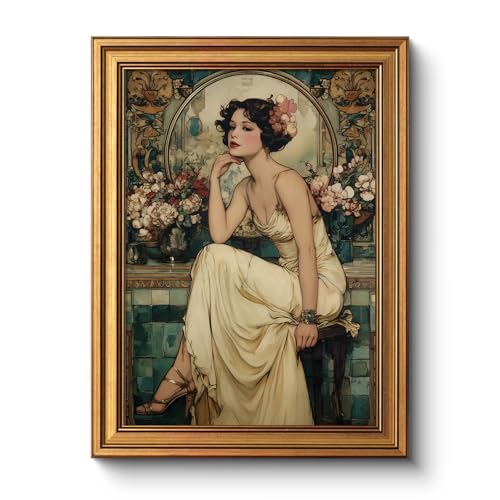
WHASAYART Vintage Woman Flower Painting with Gold Frame Wall Art 12×16 Inch, Retro 1920s Girl Painting Soft Pastel Tones Elegant Floral Background Art Print, Classic Living Room Bedroom Home Decor
Elegant Vintage Style Artwork: This framed painting showcases a timeless retro portrait of a woman with soft floral…
As an affiliate, we earn on qualifying purchases.
As an affiliate, we earn on qualifying purchases.
Exploring Different Vintage Eras and Their Signature Styles
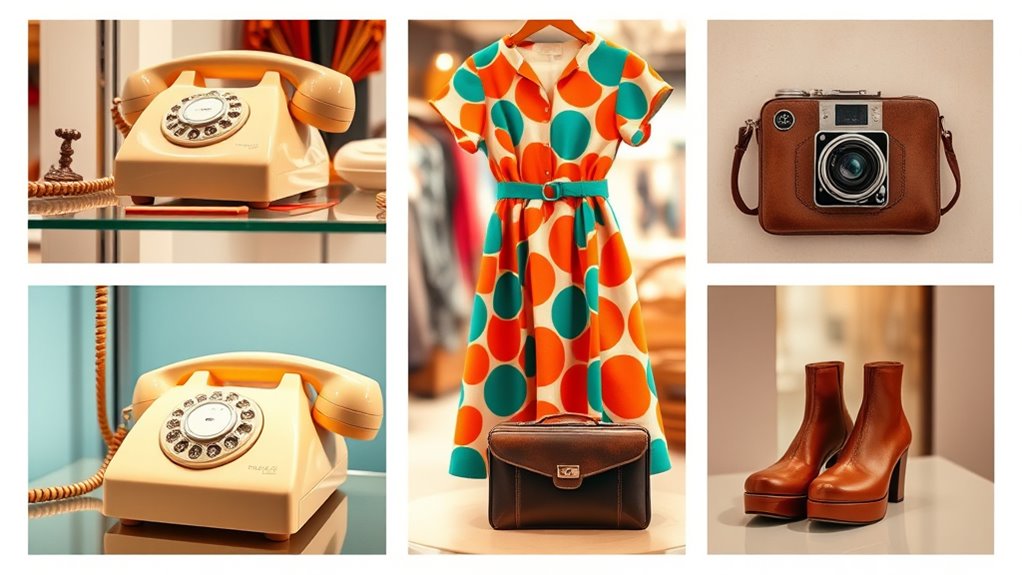
If you want to find your retro style, it is essential to understand the signature looks of different vintage eras. For example, mid-century modern design features clean lines, functional furniture, and a minimalist aesthetic that emphasizes simplicity and innovation. It emerged in the 1940s and 1950s, blending form and function effortlessly. Conversely, art deco is characterized by bold geometric patterns, luxurious materials, and intricate details, popular in the 1920s and 1930s. Its glamorous, opulent style often includes metallic accents and symmetrical designs. Recognizing these distinct styles helps you identify what resonates with you. Whether you prefer the sleek minimalism of mid-century modern or the ornate elegance of art deco, exploring these signature looks is a fundamental step in discovering your vintage aesthetic. Additionally, understanding how vintage design elements can influence contemporary decor can inspire modern interpretations of vintage styles in digital design. Exploring design trends from different eras can further refine your personal vintage style and keep your aesthetic fresh and relevant. To deepen your appreciation, studying period-specific color palettes can also help you incorporate authentic hues into your space or wardrobe. Furthermore, examining furniture styles from various decades can provide practical inspiration for incorporating vintage pieces into modern interiors.

Coffee Table, 39.4" Mid Century Modern Coffee Tables for Living Room, Coffee Table with Storage Open Shelf, Fluted Table with Sliding Cabinet Door, 2-Tier Rustic Wood Desktop, Walnut
Ample Storage Space: Coffee table with a spacious top, measuring 39.4 inches, coffee tables for living room perfect…
As an affiliate, we earn on qualifying purchases.
As an affiliate, we earn on qualifying purchases.
Key Elements That Define Vintage Design Aesthetics

Understanding the key elements that define vintage design aesthetics can help you clearly identify and incorporate your favorite eras. One of the most recognizable features is the color palette, which often includes muted tones, pastel shades, or bold, saturated hues depending on the period. These palettes evoke specific moods and atmospheres that are instantly nostalgic. Typography styles are equally important; vintage designs favor distinctive fonts such as ornate script, bold sans-serifs, or decorative serifs that reflect the era’s personality. Combining these elements creates a cohesive vintage look. Paying attention to how colors and typefaces work together to evoke the spirit of a particular time is essential for authenticity. Incorporating trendy design elements like modern accents or updated materials can also help blend vintage aesthetics with contemporary tastes. Understanding the sound design techniques used in era-specific media can enhance your overall aesthetic authenticity. Additionally, being aware of website performance metrics and how they influence user engagement can help you optimize your vintage-inspired spaces to appeal more effectively to your audience. Recognizing figurative language techniques can also be beneficial when creating engaging content that resonates emotionally. Exploring textile line techniques, such as specific fabric choices and decorative details, can further deepen your vintage style authenticity. Mastering these key elements will guide you in creating authentic vintage-inspired spaces and designs that truly reflect your personal style.

De-Mediocre Orange Mid Century Pillow Covers 70s 80s Retro Throw Pillow Covers Morden Abstract Geometric Decorative Square Cushion Case for Sofa Bedroom Car 18×18 Inch
😄 UNIQUE ABSTRACT DESIGN This 18×18 pillow cover have a orange retro look and feel,will stands out in…
As an affiliate, we earn on qualifying purchases.
As an affiliate, we earn on qualifying purchases.
Sourcing Authentic Retro Pieces and How to Spot Them

To truly capture an authentic vintage vibe, sourcing the right retro pieces is key. Thrift store treasures are often your best bet for finding genuine items, but knowing what to look for makes all the difference. Focus on authentic vintage marks, such as labels, stamps, or manufacturing details that indicate true age. Examine the construction quality, materials, and wear patterns—these clues help distinguish original pieces from reproductions. Be wary of modern reproductions that mimic vintage styles; they often lack authentic vintage marks or have inconsistent craftsmanship. Take your time, compare items, and educate yourself about the era’s specific features. With practice, you’ll develop a keen eye for spotting real treasures that enhance your retro aesthetic.

Plug in Pendant Light 50s Mid Century Modern Vintage Retro 1950s Geometric Hanging Lamp with Plug in Cord 16.4 ft Dimmable Switch Fabric Shade Hanging Light for Bedroom Kitchen Living Room
Dimensions: The size of the lamp shade is 10" Wx 7.9"H. Hanging light fixture with a 16.4 ft…
As an affiliate, we earn on qualifying purchases.
As an affiliate, we earn on qualifying purchases.
Blending Vintage and Contemporary Elements for a Cohesive Look

Blending vintage and contemporary elements creates a fresh, personalized style that feels both nostalgic and modern. Start by choosing a cohesive color palette that balances bold retro hues with neutral, contemporary tones. This careful selection ensures a harmonious look and prevents the space from feeling disjointed. When arranging furniture, consider placing vintage pieces alongside sleek, modern items to create visual harmony. Keep furniture placement balanced; avoid clustering all vintage items in one area, and give contemporary pieces room to breathe. Mixing different styles intentionally adds depth and personality to your space. Focus on maintaining a consistent flow, so each element complements the other. Additionally, understanding regional design trends can help tailor your vintage-modern blend to suit local aesthetic preferences. Incorporating vintage-inspired decor elements can further enhance the nostalgic feel while keeping the space fresh and relevant. Exploring design principles, including the use of wave and wind influences in decor, can also guide you in creating a cohesive and aesthetically pleasing environment. Being mindful of aesthetic harmony ensures your space remains balanced and visually appealing.
Personalizing Your Space With Nostalgic Touches and Unique Finds

Adding nostalgic touches and unique finds is the easiest way to infuse your space with personality and character. You can create DIY decor pieces that reflect your favorite eras, like repurposed furniture or handmade wall art. Incorporate vintage items such as retro lamps, classic posters, or quirky knickknacks to add charm. Focus on color palettes that evoke the period you’re drawn to—think warm oranges, pastel pinks, or bold teals—and use them to tie your elements together. Mixing these touches with modern accents keeps the space lively without feeling outdated. Personalization is key; the more you include items that resonate with your memories and tastes, the more your space will feel uniquely yours and authentically retro. Utilizing vintage design elements can also help create a cohesive and authentic retro ambiance throughout your space, especially when considering how color accuracy impacts the overall visual harmony. Additionally, understanding entertainment support hours for your favorite parks can inspire themed decor that celebrates your favorite attractions and experiences. Embracing period-specific details, such as patterns, textures, and retro accessories, can further enhance the nostalgic vibe you’re aiming for. Being aware of ear wax odor can inspire subtle, earthy color schemes or textures reminiscent of natural, vintage materials that evoke a sense of warmth and familiarity.
Frequently Asked Questions
How Can I Incorporate Vintage Style Into a Small Apartment?
You can incorporate vintage style into your small apartment by choosing vintage color palettes like soft pastels or bold jewel tones to add character. Use retro storage ideas such as vintage suitcases or open shelving to maximize space and keep clutter out of sight. Incorporate statement furniture with retro patterns or finishes and add decorative accessories like old cameras or vintage artwork to create a cozy, nostalgic atmosphere without overwhelming your space.
What Are Common Mistakes to Avoid in Retro Interior Design?
Avoid decor missteps like overloading with too many vintage pieces, which can feel cluttered and overwhelming. Steer clear of authenticity pitfalls by mixing genuine vintage items with modern touches; don’t rely solely on mass-produced replicas. Focus on balance, so your space feels true to your style without becoming kitschy. Keep it curated and thoughtful, ensuring your retro vibe reflects your personality without sacrificing cohesion.
How Do I Maintain the Authenticity of Vintage Furniture?
To maintain the authenticity of vintage furniture, focus on antique restoration techniques that preserve its original charm. Avoid over-restoring or replacing parts, which can compromise authenticity preservation. Use gentle cleaning methods and authentic materials whenever possible. Keep original hardware intact, and consider consulting professionals for restoration to ensure your piece stays true to its vintage roots. This approach guarantees your furniture retains its historic value and character.
Can Vintage Aesthetics Be Integrated Into Modern Office Spaces?
Who says vintage aesthetics can’t fit in your modern office? You can seamlessly blend mid-century modern pieces with bohemian chic accents to create a stylish workspace. Incorporate sleek furniture alongside vibrant textiles and eclectic decor. This mix adds personality and warmth, proving vintage isn’t just for nostalgia—it’s a fresh, functional approach to contemporary office design. Embrace the contrast and watch your space stand out effortlessly.
What Budget-Friendly Tips Exist for Creating a Retro-Inspired Home?
You can create a retro-inspired home on a budget by doing DIY projects like repainting furniture or making wall art. Thrift shopping is also a great way to find vintage pieces like lamps, rugs, and decor that add character without breaking the bank. Mix and match these thrifted finds with your DIY touches to craft a personalized retro vibe that’s both affordable and stylish.
Conclusion
Just like a timeless song that never fades, your vintage style tells your unique story. Embrace the eras that resonate with you, blend old with new, and add those nostalgic touches that make your space truly yours. Remember, as Picasso once said, “Every act of creation is first an act of destruction”—so don’t be afraid to break the rules and craft a space that’s undeniably you. Your retro journey is just beginning.