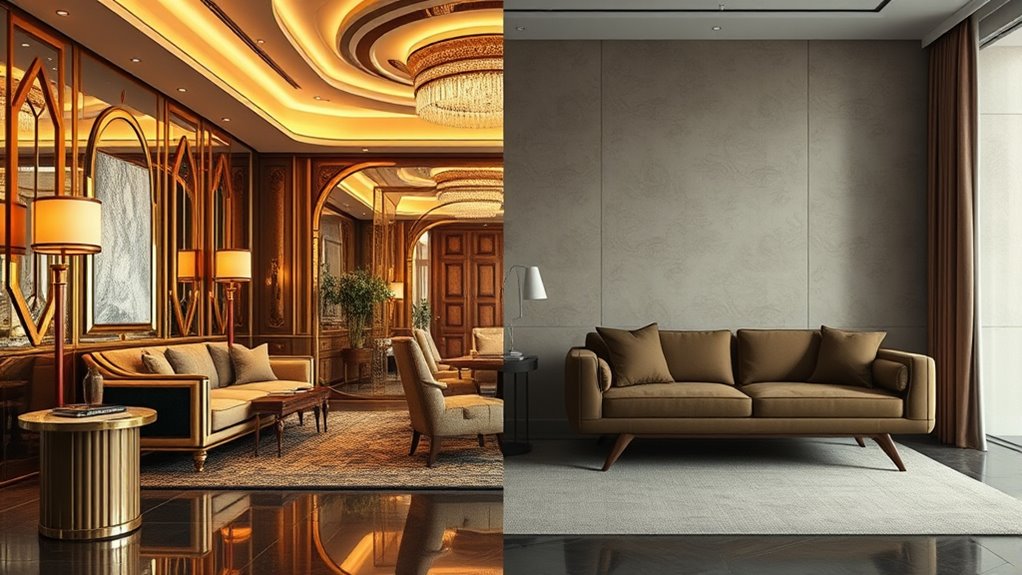
Deco and Mid-Century Modern styles offer striking contrasts in design. Deco radiates glamour with rich materials, bold geometric motifs, and luxurious patterns inspired by ancient civilizations, creating an opulent atmosphere. In contrast, Mid-Century emphasizes simplicity, natural materials, and clean lines, fostering a warm, practical vibe. If you’re curious about their unique characteristics and how to incorporate each style into your space, you’ll find plenty of interesting details below.
Key Takeaways
- Deco features luxurious materials and bold geometric patterns, emphasizing opulence and grandeur, while Mid-Century focuses on simplicity and natural materials for a relaxed vibe.
- Deco’s intricate, stylized motifs create a glamorous, eye-catching aesthetic, whereas Mid-Century’s subtle, functional geometric designs promote a minimalist atmosphere.
- Deco draws inspiration from ancient civilizations and industrial influences, contrasting with Mid-Century’s emphasis on natural forms and practicality.
- Deco spaces often showcase symmetry, repetition, and luxurious finishes like brass and marble, while Mid-Century emphasizes clean lines and tapered furniture for a more understated look.
- Deco creates a sense of drama and sophistication, whereas Mid-Century offers a warm, timeless style rooted in minimalism and functional design.
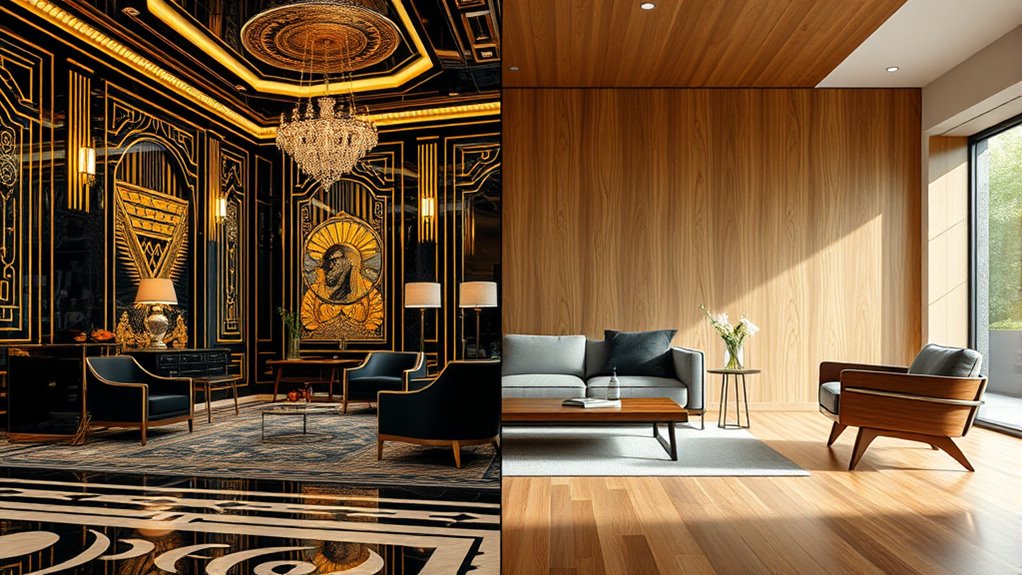
When choosing between Deco and Mid-Century styles, understanding their distinct characteristics can help you make the right decision for your space. Deco, short for Art Deco, is renowned for its luxurious patterns and bold geometric motifs. It exudes an aura of glamour and sophistication, often featuring rich materials like polished marble, brass, and lacquered surfaces. If your goal is to create a space that feels opulent and eye-catching, Deco’s signature luxury patterns—think zigzags, chevrons, and fan shapes—are perfect. These patterns emphasize symmetry and repetition, giving rooms a sense of order and grandeur. Geometric motifs in Art Deco are often intricate and stylized, drawing inspiration from both ancient civilizations and modern industrial influences. They add visual interest and a sense of movement, making your space feel dynamic and lively. Additionally, Deco design often incorporates geometric motifs to emphasize its bold, luxurious aesthetic.
On the other hand, Mid-Century Modern style leans toward simplicity, functionality, and clean lines. If you prefer a minimalist aesthetic with a focus on form and practicality, Mid-Century is your go-to. While it doesn’t emphasize luxury patterns as much as Deco, it still incorporates geometric motifs, but in a more subdued and understated way. Think of sleek, tapered furniture legs, simple shapes, and subtle patterns that don’t overpower the space. The emphasis here is on natural materials like wood, leather, and wool, creating a warm, inviting atmosphere. The geometric motifs in Mid-Century design often appear in textiles, rugs, or artwork, adding visual interest without overwhelming the senses. This style champions a more relaxed, timeless vibe that balances form and function.

Art Deco Geometric Pattern Green Blessed Throw Pillow
Art Deco Design design. Decorative Art Deco Style Pattern in a dark green color theme with the typography…
As an affiliate, we earn on qualifying purchases.
As an affiliate, we earn on qualifying purchases.
Frequently Asked Questions
Which Era Is More Sustainable for Eco-Friendly Design?
You’ll find that Mid-Century modern is more sustainable for eco-friendly design because it emphasizes sustainable materials and energy efficiency. This era prioritizes simple, functional furniture often made from natural or recycled materials, reducing environmental impact. Deco, on the other hand, features luxurious, ornate designs that typically use less sustainable materials and energy-intensive production. So, if sustainability matters most, Mid-Century modern is the better choice for eco-conscious design.
How Do Deco and Mid-Century Styles Influence Modern Architecture?
You see how Art Deco ornamentation influences modern architecture with its rich details and geometric patterns, adding glamour and elegance. Meanwhile, Mid Century minimalism shapes contemporary designs by emphasizing clean lines and functional spaces. Both styles inspire your choices today—Art Deco for decorative flair and Mid Century for simplicity. You blend these influences to create spaces that are both sophisticated and streamlined, reflecting their timeless appeal in your projects.
Are There Specific Color Palettes Unique to Each Era?
Like a carefully curated gallery, each era’s color palette reflects its design symbolism. Deco favors bold, contrasting hues like gold, black, and jewel tones, emphasizing luxury and opulence. Mid-century styles lean toward muted, earthy shades such as avocado green, mustard yellow, and teak brown, embodying simplicity and organic inspiration. These distinctive palettes help define each era’s unique aesthetic and influence modern interpretations of vintage glamour.
What Are Common Misconceptions About Deco and Mid-Century Styles?
You might think Deco and Mid-Century styles are all about luxury embellishments, but that’s a misconception. Both eras emphasize sleek, functional designs rooted in historical accuracy, not just opulence. Deco features geometric patterns, while Mid-Century highlights simplicity. Avoid assuming these styles are overly ornate or outdated; instead, appreciate their timeless elegance and true historical influences, which shape their unique, enduring appeal.
How Do These Styles Impact Contemporary Interior Resale Value?
Surprisingly, embracing vintage charm from Deco or Mid-Century styles can boost your home’s resale value, yet some buyers overlook their timeless appeal. These styles blend history with modern appeal, making your space stand out. You might think trendy is better, but classic glamour adds unique character that attracts buyers seeking something distinctive. So, don’t underestimate the power of vintage charm—it’s an investment in your home’s future allure.

Mid Century Modern Coffee Table – Walnut Wooden Coffee Table for Living Room,Center Table Suitable for Bedroom Living Room Reception Office Tables (Walnut, Small 34.5 * 23.5 * 16in)
【Modern Aesthetics】:Small coffee table with a sleek mid-century modern design, perfect for any living room. the triangle shape…
As an affiliate, we earn on qualifying purchases.
As an affiliate, we earn on qualifying purchases.
Conclusion
Imagine stepping into a room and feeling transported—like slipping into a vintage film or a sleek 60s lounge. Deco’s bold glamour and mid-century’s clean lines each paint a different story of elegance. Think of it as choosing between a shimmering diamond and a smooth pearl—both beautiful, yet evoking different emotions. Whichever style you embrace, remember it’s about creating a space that makes you feel alive, inspired, and truly at home.
Cork & Mill Marble Coasters Set of 6 – Luxury Aesthetic Modern Decor for Coffee Table- White Marble with Gold Brass Inlay – Real Natural Semi Absorbent Stone Coasters
An Elegant Accent – Our white and gold coasters pair the classic simplicity of marble with a gold…
As an affiliate, we earn on qualifying purchases.
As an affiliate, we earn on qualifying purchases.

KITEVICH 4PACK Solid Wood Furniture Legs 6 Inch Sofa Legs, Replacement Legs Mid Century Modern Legs for Couch End Table TV Stand Bed Dresser Cabinet, Accessorizes Included
【High Quality】Made of 100% solid oak wood with original wood color, which is hard quality, stable, durable and…
As an affiliate, we earn on qualifying purchases.
As an affiliate, we earn on qualifying purchases.