
TL;DR

Get furniture and decor delivered free with Prime
- Fast, free delivery on millions of items
- Prime Video, Amazon Music and more included
- Member-only deals all year
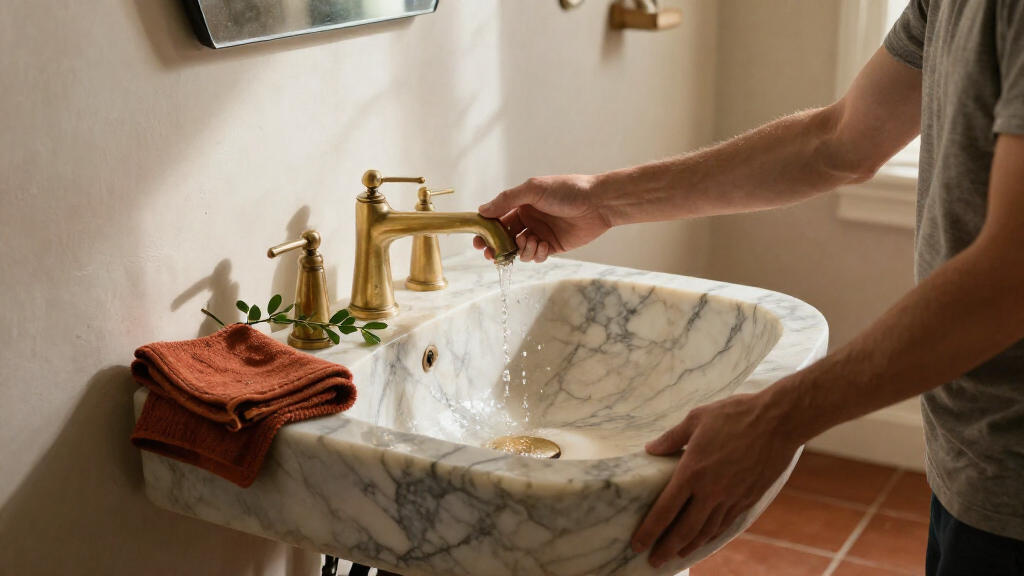
A Livingetc report examines the growing interest in marble sinks bought directly from Turkish makers, where established stoneworking and competitive pricing are attracting homeowners. The report also stresses that marble varies by type and slab, while shipping, product specifications and the risks of buying a heavy bespoke item from abroad need careful checking.
Marble sinks from Turkey are drawing attention on social media as homeowners look to buy decorative stone pieces directly from manufacturers, according to a Livingetc report. The appeal is a combination of competitive prices and Turkish stoneworking expertise, but buyers face practical risks when ordering a large, heavy and potentially bespoke item across borders.
Livingetc describes buyers sharing their experiences of purchasing marble basins through online platforms such as Etsy, sometimes calling the decision “worth the risk” after the sink arrives. The publication does not provide sales figures or establish how widespread the trend is; it reports a pattern observed in home-renovation social media and through its own research.
Damla Turgut, founder of tile brand Otto Tiles, told the magazine that Turkey has a long history of working with natural stone and a developed industry of quarries, processing facilities and workshops. She said more Turkish manufacturers have been producing finished marble pieces for international interiors customers in recent years, including sinks, fireplace surrounds and coffee tables.
Turgut estimated that Turkish marble can often cost roughly half as much as high-end Italian stone. She attributed the price difference to Turkey’s quarry reserves and domestic processing industry, while noting that Italian marble such as Carrara and Calacatta carries strong demand and a luxury reputation. The comparison is an estimate, not a guaranteed price difference for every stone, product or seller.
Why Direct Sink Imports Appeal
For homeowners, buying directly from a maker may provide access to distinctive shapes, finishes and bespoke dimensions that are harder to find in mass-market bathroom ranges. Turkey’s established stoneworking sector gives designers and buyers a source of both material and fabrication experience, while lower prices can make a custom stone basin appear more attainable.
But a low listing price does not by itself establish the full cost or suitability of a sink. Buyers are dealing with a fragile, heavy product that must be fabricated to specification, packaged for international transport and installed appropriately. The Livingetc report describes the attraction and the perceived risk, but does not publish a typical shipping cost, return rate or breakdown of import charges. Those details will vary by seller and destination and should be confirmed before purchase.
Stone selection also matters beyond price. A basin intended to coordinate with existing tiles or counters may not match them, even when both are described as marble. Buyers who care about a close visual match may need to check the specific stone and slab rather than rely on a broad label or a photograph.
Products Worth Considering

Philips Hue White and Color Ambiance Smart Light Starter Kit, 2 A19 Bulbs with Hub

Ring Alarm Pro 14-Piece Home Security Kit with Built-In eero Wi-Fi 6 Router

Google Nest Learning Thermostat (4th Gen) with Nest Temperature Sensor (2nd Gen), Obsidian
As an affiliate, we earn on qualifying purchases.
Stone Differences And Turkish Craft
Turgut told Livingetc that marble quality varies regardless of where it is quarried. She described Turkish marble as often having softer color and more uniform veining, while Italian varieties may have sharper, more dramatic patterns. Her comparison of Turkish alternatives to Calacatta Viola was that some have less saturated color and softer, cloudier veining; she also stressed that each slab is different.
That distinction can matter when a Turkish basin is paired with stone sourced elsewhere. A product’s origin does not alone identify its appearance or performance, and “marble” covers different varieties. The report says Turkey also has deposits of travertine, onyx and limestone, so listings should be checked for the actual material rather than assumed to describe marble.
Designer Tanya Selway, founder of Selway Design Studio, described the traditional hammam basin, or kurna, as a form associated with Turkey and said the country is the place to go for one carved with genuine understanding. Her comment points to cultural and craft reasons for sourcing a traditional design there, alongside cost. The supplied report excerpt does not include further details of her commission or a full account of the purchase process.
““Turkey has an incredibly rich history of working with natural stone, stretching back thousands of years.””
— Damla Turgut, founder of Otto Tiles
Costs And Product Checks Remain
The available report does not establish how many people are buying Turkish marble sinks, whether the trend is growing in measurable terms, or what the average final cost is after freight and any applicable taxes or duties. It also does not give a verified rate of damage, delivery delays or successful returns. Those figures should not be inferred from social-media posts or individual buyer accounts.
Specific listing details remain seller-dependent: the exact stone and slab, basin dimensions, finish, weight, packaging, delivery arrangements and remedies if a sink arrives damaged. The supplied source does not set out standardized buyer protections or import rules for particular countries. Prospective purchasers should obtain those terms directly from the seller and check what applies where they live.
What Buyers Should Verify
Before ordering, buyers can ask for current photographs or video of the actual basin or slab, written dimensions, the stone’s exact name and details of its finish. They should confirm whether the item is made to order, how it will be packed, who arranges delivery and what happens if the shipment is delayed or damaged.
It is also prudent to request a complete written price, including shipping and any costs the seller expects the customer to pay separately, and to review the seller’s cancellation, return and damage policies before paying. For a bespoke piece, confirm that the basin will work with the planned plumbing and installation. The source does not identify a specific next industry or regulatory milestone; the immediate next step for buyers is verifying the individual product and transaction rather than relying on a general claim about Turkish marble.
Key Questions
Why are Turkish marble sinks attracting buyers?
Livingetc reports that buyers are drawn by decorative designs, bespoke options and competitive pricing. Damla Turgut attributes the lower prices she has observed to Turkey’s quarry reserves and established stone-processing industry.
Is Turkish marble always half the price of Italian marble?
No. Turgut described Turkish marble as often costing roughly half as much as high-end Italian stone, but that is an estimate rather than a fixed rule. Prices depend on the stone, design, seller and transaction costs.
Will a Turkish sink match Italian marble tiles?
Not necessarily. Turgut said Turkish marble can have softer color and more uniform veining than some Italian varieties, and that individual slabs differ. Ask to see the specific stone or slab before buying if a close match matters.
What should I check before buying a sink directly?
Confirm the exact material, dimensions, finish, weight, shipping arrangements, full costs and policies for cancellation or damage. Request images of the actual item and verify that its specifications suit your planned plumbing and installation.
Source: livingetc.com