TL;DR
Burlwood is appearing in contemporary interiors again, with designers describing its irregular grain and natural variation as a way to add character and warmth. The trend is less about recreating period styles than using the material in new furniture forms and with modern colors and finishes.
Burlwood is returning to interior design, but designers interviewed by Design Milk say its current use is not simply a revival of Art Deco or 1970s decor. They are incorporating the naturally patterned wood into contemporary rooms to add warmth, visual texture and individuality.

Get furniture and decor delivered free with Prime
- Fast, free delivery on millions of items
- Prime Video, Amazon Music and more included
- Member-only deals all year
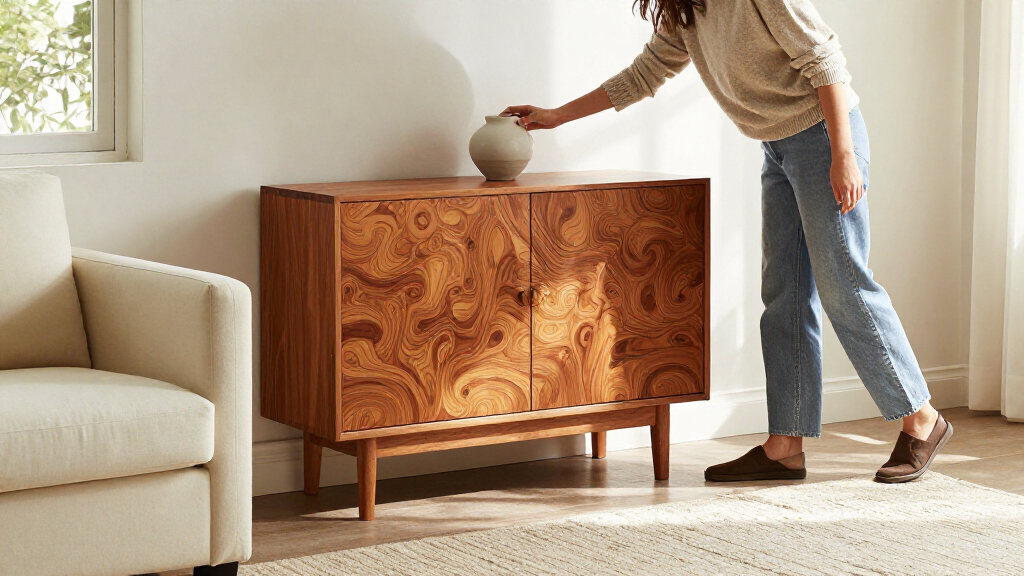
The renewed interest is described through the views of four designers: Tiffany Brooks of Tiffany Brooks Interiors, Abbe Fenimore of Studio Ten 25, Eddie Maestri of Maestri Studio, and Mimi Meacham of Marian Louise Designs. Their examples include chests, tables, nightstands, trays and consoles, often set against modern furniture or restrained finishes. The source describes a curved burlwood console and a three-drawer chest with bookmatched veneer, in which matching sections create a symmetrical pattern across the drawer fronts.
Designers distinguish among burl varieties by their color, grain and visual weight. Brooks favors walnut burl for a deeper, moodier effect, maple burl for a lighter palette and mappa burl for a bolder pattern. Maestri prefers mappa burl, also called poplar burl, because its lighter, golden tone can show the grain’s movement without making a room feel heavy. Meacham says the character of an individual piece matters more than choosing a species by name: its color, figuring, finish and furniture shape all affect how it reads in a room.
The designers’ advice for surrounding materials reflects burlwood’s already active pattern. Brooks suggests warm brass, matte paint, linen and velvet, and says honey-toned burl can sit alongside deep aubergine or inky blue. Fenimore points to soft blues, olive greens, warm neutrals and occasional brighter color, as well as contrast with lacquer, brass and contemporary silhouettes. Meacham recommends balancing glossy burl with matte walls or textured fabrics. Maestri favors earthy shades such as tobacco, ochre and olive with stone, linen, mohair and brass.
Burlwood Returns With a Modern Twist
Designers are bringing burlwood’s irregular grain into contemporary rooms for warmth, texture and individuality. The trend adapts the material to modern forms rather than recreating a period look.
Why Burlwood Stands Out
Its naturally varied grain gives each piece a distinctive presence.
Natural variation
Burl markings vary from piece to piece, adding a focal point without patterned textiles.
Fresh forms
Chests, tables, trays and consoles pair the distinctive wood with contemporary shapes and finishes.
Mix periods
Modern furniture and restrained finishes help burlwood feel collected, not like a reproduction.
Choose by Look and Feel
Designers describe different effects across burl varieties, while emphasizing the individual piece.
| Variety | Effect | Designer guidance |
|---|---|---|
| Walnut burl | Deeper, moodier | Favored by Tiffany Brooks |
| Maple burl | Lighter palette | Favored by Tiffany Brooks |
| Mappa burl | Golden tone, bold grain | Preferred by Eddie Maestri |
Pair It With Quiet Textures
Use surrounding materials to complement the active grain and the finish of the specific piece.
Try matte walls or paint, linen, velvet and other textured fabrics alongside glossy burl.
Brass, stone and earthy shades such as tobacco, ochre and olive are among the designers’ suggestions.
Soft blues, olive greens and warm neutrals can sit with burl; honey-toned pieces can also contrast with deep aubergine or inky blue.
What the Reporting Establishes
- Renewed use in contemporary interiors
- Furniture and accessories in varied forms
- Warmth, individuality and visual texture
- How widespread the interest is
- Whether it is translating into sales
- Sourcing practices and solid wood versus veneer
A Natural Grain Against Uniform Rooms
The designers’ case for burlwood is tied to a broader preference they describe for rooms that feel personal rather than coordinated from a single template. Burl’s markings vary from piece to piece, so the material can provide a distinctive focal point even when used on one table, cabinet or tray. That makes it an option for adding pattern without relying on printed textiles or a busy overall scheme.
Its appeal also offers a way to mix periods. A new burlwood object can bring an older, collected quality into a contemporary room, while modern shapes and finishes keep it from reading as a reproduction of a past decade. The source presents these points as designers’ observations, not as measured evidence of a wider shift in consumer demand. Still, they explain why a material associated with historical furniture styles is being adapted for current interiors.
Products Worth Considering

Hisense 65-Inch U8 Series Mini-LED 4K UHD Smart Google TV (65U8QG)

Levoit Core 400S-P Smart Air Purifier for Large Rooms

Google Nest Thermostat E Smart Thermostat with Temperature Sensor Bundle – White
As an affiliate, we earn on qualifying purchases.
From Art Deco to Contemporary Pieces
Burlwood’s distinctive appearance comes from irregular growths called burls, which form on tree trunks or branches and are often associated with injury, stress or infection. The resulting grain is naturally varied, and the source notes that even pieces made from the same type of wood can look different. That irregularity is central to the material’s appeal—and makes its appearance difficult to treat as a uniform pattern.
The material has appeared in several earlier design periods. It gained popularity during the 1920s and 1930s Art Deco era and became a notable furniture feature again in the 1970s. The designers cited by Design Milk see the present interest as another use of a long-established material, rather than a return to one historic look. The examples and recommendations in the source focus on furniture forms, finishes and color pairings; it does not provide sales figures, survey results or a timeline for the trend’s growth.
““It gives your eye somewhere to go.””
— Tiffany Brooks, principal designer of Tiffany Brooks Interiors
Trend Scale and Sourcing Remain Unknown
The source documents designers’ enthusiasm and examples of burlwood in interiors, but it does not establish how widespread the renewed interest is. It includes no sales data, production figures, consumer research or comparison with other furniture materials. The designers’ comments should be understood as professional perspectives, not proof that burlwood is gaining popularity across the entire market.
It is also not clear from the source how much of the furniture shown uses solid burlwood versus veneer, or what sourcing practices apply to the pieces. No information is provided about prices, availability, durability across different finishes or the environmental effects of particular products. Those details can vary by item and maker.
Designers’ Uses Will Shape the Revival
The source does not announce a product launch, industry forecast or scheduled next milestone. The development it describes is an ongoing design trend, with burlwood appearing in furniture and accessories that pair its highly figured surface with contemporary shapes, colored walls and contrasting textures. Further reporting would be needed to establish whether the interest is translating into broader production or sales.
For readers considering the material, the designers’ practical guidance is to judge the specific piece, grain scale and finish rather than choosing by wood name alone. A strongly patterned surface can serve as a focal point, while matte paint, textiles, stone or quieter colors can balance it. Whether the current interest lasts beyond individual interiors remains unclear.
Key Questions
What is burlwood?
Burlwood comes from burls, rounded growths that develop on tree trunks or branches. The resulting wood is known for irregular, varied grain patterns.
Why are designers using burlwood again?
The designers interviewed by Design Milk say its natural variation brings warmth and individuality to interiors. They also value its ability to add visual interest without relying on patterned fabric.
Which types of burlwood do designers prefer?
Preferences differ. The source discusses walnut, maple and mappa burl: walnut can create a deeper look, maple offers a lighter palette, and mappa is prized by one designer for its golden tone and prominent grain. Designers also stress that the individual piece matters.
How can burlwood be paired with modern decor?
The designers recommend combining it with matte surfaces, textured fabrics, brass, stone or contemporary furniture. Suggested colors include blues, greens, warm neutrals and, for stronger contrast, deeper shades such as aubergine.
Is burlwood’s comeback supported by sales data?
No market data is included in the source. It reports designers’ observations and examples, so the scale of the trend across the furniture market is not established.
Source: design-milk.com