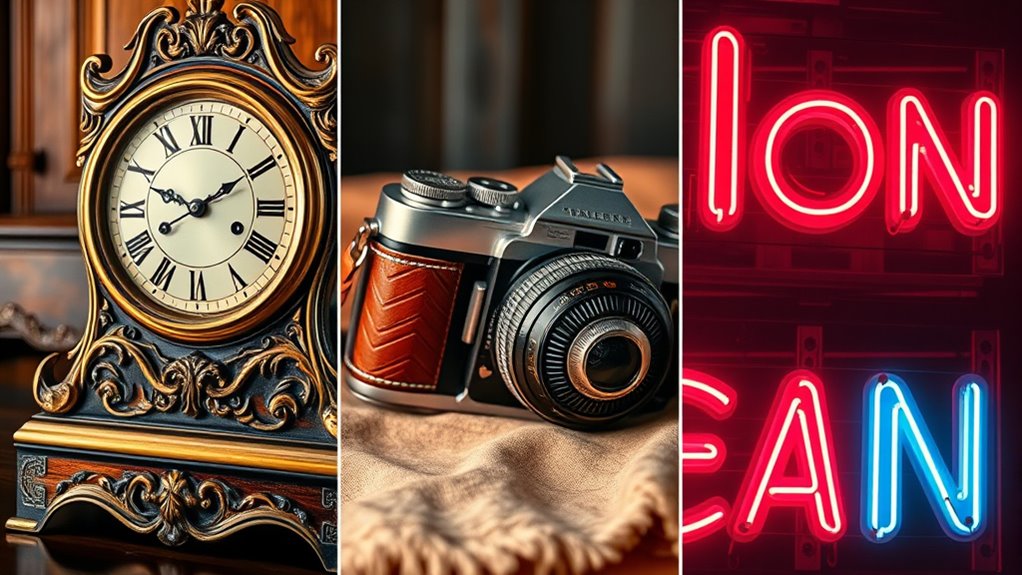

Antiques are items that are at least 100 years old, showcasing craftsmanship from a bygone era, while vintage pieces date from 20 to 100 years ago and reflect specific styles from those decades. Retro items are inspired by or mimic mid-20th-century aesthetics, often more affordable and nostalgic. Understanding these differences helps you recognize the character, value, and historical significance of each. Keep exploring to learn how to identify and appreciate these unique styles even better.
Key Takeaways
- Antiques are typically 100+ years old, vintage items are 20–100 years old, and retro styles mimic mid-20th-century aesthetics.
- Antiques showcase historical craftsmanship, vintage reflects specific past decades, and retro imitates or is inspired by older styles.
- Antiques often have higher value due to rarity; vintage depends on condition and era; retro is more affordable and nostalgic.
- Proper restoration enhances authenticity and value for antiques and vintage pieces, while retro is more flexible in restoration approaches.
- Market value and investment potential depend on rarity, age, provenance, and restoration quality of each category.
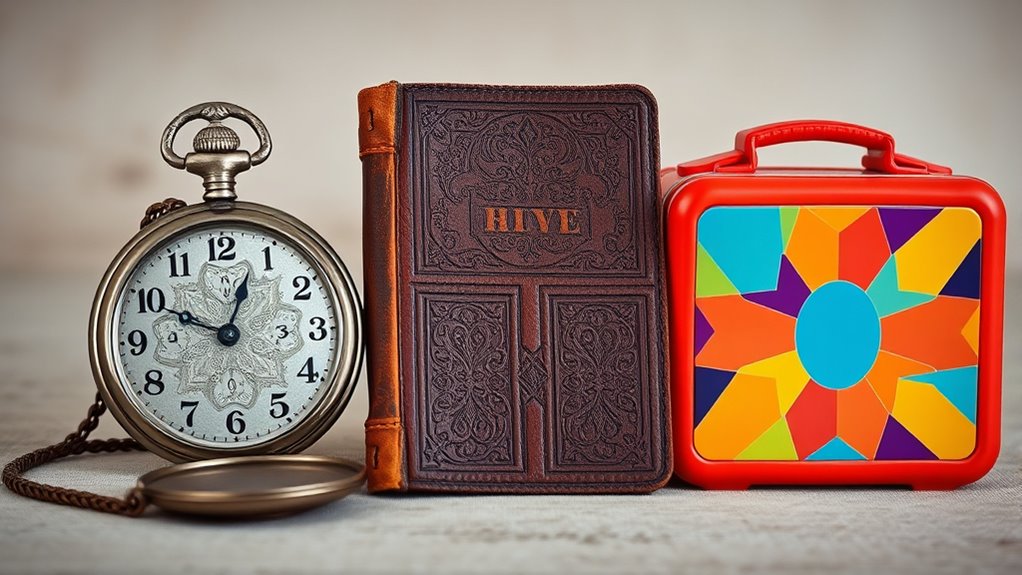
When choosing decor or collectibles, it’s important to understand how antique, vintage, and retro items differ. Recognizing these distinctions helps you make informed decisions, whether you’re decorating your home or building a collection. One of the first things to consider is the age of the items. Antiques are typically at least 100 years old, representing craftsmanship from a bygone era. Vintage pieces are generally between 20 and 100 years old, often reflecting styles from specific periods like the 1950s or 1970s. Retro items, on the other hand, are inspired by or imitate styles from the recent past, usually from the mid-20th century, but they’re not necessarily old themselves. Understanding the age classification is crucial for collectors and enthusiasts alike.
Understanding the age alone isn’t enough; you should also appreciate the significance of restoration techniques. Proper restoration can enhance the collector value of vintage and antique items, but it requires careful skill to preserve authenticity. For antiques, restoration often involves delicate cleaning, repairing damaged parts, or conserving original finishes without altering the piece’s historical integrity. Vintage items might need repainting, reupholstering, or refinishing, but you should always aim to retain their original character. Retro pieces tend to be more forgiving; since they’re often mass-produced, restoring them might involve replacing parts or giving them a fresh coat of paint to achieve a modern look while keeping their nostalgic appeal.
Collector value is another vital aspect. Antique items tend to command higher prices due to their rarity and historical significance, especially if they’re in good condition and have been properly restored. Vintage collectibles hold value based on their condition, popularity, and how well they capture the style of their era. Retro items can be more affordable and appeal to those seeking nostalgia, but they might not appreciate as much over time unless they become iconic or rare. When investing, consider the story behind each piece, its provenance, and the quality of restoration work. Well-restored antiques and vintage items with authentic features tend to appreciate more and draw interest from collectors.
Frequently Asked Questions
How Can I Identify Authentic Antiques From Replicas?
To identify authentic antiques from replicas, you should focus on authenticity verification by examining materials, craftsmanship, and markings. Authentic antiques often show age-related wear, unique craftsmanship, and sometimes maker marks, while replicas tend to have uniformity and newer finishes. Look for signs of replica characteristics, such as modern adhesives or synthetic materials. Consulting experts or using reputable appraisal services can also help confirm authenticity and distinguish genuine antiques from copies.
What Defines the Period When Retro Items Were Popular?
You’re curious about when retro items took center stage? That thrilling era spans the 1940s to the 1980s, a time when bold fashion eras and daring design trends captivated everyone. It’s a period marked by experimentation, neon lights, and pop culture influence. You’ll spot these items as icons of that vibrant, rebellious spirit—each piece whispering stories of a time when style broke all the rules.
Are Vintage Items Always Older Than 20 Years?
You might think vintage items are always older than 20 years, but it depends on the age classification used by collectors. Generally, vintage objects are at least 20 years old, but some collectors may set the bar higher. Your preferences influence what you consider vintage. So, while many vintage pieces are over two decades old, always check specific definitions, as collector standards can vary.
How Does the Value of Retro Items Compare to Antiques?
You’ll find that retro items often have a more playful, nostalgic appeal, but their value in the collectible market usually isn’t as high as antiques. Pricing trends show antiques tend to appreciate more over time due to rarity and historical significance. Retro pieces are generally more affordable and popular for their fun factor, but if you want long-term investment value, antiques typically hold or increase their worth better than retro items.
Can a Piece Be Both Vintage and Retro Simultaneously?
Yes, a piece can be both vintage and retro at the same time. Your collector preferences often influence this, as some favor items that blend styles from different eras. These pieces offer styling versatility, making them popular for various decor themes. When shopping, look for items that clearly reflect their vintage age while also embodying retro design elements, giving you a unique blend that appeals to diverse tastes.
Conclusion
Now that you know the difference between antique, vintage, and retro, you can tell a true gem from a passing trend. Remember, knowledge is power, and it helps you make smarter choices when hunting for unique pieces. Don’t just follow the crowd—stand out by understanding what makes each style special. After all, if you’re not careful, you might end up chasing shadows. So, stay sharp and keep your eyes peeled for those timeless treasures!