
TL;DR

Get furniture and decor delivered free with Prime
- Fast, free delivery on millions of items
- Prime Video, Amazon Music and more included
- Member-only deals all year
House Beautiful’s report presents an IKEA children’s room designed around how a child uses the space, with reachable storage, play-focused rugs and a nook beneath a reversible bed. The report describes the design approach and products, but does not provide independent testing, pricing details or evidence about how children used the room.
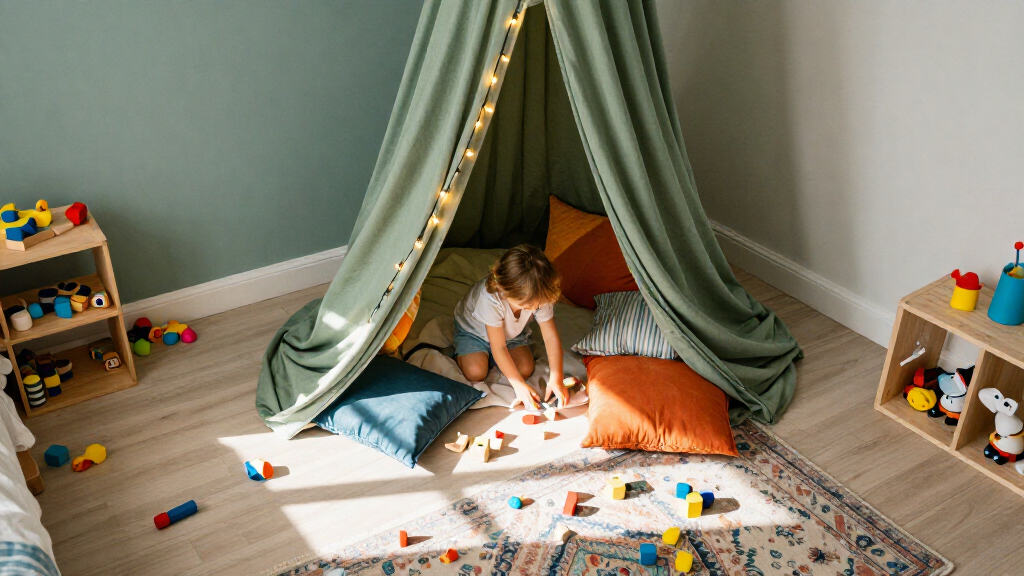
House Beautiful has presented an IKEA children’s room design built around a child’s point of view, using low, reachable storage, rugs that mark out play areas and a reversible bed that can create a small hideaway. The report’s focus is a practical design idea: arranging a bedroom so children can use more of it independently while retaining room for play and rest.
In the video, House Beautiful Associate Shopping Editor Janae McKenzie demonstrates the room and its IKEA products. The report argues that a child-height perspective can shape choices about furniture and storage. It features the house-shaped VITBJÖRN storage unit as a reachable place for toys and a cactus-shaped clothes stand as a child-friendly way to hang garments. The report suggests these features may help children take responsibility for their belongings; it does not report a measured effect or a trial with children.
The design also uses floor coverings to give play a clearer setting. House Beautiful describes the nature-inspired GREJSIMOJS rug as a soft surface for pretend wilderness play, while the cityscape-patterned HUSSPARV rug can suggest a miniature urban landscape. These are presented as ways to invite imaginative play and distinguish areas of the room, rather than as products tested for developmental outcomes.
A KURA reversible bed is shown raised to make a nook underneath for reading or play. The report says a coordinating screen can make the area feel more enclosed and conceal some clutter, and can be removed to reopen the space. The source frames the arrangement as adaptable, but does not give measurements, installation details or guidance on whether a particular room can accommodate it.
A Room Children Can Use
The design illustrates how everyday room choices can affect a child’s ability to participate in keeping a space organized. Low storage and reachable hooks put some routines within children’s reach, while rugs and a tucked-away nook give play a defined place. The report’s central point is that a child’s room can support both imaginative activity and ordinary tasks without treating those needs as separate.
For families considering a room redesign, the example offers a set of practical questions: Can a child reach the storage? Is there a soft, usable floor area? Can a corner serve as a retreat without making the rest of the room difficult to use? Those questions are more broadly useful than any one product recommendation. The report does not establish that these particular IKEA items are necessary, or that they produce specific developmental benefits.
The idea also highlights a potential trade-off in children’s rooms: a design that looks playful still has to work for adults managing cleaning, clutter and changing needs. The reversible bed and removable screen are presented as ways to adapt a layout. Whether that flexibility works in a particular home depends on available floor space, room dimensions and the household’s priorities.
Products Worth Considering

Blueair Blue Pure 511i Max Smart Air Purifier

Arlo Essential Wireless Security Camera 2K (3rd Gen), 3-Camera Set with Yard Sign

Dyson Airwrap i.d. Multi-Styler for Straight and Wavy Hair
As an affiliate, we earn on qualifying purchases.
From Sleep Space to Play Space
The report opens with the premise that a child may experience a bedroom as more than a place to sleep: it can become a setting for adventures, pretend cities or quiet retreat. House Beautiful’s proposed response is to plan from the child’s physical perspective, especially given the time children spend on the floor and the importance of storage they can reach.
The piece is a product-focused design report, not a news announcement about a new room, study or policy. It names IKEA items and points readers to a video and a “Shop the Room” feature. The source material does not state when the room was installed, whether it was made for a specific child, or whether all of the products are available in every market.
“Think at their level.”
— House Beautiful
Details the Report Leaves Open
The supplied report does not state the room’s dimensions, total cost, product prices or whether the pictured setup reflects a completed home installation or a demonstration. It also provides no independent assessment of product durability, safety or accessibility, and no evidence measuring whether the storage arrangement leads children to put items away more often.
Availability can depend on location and time, but the source does not identify markets, stock status or purchase conditions. It also does not provide installation instructions for raising the KURA bed or describe how the screen is secured. Readers should check current product documentation and suitability for their room before purchasing or assembling furniture; the report itself does not resolve those practical questions.
Video and Product Details
House Beautiful directs readers to watch McKenzie’s video for a closer look at the room and to use its “Shop the Room” feature to find the items shown. The supplied material does not announce a follow-up, a wider design project or a later evaluation of how the room works in everyday use.
For readers who want to apply the approach, the next step is to check the current product specifications and availability, then compare the furniture and layout with the child’s needs and the room’s measurements. The source offers a design concept, not a complete plan for adapting every bedroom.
Key Questions
What is the main idea behind the room design?
Plan from a child’s perspective: use reachable storage, floor areas that invite play and a tucked-away spot for quiet activities, while keeping everyday organization in view.
Which IKEA products does the report feature?
The report names the VITBJÖRN storage unit, a cactus-shaped clothes stand, the GREJSIMOJS and HUSSPARV rugs, and the KURA reversible bed with a coordinating screen.
Does House Beautiful show that the design improves children’s independence?
No measured results are included in the supplied report. It says reachable storage may encourage children to take ownership of their space, but does not describe a study or provide evidence of an observed effect.
Can the room layout fit any bedroom?
The source gives no dimensions or room-planning specifications. Families would need to check their own room measurements and the furniture’s current product information before deciding whether the arrangement fits.
Where can readers see the room and its products?
House Beautiful points readers to McKenzie’s video and a “Shop the Room” feature. The supplied source does not provide current prices or confirm product availability by location.
Source: housebeautiful.com