
TL;DR

Get furniture and decor delivered free with Prime
- Fast, free delivery on millions of items
- Prime Video, Amazon Music and more included
- Member-only deals all year
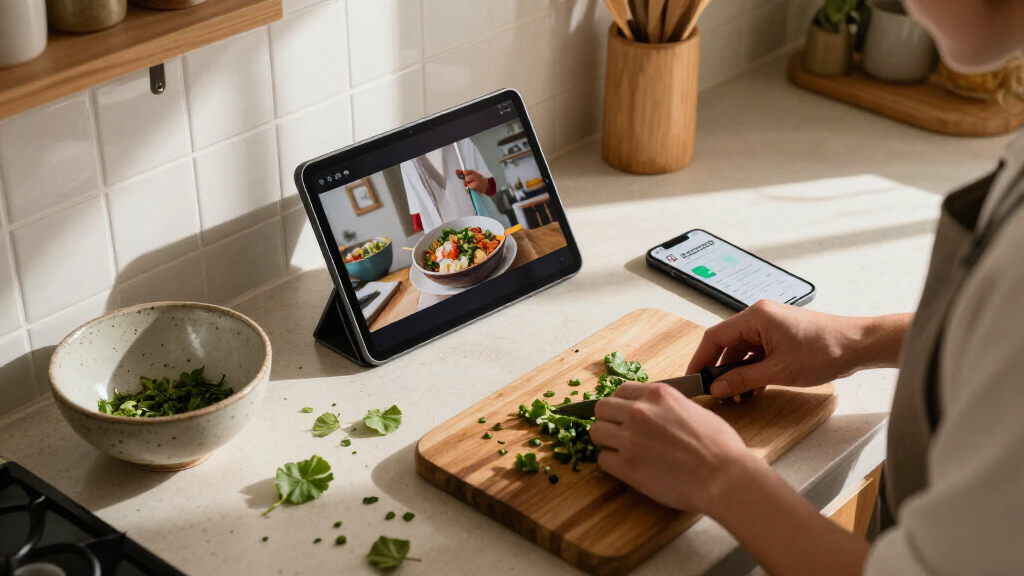
Apple’s HomeView smart display can extract online recipes into simplified, hands-free instructions, adding another way for people to cook without staying on a recipe website. The Verge reports that writers worry this format could reduce repeat ad views and remove advice that helps readers troubleshoot, though HomeView users must first open the source recipe. Its reach and financial impact are not yet known.
Apple’s HomeView smart display can turn compatible online recipes into simplified, hands-free cooking instructions, a feature that The Verge reports has renewed concerns among food writers about lost advertising revenue and missing context. Users must first open a recipe on an iPhone or in Safari on HomeView, but they can then follow the formatted steps without remaining on the original page.
The feature appeared in Apple’s HomeView introduction, which showed a family using the device to pull up a French toast recipe during a busy morning. According to The Verge, Apple says the system works with online recipes using Google’s search-friendly recipe formatting. The instructions can be navigated hands-free with voice controls and Siri AI, giving cooks an alternative to scrolling a full webpage while preparing food.
The convenience comes with a trade-off for publishers. Recipe pages commonly earn money through advertising and affiliate links, while the costs of testing and writing recipes do not disappear when the recipe is free to read. HomeView requires an initial visit to the original page, which can show its ads, but The Verge reports that writers may miss the additional ad impressions generated when readers stay on a page while cooking.
The extraction can also leave out material beyond the ingredient list and steps. Eater senior reporter Bettina Makalintal told The Verge that surrounding information can help cooks troubleshoot problems and make ingredient substitutions. The report does not establish how often HomeView omits such guidance or how much recipe content is affected.
Recipe Traffic and Publisher Income
For readers, stripped-down instructions may be easier to use in a kitchen, particularly when hands are occupied and a screen is inconvenient to touch. For recipe publishers, however, a tool that keeps people on a device’s simplified view can reduce the time they spend on the source site. That matters because page views and ad impressions are among the ways many publishers fund free recipes and the work behind them.
The issue is not only financial. A page may include practical details about technique, ingredient alternatives, or what to do if a recipe behaves unexpectedly. If those details are not carried into the extracted format, a cook could lose information needed to use the recipe successfully. The source report describes that risk, but does not document a specific case of a HomeView user receiving unsafe or incorrect instructions.
HomeView also sits within a broader change in how people find and use cooking information. When platforms put a summary between the reader and the publisher, the publisher may receive less attention and fewer opportunities to earn revenue, even if the source is initially opened. The scale of that effect depends on how many people use the feature and how its recipe display works in practice.
As an affiliate, we earn on qualifying purchases.
Earlier Recipe-Extraction Tools
Apple is not the first company to simplify online recipes for cooking devices. The Verge notes that Amazon Echo Show displays offer hands-free recipe features through partner sites including Allrecipes and Epicurious. Google previously offered step-by-step recipes on Nest Hubs, but removed that feature in 2024 alongside other features it described as underused.
In 2021, startup Recipeasly tried to remove advertisements and personal writing from online recipes, promising to “fix” them. The Verge reports that backlash led its founders to take the service offline after less than a weekend. That response reflected longstanding disagreement about recipe-page writing: some readers see it as an obstacle, while writers say it can support search visibility, provide useful cooking advice, and help fund their work.
The report also points to Google Search’s Gemini AI, which can combine online recipes into a streamlined result on the search page. Unlike HomeView’s reported requirement to open the source recipe first, that approach can let users view a synthesized recipe without clicking through to the original page. The two products differ, but both raise questions about how much of a publisher’s work users see and whether the publisher receives a visit.
As an affiliate, we earn on qualifying purchases.
HomeView’s Reach and Recipe Display
The available reporting does not provide HomeView sales figures, usage data, or estimates of how much income publishers could lose. It is also unclear how completely the device carries over recipe notes, troubleshooting advice, substitutions, advertisements, and affiliate links, or whether the display varies by source page.
Apple’s stated compatibility with recipes using Google’s formatting does not establish that every such recipe will appear correctly or that every online recipe uses that format. The report describes a required first visit to the source, but does not quantify whether that visit meaningfully offsets fewer subsequent page views. Claims about broader financial harm should therefore be treated as concerns, not measured outcomes.
As an affiliate, we earn on qualifying purchases.
Usage Will Show the Impact
The next useful indicators will be whether HomeView reaches a substantial audience, how its recipe feature handles different publishers’ pages, and whether writers report changes in traffic or advertising returns. The source material gives no date for a specific follow-up, usage report, or financial assessment.
For now, HomeView adds another option to a crowded mix of recipe websites, smart displays, and AI-powered search results. Readers can still open the original recipe page to see its full instructions and surrounding advice; whether they continue to do so after loading a recipe onto HomeView remains unclear.
As an affiliate, we earn on qualifying purchases.
Key Questions
What does Apple HomeView do with online recipes?
According to The Verge, HomeView can turn compatible online recipes into step-by-step instructions that users can follow hands-free. Apple says the feature works with recipes using Google’s search-friendly recipe formatting.
Does HomeView require a visit to the original recipe page?
Yes. The Verge reports that users must first open the recipe on an iPhone or in Safari on HomeView before it appears in the device’s cooking view. The article does not say how much of the original page’s content then remains accessible.
Why are recipe writers concerned about the feature?
Many recipe sites depend on advertising and affiliate links. Writers quoted by The Verge say a simplified display could mean fewer repeat ad impressions and could leave out useful notes about troubleshooting or substitutions.
Is HomeView proven to reduce recipe publishers’ income?
No. The source report describes writers’ concerns but provides no HomeView usage figures or measured financial impact. The scale of any effect remains unknown.
Can readers skip a recipe’s introduction without HomeView?
Jaya Saxena of Ravenous told The Verge that many food blogs have a “jump to recipe” button near the top of the page. Readers can use it to reach the recipe without scrolling through the introductory text.
Source: rss
Halloween Picks
halloween
As an affiliate, we earn on qualifying purchases.