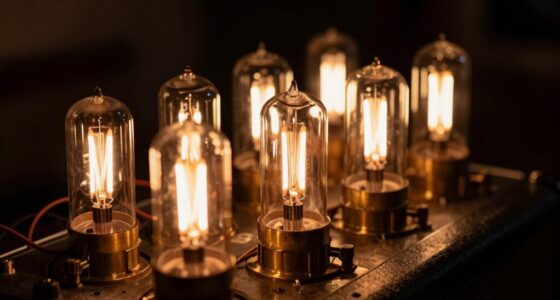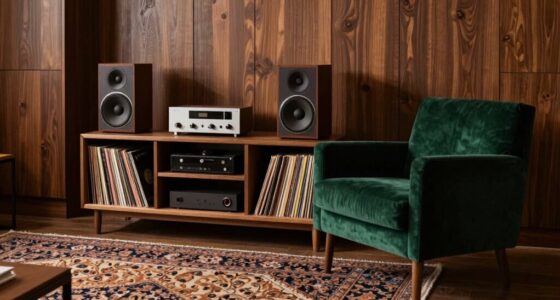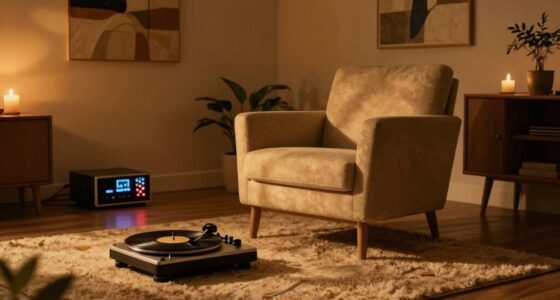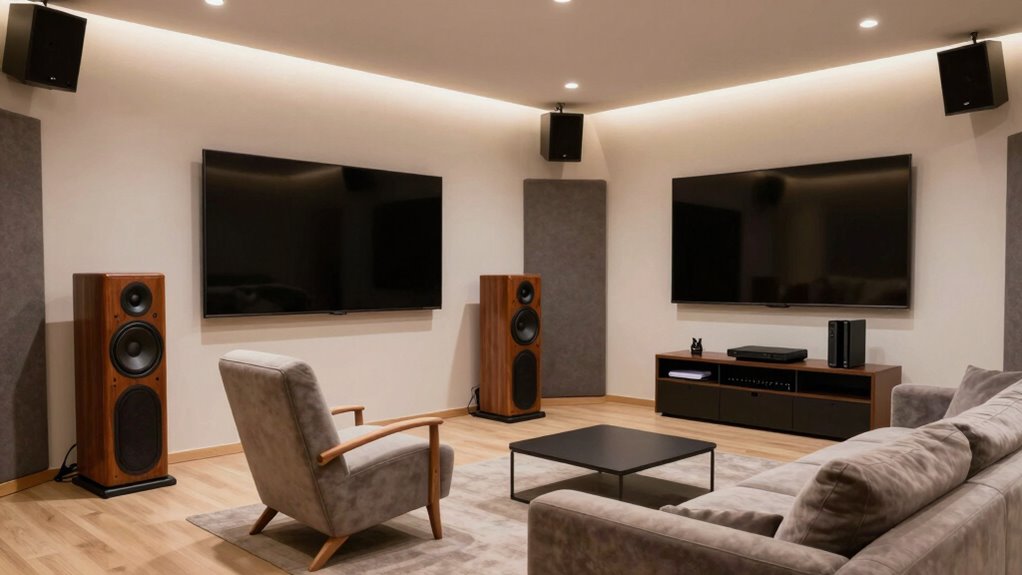

A stereo room is designed for music listening, focusing on sound clarity, stereo imaging, and a neutral environment. It uses high-quality speakers and minimal acoustic treatment. A media room aims for an immersive cinematic experience with surround sound, multiple speakers, and extensive acoustic treatments to handle reflections. Your setup choices depend on whether you prioritize hi-fi music or movie immersion. If you want to learn more about making the right choice for your space, keep exploring the details.
Key Takeaways
- Stereo rooms focus on sound clarity and stereo imaging for music, while media rooms prioritize immersive surround sound for movies.
- Acoustic treatments in stereo rooms aim to minimize reflections; media rooms require extensive treatment for multi-channel audio.
- Equipment in stereo rooms includes high-fidelity speakers and precise placement; media rooms feature multiple surround speakers and cinematic displays.
- Soundproofing in media rooms is more comprehensive to prevent sound leakage, compared to stereo rooms’ focus on sound clarity.
- Design priorities differ: stereo rooms enhance music fidelity, while media rooms emphasize immersive visual and audio experiences.
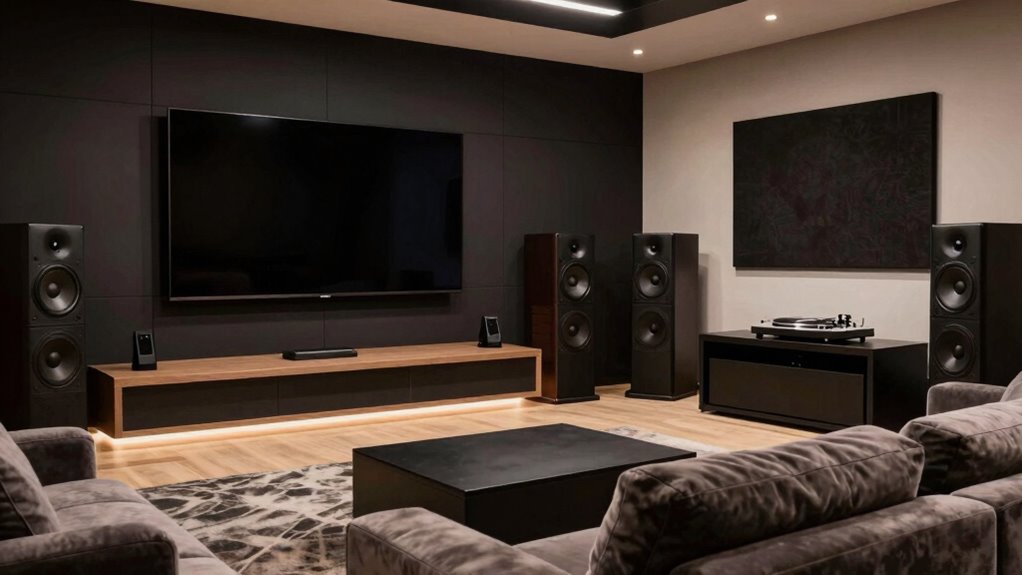
When setting up your home entertainment space, understanding the key differences between a stereo room and a media room can help you make better choices. A stereo room is primarily designed for high-quality music listening, emphasizing sound clarity and stereo imaging. Conversely, a media room aims to deliver an immersive experience for movies and TV shows, often featuring multiple speakers and visual enhancements. Recognizing these differences guides your decisions around acoustic treatment and equipment setup, ensuring you get the most out of your space.
Choosing between a stereo and media room impacts your setup for optimal sound and viewing experiences.
In a stereo room, acoustic treatment plays a vital role in achieving pristine audio quality. You want to minimize sound reflections and echoes that can muddy the stereo image. This often involves adding acoustic panels, bass traps, or diffusers to control reverberations. The goal is to create a neutral listening environment where sound waves are not distorted. The equipment setup here focuses on high-fidelity components like a quality amplifier, a pair of well-matched speakers, and a dedicated audio source, such as a turntable or high-resolution streamer. You’ll want to position your speakers carefully, usually at ear level and equidistant from your listening position, to optimize stereo imaging and soundstage. Additionally, acoustic treatment can be tailored to specific room characteristics to further enhance sound clarity. Proper room dimensions and shape also influence how sound behaves, making room acoustics a critical consideration in designing a stereo space. Incorporating soundproofing techniques can also help prevent external noise from interfering with your listening experience, especially in shared or noisy environments.
A media room, on the other hand, demands a different approach to acoustic treatment and equipment setup. Since the goal is to produce a cinematic experience, soundproofing becomes more important to prevent noise from escaping or entering the room. Acoustic treatments are often more extensive, including bass traps and absorptive panels behind the seating area to handle multiple sound reflections. The equipment setup in a media room involves a surround sound system, often with multiple speakers placed strategically around the room to create a sense of immersion. You’ll also want a high-quality AV receiver that can handle multiple channels and various formats, along with a large, high-resolution display. Proper speaker placement is crucial here, as it ensures balanced sound coverage and an authentic theater-like experience. Additionally, incorporating soundproofing techniques can significantly enhance the cinematic experience by minimizing external noise and preventing sound leakage. Effective wiring and cable management also help maintain audio integrity and prevent interference that could diminish sound quality.
Ultimately, the differences boil down to your priorities. If you love music and want clarity and precision, your focus should be on acoustic treatment and equipment setup tailored for stereo sound. If you prefer movies and immersive sound effects, designing a media room with appropriate acoustic treatments and a well-placed surround sound system will serve you better. Knowing these distinctions helps you build a space that truly enhances your entertainment, whether it’s music, movies, or both.

ANGELS HORN Bluetooth Bookshelf Speakers, 60W Powered Stereo Speakers
Turntable Speakers for Vinyl Lovers: Designed for record players and vinyl enthusiasts, these powered bookshelf speakers deliver warm,…
As an affiliate, we earn on qualifying purchases.
As an affiliate, we earn on qualifying purchases.
Frequently Asked Questions
Can a Room Serve as Both a Stereo and Media Room?
Yes, your room can serve as both a stereo and media room with a multi-purpose design. You should focus on aesthetic considerations that balance sound quality and visual appeal. Use versatile furniture, adjustable lighting, and soundproofing to create an environment suitable for music and movies. By thoughtfully combining these elements, you’ll guarantee your space is functional, stylish, and adaptable for different entertainment needs.
What Equipment Is Essential for a Media Room?
You need essential equipment like a high-quality surround sound system and precise audio calibration tools. Imagine stepping into a room where every whisper and explosion feels real—your speakers, strategically placed, create immersive sound. An AV receiver powers everything seamlessly, while a 4K projector or large screen transforms your space into a cinematic haven. Don’t forget, proper calibration guarantees perfect sound clarity, elevating your media experience from ordinary to extraordinary.
How Do Room Size and Shape Affect Acoustics?
Room size and shape greatly influence acoustics by affecting sound reflection and absorption. Larger rooms can cause echoes, while irregular shapes help diffuse sound waves, reducing unwanted reflections. You should consider acoustic treatment to manage these issues, such as adding panels or bass traps to absorb excess sound and improve clarity. Properly-designed spaces ensure balanced sound, making your media or stereo experience more immersive and enjoyable.
Is Soundproofing Necessary for a Media Room?
Soundproofing isn’t always necessary for a media room, but it offers significant benefits like reducing noise disturbance and enhancing sound clarity. You should consider acoustic treatments, such as bass traps and diffusers, to improve sound quality and prevent sound leakage. If your media room shares walls with quiet spaces or neighbors, adding soundproofing can make your experience more immersive and enjoyable, ensuring minimal disturbance outside the room.
What Budget Is Typical for Setting up Each Room Type?
Think of your room setup as a canvas—your budget shapes what’s achievable. For a stereo room, you might spend $1,000 to $5,000, focusing on quality speakers and acoustic treatments. For a media room, budgets typically range from $5,000 to $20,000 or more, including plush furniture, decorative lighting, and advanced equipment. Smart furniture arrangement and thoughtful lighting elevate your space without breaking the bank.

ULTIMEA 7.1ch Surround Sound System for TV with Dolby Atmos, Aura A60 Pro
7.1ch Dolby Atmos Surround Sound System for TV: This 7.1ch sound bar features 3 main channels for crisp…
As an affiliate, we earn on qualifying purchases.
As an affiliate, we earn on qualifying purchases.
Conclusion
Ultimately, a stereo room immerses you in a world of pure sound, where music and clarity take center stage. In contrast, a media room surrounds you with visuals and multi-sensory entertainment, making every movie a cinematic experience. While a stereo room isolates you in the purity of sound, a media room pulls you into a full-spectrum experience. Both transform your space, but in very different ways—one for listening, the other for living.

Focusound 52 Pack Acoustic Foam Panels 1" x 12" x 12" Sound Proof Foam Panles Soundproofing Noise Cancelling Wedge Panels for Home Office Recoding Studio with 300PCS Double-Side Adhesive
Soundproofing – Acoustic foam panels triangular grooves structure for better noise absorption, helps to reduce and absorb unwanted…
As an affiliate, we earn on qualifying purchases.
As an affiliate, we earn on qualifying purchases.

12 Pack Sound Proof Foam Panels for Walls with Self-Adhesive & High Density
🔇Effective Noise Reduction: Say goodbye to noise and enjoy tranquility. Our acoustic panels sound absorbing use 35kg/m³ ultra…
As an affiliate, we earn on qualifying purchases.
As an affiliate, we earn on qualifying purchases.