Turning junk into gems at flea markets is all about spotting overlooked vintage and discarded items that can become eye-catching treasures with some creativity. You can upcycle furniture, repurpose vintage fabrics, or add a fresh coat of paint to transform pieces into unique, profitable accents. Developing a good eye for potential and strategic shopping will help you flip these finds quickly. Keep exploring, and you’ll discover even more tips to turn everyday items into valuable gems.
Key Takeaways
- Spot undervalued vintage items quickly and assess their potential for easy updates or upcycling.
- Use creative ideas to transform overlooked pieces into eye-catching, profitable treasures.
- Negotiate prices and focus on items with simple fixes like paint or hardware upgrades.
- Develop skills in upcycling and personalization to increase the appeal and value of finds.
- Combine strategic shopping with upcycling expertise to maximize profit from flea market flips.
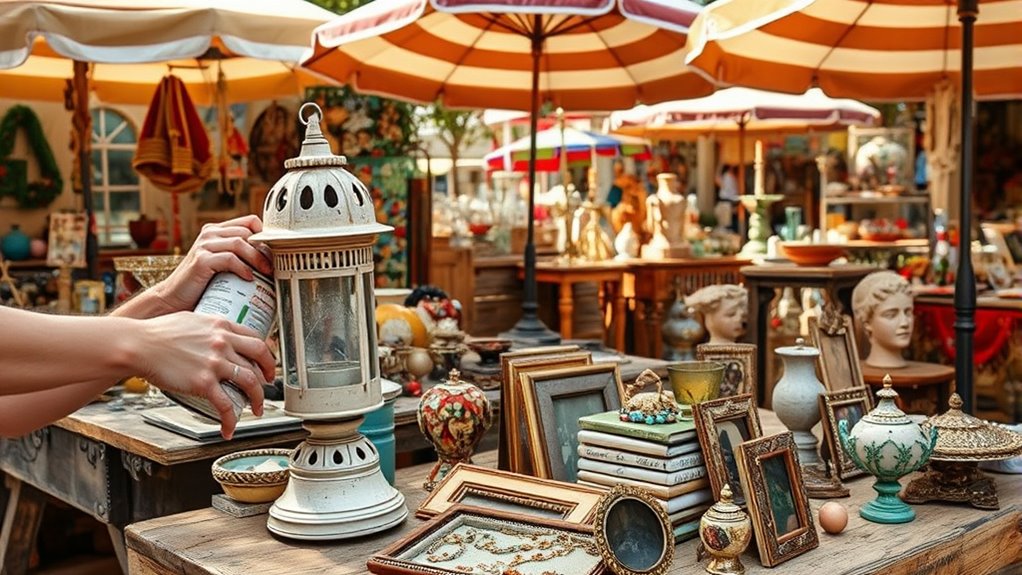
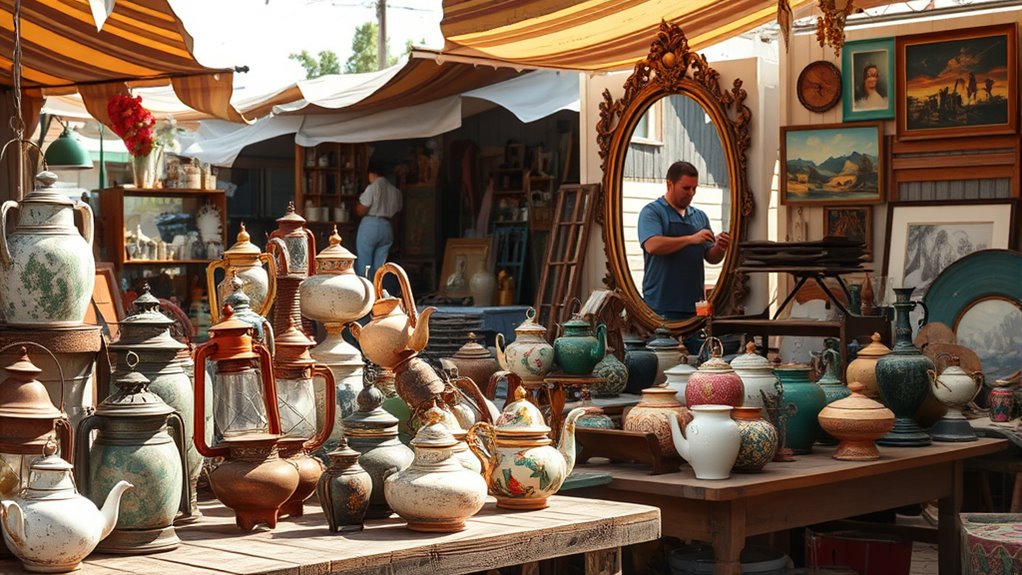
Ever wondered how people turn simple flea market finds into profitable treasures? The secret often lies in creative upcycling ideas and sharp vintage shopping tips. When you step into a flea market, it’s easy to see a jumble of old, forgotten items. But with a keen eye and a bit of ingenuity, you can transform those items into valuable, eye-catching pieces. Upcycling ideas are all about breathing new life into something that others might overlook. For example, an old wooden ladder can become a rustic bookshelf, or vintage teacups can be turned into charming candles. The key is to see potential where others see waste. You don’t need to be a professional craftsman—just a willingness to experiment and a sense of style.
Getting the most out of your flea market trips means knowing some vintage shopping tips. First, go early to beat the crowds and get first pick of the best items. Bring a measuring tape and a list of what you’re seeking, so you stay focused and don’t get overwhelmed. Don’t hesitate to negotiate prices; many vendors are willing to cut a deal, especially if you’re buying multiple items. It’s also helpful to look beyond the surface—sometimes, a coat of paint or a few minor repairs can make a huge difference. Keep an open mind, and you might find a vintage dresser that just needs a fresh coat of paint or some new hardware to become a statement piece.
As you develop your vintage shopping tips, remember that the real magic happens when you combine these skills with your creativity. Think about how to upcycle items into something unique and functional. For instance, an old window frame can become a picture display, or vintage fabric can be transformed into pillow covers. The more you explore different upcycling ideas, the more your projects will stand out. Plus, knowing how to spot good vintage pieces means you can flip them quickly for a profit. Your eye for detail and willingness to experiment are what will set your flea market flips apart. With patience, practice, and a bit of creativity, you’ll turn even the most overlooked flea market finds into profitable treasures that showcase your personal style.
As an affiliate, we earn on qualifying purchases.
Frequently Asked Questions
How Do I Identify Valuable Items at Flea Markets?
To identify valuable items at flea markets, start with antique identification by examining markings, craftsmanship, and materials. Use valuation techniques like researching similar items online or in price guides to gauge worth. Trust your intuition, but also check for provenance and condition, as these impact value. Don’t hesitate to ask vendors questions; often, they can provide insights that help you spot hidden gems worth flipping or collecting.
What Tools Are Essential for Refurbishing Flea Market Finds?
Imagine your tools as your treasure map—without them, you’re lost. Essential tools for refurbishing flea market finds include a good screwdriver set, sandpaper, paintbrushes, and a mini sander. Restoration techniques like cleaning, sanding, and repainting bring new life to items. Remember to maintain your tools by cleaning and oiling them regularly, ensuring they work smoothly and last longer, just like a trusty compass guiding you to hidden gems.
How Do I Negotiate Prices With Vendors Effectively?
To negotiate prices effectively, focus on using smart pricing strategies and bargaining techniques. Start by researching the item’s value, then offer a fair, slightly lower price to leave room for negotiation. Be friendly and respectful, show genuine interest, and don’t be afraid to walk away if the deal isn’t right. Your confidence and preparation will help you secure better prices and maximize your flea market finds.
What Are Common Mistakes to Avoid During Flips?
To avoid common mistakes during flips, steer clear of pricing pitfalls like overvaluing items or undervaluing them, which can hurt profits. Don’t overbuy; it’s tempting to acquire too much, but it increases storage costs and risks of unsold inventory. Always research market value first, set a budget, and stick to it. This disciplined approach helps make certain your flips are profitable and minimizes losses from poor purchasing decisions.
How Can I Build a Consistent Customer Base?
Imagine your booth greeting familiar faces like old friends—that’s how you build a consistent customer base. Focus on effective marketing strategies, like social media updates and special promotions, to attract repeat visitors. Prioritize customer retention by offering excellent service, personalized recommendations, and loyalty discounts. When customers feel valued and connected, they’ll return regularly, turning casual shoppers into loyal supporters who help grow your business steadily.
As an affiliate, we earn on qualifying purchases.
Conclusion
Now that you know how to spot hidden treasures and give them new life, are you ready to turn your own flea market finds into valuable gems? With a little creativity and effort, you can transform junk into stunning pieces that everyone will admire. So why not start your flip journey today? You never know—your next big treasure might just be waiting for you at your local flea market. Are you excited to begin?
As an affiliate, we earn on qualifying purchases.
DIY furniture hardware replacement
As an affiliate, we earn on qualifying purchases.
As an affiliate, we earn on qualifying purchases.