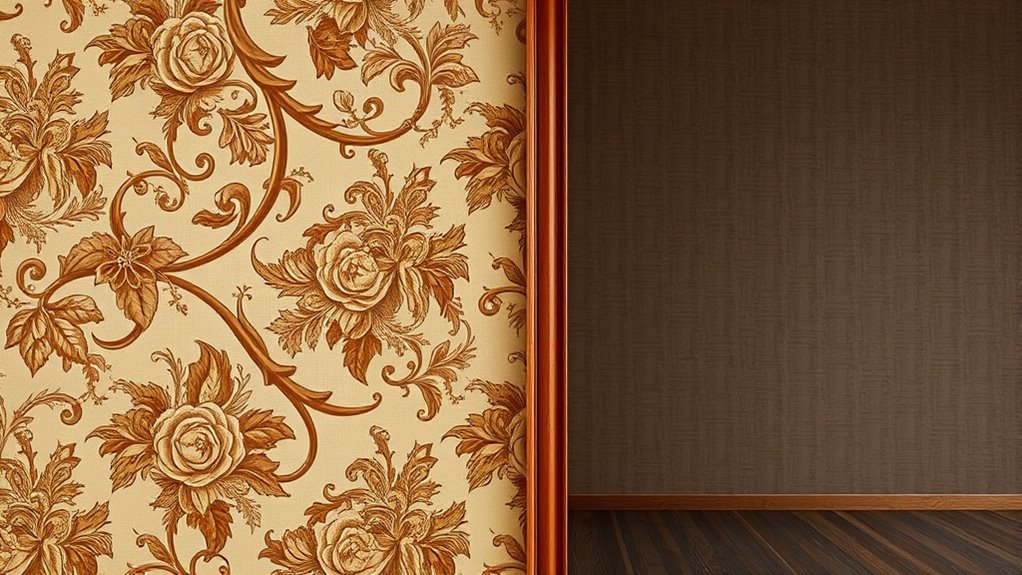

From the Victorian era to mid-century styles, wallpaper evolved with technological advances like machine printing and lithography, making intricate designs more accessible. Victorian patterns showcased nature, exotic motifs, and elaborate ornamentation reflecting social status, while the Arts and Crafts movement emphasized handmade artistry. In the mid-20th century, bold geometric and abstract motifs emerged, influenced by Modernism and Art Deco. If you explore further, you’ll discover how these designs mirror cultural shifts and technological progress over time.
Key Takeaways
- Victorian wallpaper evolved from handcrafted to mechanized production, enabling intricate, colorful designs for the growing middle class.
- Victorian patterns were influenced by nature, exotic motifs, and cultural exchanges like Japonisme, reflecting social status and taste.
- Technological advances such as lithography and screen printing in the 20th century expanded design diversity and texture options.
- Mid-century styles embraced bold geometric, abstract motifs, influenced by Modernism and Art Deco movements.
- Contemporary wallpapers blend historical influences with innovative, sustainable materials, continuing the tradition of artistic and cultural expression.

Have you ever wondered how wallpaper became a popular way to decorate walls? The story begins with early manufacturing techniques that evolved over centuries, shaping the wallpaper industry into what it is today. During the Victorian era, wallpaper production shifted from handcrafted methods to more efficient, mechanized processes. These manufacturing techniques allowed for intricate patterns and vibrant colors to be produced on a large scale, making wallpaper more accessible to the growing middle class. The advent of machine printing, especially rotary presses, revolutionized how designs were created and applied, enabling mass production and consistent quality. This technological leap also influenced the variety and complexity of patterns available, from florals and damasks to geometric shapes, reflecting the artistic trends of the time.
Early manufacturing innovations made wallpaper more intricate, colorful, and accessible to the middle class.
Cultural influences played a significant role in shaping Victorian wallpaper designs. The era was characterized by a fascination with nature, history, and exotic motifs, which found expression in the patterns chosen for homes. You’d see motifs inspired by Chinese and Japanese art, thanks to increased trade and cultural exchange, leading to what was known as Japonisme. Additionally, the Victorian penchant for ornamentation and detail meant that wallpaper designs were often elaborate, with motifs symbolizing status, taste, and cultural awareness. The influence of the Arts and Crafts movement also pushed for more handmade, artistic qualities, blending traditional craftsmanship with modern manufacturing techniques to produce wallpapers that were both decorative and meaningful.
As the 20th century approached, manufacturing techniques continued to advance, allowing for even more innovative designs and materials. Lithography and screen printing introduced new textures and effects, broadening the scope of wallpaper aesthetics. Meanwhile, cultural influences remained crucial, with each decade reflecting current social and artistic trends. For example, the mid-century period embraced bold geometric patterns and abstract motifs, influenced by movements like Modernism and Art Deco. These styles often drew inspiration from contemporary art, technology, and global cultural shifts, making wallpaper a reflection of the evolving cultural landscape. Additionally, technological innovations enabled the development of more sustainable materials, aligning with growing environmental consciousness.
Throughout this history, you can see how manufacturing techniques and cultural influences intertwined to shape wallpaper styles across eras. What started as handcrafted, limited designs became a mass-produced art form, echoing societal changes, technological progress, and artistic movements. Today, this rich history continues to influence modern wallpaper choices, blending tradition with innovation to create spaces that are both stylish and meaningful. Understanding this evolution helps you appreciate how wallpaper is more than just decoration—it’s a reflection of cultural identity, technological progress, and artistic expression throughout history.

Scotch Felt Pads 162 PCS Beige, Felt Furniture Pads for Protecting Hardwood Floors, Round, Assorted Sizes Value Pack, Self-Stick design, Protecting from nicks, dents and scratches (SP845-NA)
GREAT FOR FURNITURE AND DÉCOR: Scotch felt pads for furniture on hardwood floors are great for chair legs,...
As an affiliate, we earn on qualifying purchases.
Frequently Asked Questions
How Did Wallpaper Influence Interior Design Trends Over the Centuries?
Wallpaper influences interior design trends by shaping the ambiance and reflecting societal symbolism. You notice how wallpaper symbolism, like floral or geometric patterns, communicates mood and status. Decorative techniques, from hand-painting to modern printing, evolve with styles, inspiring designers to experiment and set new trends. Over centuries, wallpaper’s versatility and expressive potential continue to influence interior aesthetics, making spaces more personalized and visually compelling.
What Materials Were Commonly Used in Early Wallpaper Manufacturing?
You might think wallpaper materials were flimsy, but early manufacturing used durable materials like hand-printed papers with natural fibers, pigments, and adhesives. Historical techniques included block printing and hand painting, ensuring longevity. These materials were chosen not just for aesthetic appeal but also for their ability to withstand wear and tear. This combination of craftsmanship and sturdy materials helped wallpaper become a lasting feature in interior design.
Were There Regional Differences in Wallpaper Styles Globally?
Yes, there are regional differences in wallpaper styles globally. You’ll notice distinct regional motifs and style variations that reflect local cultures, traditions, and aesthetics. For example, you might see intricate Asian patterns, bold African designs, or delicate European florals. These regional motifs give each wallpaper a unique identity, allowing you to choose styles that resonate with your cultural background or preferred decor, adding a personalized touch to your space.
How Did Technological Advances Impact Wallpaper Production?
Imagine you’re browsing wallpaper options on your tablet—digital printing revolutionized production, making intricate designs faster and more affordable. Manufacturing automation further streamlined processes, reducing costs and allowing for mass customization. These technological advances let you choose from a wide range of patterns, colors, and textures, transforming wallpaper from a handcrafted luxury into an accessible home decor staple. You now enjoy stunning, personalized walls thanks to these modern innovations.
What Are the Cultural Significances of Patterns in Different Eras?
You see that patterns in different eras hold deep cultural symbolism, reflecting societal values and aesthetics. As patterns evolve, they mirror changing tastes, technological advances, and social influences. For example, Victorian motifs often symbolized wealth, while mid-century designs embraced simplicity and modernity. Recognizing this pattern evolution helps you appreciate how wallpaper not only decorates but also communicates cultural identity and historical shifts across time periods.
Felt Furniture Pads X-PROTECTOR 133 PCS Premium Furniture Pads - Felt Pads Furniture Feet Best Wood Floor Protectors - Protect Your Hardwood & Laminate Flooring! Brown and Beige
✌ X-PROTECTOR FURNITURE FELT PADS – best protection for Your wooden, laminate or tiled floors. Our furniture coasters...
As an affiliate, we earn on qualifying purchases.
Conclusion
So, next time you see a vintage floral or bold geometric wallpaper, remember it’s more than just decor—it’s a piece of history. You might think wallpaper’s outdated or tricky to maintain, but today’s options are easier and more stylish than ever. Embrace the patterns that tell stories from Victorian elegance to mid-century modern. After all, adding a touch of history can make your space uniquely yours, and who doesn’t want a home that reflects timeless style?

Haimin Grasscloth Textured Wallpaper 24in X 393in Fabric Contact Paper White Wall Paper Linen Peel and Stick Self-Adhesive Thick Vinyl Embossed Film Wallpaper (White)
【Size】24in x 393in, ±2%/roll (about 61 cm x 10 m, ±2% per roll).Thickness about 0.5mm.【Color】: mainly white, but...
As an affiliate, we earn on qualifying purchases.
NuWallpaper by WallPops Tan Poplin Peel and Stick Wallpaper, NUS5002
Taupe textural peel and stick NuWallpaper
As an affiliate, we earn on qualifying purchases.