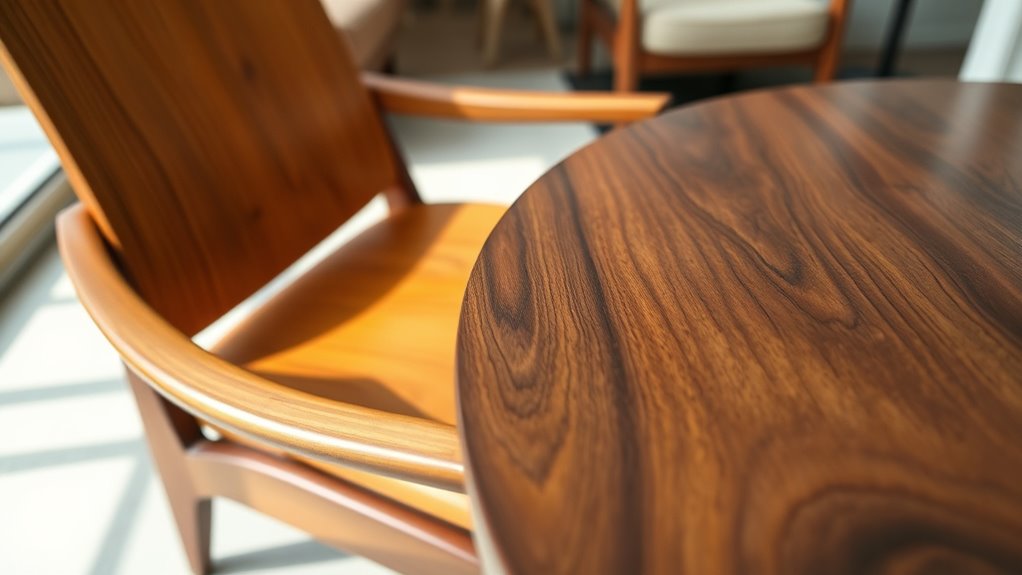

Teak and walnut dominate mid-century furniture because of their durability, natural beauty, and versatility. Teak’s rich hue and resistance to wear make it perfect for sleek, enduring pieces, while walnut’s smooth grain and refined darkness add elegance and sculptural potential. Both woods age beautifully, developing a character that adds value over time. Their timeless appeal and sustainability practices make them favorites among designers and collectors. Keep exploring to discover more about what makes these woods essential to the style.

Get furniture and decor delivered free with Prime
- Fast, free delivery on millions of items
- Prime Video, Amazon Music and more included
- Member-only deals all year
Key Takeaways
- Teak and walnut offer durability and timeless aesthetic appeal, ensuring long-lasting, stylish furniture pieces.
- Their natural beauty ages gracefully, developing a desirable patina that enhances mid-century designs.
- Both woods enable sleek, minimalist, and sculptural forms, aligning with mid-century modern aesthetics.
- Responsible sourcing of teak emphasizes sustainability, appealing to eco-conscious designers and consumers.
- Their versatility in finishes and shapes makes them ideal materials for diverse mid-century furniture styles.

Mid-century furniture is celebrated for its sleek lines and functional design, and two woods—teak and walnut—play a essential role in defining its distinctive look. You’ll find these woods not only because of their beauty but also due to their sustainability and versatility. When choosing furniture, you might wonder how these woods have become staples of the era. The answer lies in their sustainable sourcing and incredible design versatility, making them ideal for the clean, minimalist aesthetic that characterizes mid-century style.
Teak, in particular, is renowned for its durability and rich, golden-brown hue. Its sustainable sourcing has become a significant factor in its popularity, especially as manufacturers and consumers become more conscious of environmental impact. Many teak suppliers now prioritize responsibly harvested wood, ensuring that forests are managed sustainably and that trees are replanted or harvested in ways that maintain ecological balance. This commitment to sustainability not only helps protect the environment but also guarantees that the wood remains available for future generations. When you select teak furniture, you’re supporting responsible forestry practices, which aligns with the modern emphasis on eco-conscious living.
Choosing sustainably sourced teak supports eco-conscious living and ensures beautiful, durable furniture for generations to come.
Walnut, on the other hand, offers a darker, more refined appearance that complements mid-century designs with its smooth grain and rich tone. Its design versatility makes it a favorite among artisans and homeowners alike. Walnut can be crafted into sleek, minimalist pieces or intricate, sculptural forms, allowing you to incorporate it into various interior styles. Whether you want a statement piece or a subtle accent, walnut adapts effortlessly. Its ability to be finished in multiple ways—whether matte, satin, or high gloss—further expands its versatility, giving you options to match your aesthetic preferences.
Both woods also lend a timeless quality to furniture, making pieces crafted from them enduring and stylish. Their natural beauty ages gracefully, developing a lovely patina that adds character over time. This longevity ensures that your investment remains relevant and beautiful for decades. Additionally, sustainable sourcing is a key factor that enhances their appeal, reflecting a broader movement towards environmentally responsible manufacturing. When you choose furniture made from teak or walnut, you’re not just selecting a material; you’re embracing a design philosophy rooted in quality, sustainability, and versatility. These woods support your desire for stylish, functional pieces that stand the test of time while respecting the environment. That’s why they have become the defining materials of mid-century furniture, and why they continue to be favored by designers and collectors today.
teak mid-century modern furniture
As an affiliate, we earn on qualifying purchases.
As an affiliate, we earn on qualifying purchases.
Frequently Asked Questions
Are Teak and Walnut Sustainably Sourced?
You’ll find that teak and walnut are often sustainably sourced through eco-friendly harvesting practices, ensuring minimal environmental impact. Certification standards like FSC and PEFC verify responsible forestry, so you can trust that these woods are harvested ethically. When shopping, look for products with these certifications to support sustainable practices. This way, you enjoy beautiful, durable furniture while helping protect forests and promote eco-conscious sourcing.
How Do Teak and Walnut Compare in Durability?
Teak and walnut both boast impressive durability, but teak often outperforms due to its dense grain patterns and natural oils, making it more resistant to moisture and pests. Walnut, while strong, has finer grain patterns that can be more susceptible to scratches and requires regular maintenance to preserve its beauty. If you’re after long-lasting furniture, teak’s low maintenance and resilience make it the better choice.
Can Teak and Walnut Furniture Be Recycled?
Yes, you can recycle teak and walnut furniture, but recycling challenges exist due to their dense, durable wood. These woods aren’t always easily processed by standard recycling facilities, which can impact their environmental footprint. To minimize this, consider repurposing or donating furniture instead of disposal. Recycling helps reduce environmental impact, but because of their quality and longevity, many people prefer to reuse or upcycle teak and walnut pieces rather than recycling them.
What Are the Cost Differences Between Teak and Walnut?
You’ll find that teak generally costs more than walnut, mainly due to its premium pricing analysis and limited market availability. Teak’s durability and scarcity drive up prices, making it a more expensive choice. Walnut, while still valuable, is more widely available and tends to be more affordable. If budget matters, walnut offers a cost-effective alternative, but if you want luxury and longevity, teak’s higher price reflects its quality and rarity.
How Do Finishing Options Vary for Teak and Walnut?
Finishing options for teak and walnut are like a painter’s palette, offering diverse choices. Teak’s rich wood grain patterns respond well to oil finishes that enhance its natural oils and warm glow, while walnut’s smooth, dark surface lends itself to stains, lacquers, or clear finishes that highlight its intricate grain. Both woods benefit from protective techniques like sealing and polishing, ensuring your furniture’s beauty endures for generations.
As an affiliate, we earn on qualifying purchases.
Conclusion
So, next time you see a sleek piece of mid-century furniture, ask yourself: wouldn’t you want something that’s not only beautiful but also stands the test of time? Teak and walnut bring warmth, durability, and a touch of elegance that’s hard to beat. They invite you to imagine a piece that ages gracefully, becoming part of your space’s story. Isn’t that the kind of furniture you’d want to cherish for generations?
As an affiliate, we earn on qualifying purchases.
As an affiliate, we earn on qualifying purchases.
Halloween Picks
halloween
As an affiliate, we earn on qualifying purchases.