
In the 70s, mid-century design focused on simplicity, natural materials, and calming earthy tones, creating timeless, functional spaces. Postmodern design then emerged as a bold contrast, with playful shapes, exaggerated proportions, and vibrant colors that challenge traditional aesthetics. It embodies individuality and experimental forms, reflecting a cultural shift toward self-expression. If you explore further, you’ll discover how these contrasting styles shaped retro trends and offered fresh ways to interpret modern living.

Get furniture and decor delivered free with Prime
- Fast, free delivery on millions of items
- Prime Video, Amazon Music and more included
- Member-only deals all year
Key Takeaways
- Mid-Century design emphasizes simplicity, natural materials, and muted earthy tones, reflecting stability and harmony in the 1950s-60s.
- Postmodern in the 70s introduces bold colors, playful shapes, and eclectic materials, challenging traditional aesthetics with expressive, daring elements.
- The transition from Mid-Century to Postmodern marks a shift from calm elegance to vibrant, rebellious visual language.
- Postmodern design incorporates unconventional forms and mixed media, contrasting the functional minimalism of Mid-Century furniture.
- The evolution reflects a cultural move from optimistic stability to experimental, personality-driven artistic expression in retro design.

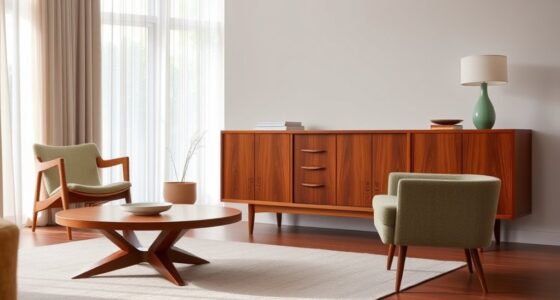
Design styles often reflect the cultural and aesthetic values of their time, and nowhere is this more evident than in the contrast between Mid-Century and Postmodern design. When you compare these styles, you notice how each captures the spirit of its era through distinctive furniture styles and color palettes. Mid-Century design, which gained popularity in the 1950s and 60s, emphasizes clean lines, organic forms, and functionality. You’ll see furniture styles that prioritize simplicity and comfort, with pieces often crafted from wood, molded plastics, and metal. The color palettes tend to be muted and natural, featuring earthy tones like olive green, mustard yellow, warm browns, and soft pastels. These choices weren’t just aesthetic—they reflected a desire for harmony with nature and a sense of calm.
Mid-Century design emphasizes simplicity, organic forms, and earthy, muted colors reflecting harmony and calm.
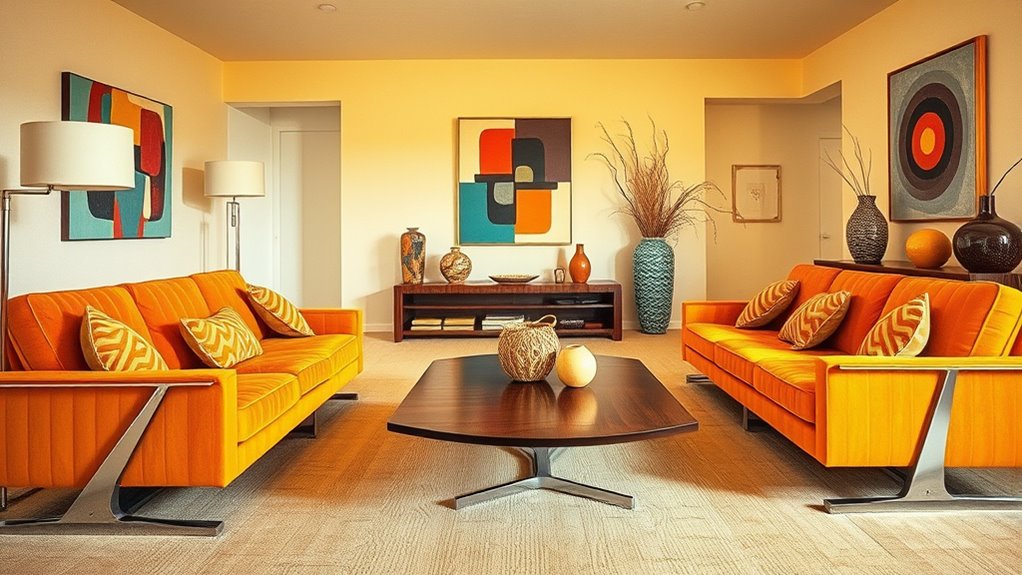
In contrast, Postmodern design, emerging in the late 1960s and thriving into the 70s, challenges the straightforwardness of Mid-Century aesthetics. You’re likely to encounter furniture styles that are more playful, eclectic, and experimental. Instead of clean, minimal lines, Postmodern pieces often incorporate quirky shapes, exaggerated proportions, and a sense of humor. Bright, bold colors frequently dominate the palette, including vivid reds, electric blues, and neon shades, breaking away from the subdued tones of the previous era. The color palettes in Postmodern design serve to create visual impact and express personality, reflecting a desire to push boundaries and question traditional notions of beauty and function.
The shift from Mid-Century to Postmodern can be seen as a move from subtle elegance to bold expression. You might find that furniture styles in Postmodern interiors incorporate unexpected materials and combinations—think plastic, glass, and chrome—often assembled in unconventional ways. The focus is less on harmony and more on creating visual surprise. This transition also signifies a cultural shift: from the optimistic, forward-looking attitude of the Mid-Century period to a more rebellious, questioning outlook that embraces complexity and contradiction. Additionally, the use of color palettes in Postmodern design exemplifies how visual language was employed to evoke emotion and challenge traditional aesthetics.
Understanding these differences helps you appreciate how each style communicates the values of its time. Mid-Century’s muted, organic color palettes and streamlined furniture styles reflect a desire for stability and simplicity, while Postmodern’s vibrant colors and experimental furniture styles embody a playful, provocative spirit. When you’re designing or redecorating, knowing the contrast between these eras allows you to choose elements that resonate with the mood and message you want to convey, whether it’s timeless tranquility or daring originality.
Mid-Century Modern wooden coffee table
As an affiliate, we earn on qualifying purchases.
As an affiliate, we earn on qualifying purchases.
Frequently Asked Questions
How Did Societal Shifts Influence Design Trends in the 70S?
You see that societal shifts, like changing values and political climate, shape 70s design trends. Sociocultural influences, such as the desire for individuality and breaking traditional norms, lead you to bold, eclectic styles. Meanwhile, political tensions and social movements push you toward experimental and rebellious aesthetics. These factors combine, inspiring you to embrace vibrant colors, unconventional shapes, and a playful mix of retro elements in your space.
What Materials Were Commonly Used in Postmodern Furniture?
You’ll notice that postmodern furniture often features eclectic material combinations, blending wood, metal, plastic, and glass for bold contrasts. Innovative surface finishes, like high-gloss lacquers or textured veneers, add visual interest. These materials reflect the playful, experimental spirit of the era, allowing designers to push boundaries. By mixing different textures and finishes, postmodern pieces create dynamic, eye-catching designs that challenge traditional aesthetics and embrace individuality.
How Did Interior Lighting Evolve Between Mid-Century and Postmodern Styles?
Did you know that interior lighting shifted dramatically in the 70s, with neon lighting becoming a hallmark of postmodern design? You’ll notice a move from the subtle ambient illumination of mid-century styles to bold, colorful neon accents, creating vibrant, energetic spaces. This evolution reflects a desire for more expressive, dynamic environments, making lighting not just functional but a key element of aesthetic statement in postmodern interiors.
Were There Regional Differences in the Adoption of These Design Styles?
You’ll find that regional preferences and cultural influences shaped how these styles spread. In the U.S., mid-century designs flourished in suburban homes, while postmodern styles gained traction in urban areas with diverse cultures. In Europe, different countries embraced these styles uniquely, blending local traditions. These regional differences reflect how cultural influences and local tastes impacted the adoption and adaptation of mid-century and postmodern design across various locations.
How Did These Styles Impact Contemporary Architecture Beyond the 70S?
Imagine stepping into a modern cityscape and noticing how Mid-Century and Postmodern styles influence today’s architecture. You see bold furniture aesthetics and vibrant color palettes that trace back to those revolutionary designs. These styles broke traditional boundaries, inspiring contemporary architects to experiment with form and color, shaping innovative aesthetics. Their legacy endures, reminding you how design evolution sparks creativity, even beyond the 70s, transforming spaces into expressive, vibrant environments.
Postmodern colorful accent chair
As an affiliate, we earn on qualifying purchases.
As an affiliate, we earn on qualifying purchases.
Conclusion
As you step into a room that blends sleek mid-century furniture with bold postmodern accents, it’s like witnessing a time capsule collide. The clean lines meet playful patterns, creating a visual harmony that’s both nostalgic and fresh. Just as a vintage clock and a modern sculpture sit side by side, these styles remind you that design evolves, yet always finds a way to surprise and delight. Sometimes, the past and present dance together perfectly.
As an affiliate, we earn on qualifying purchases.
Eclectic vintage living room furniture
As an affiliate, we earn on qualifying purchases.
As an affiliate, we earn on qualifying purchases.
Halloween Picks
halloween
As an affiliate, we earn on qualifying purchases.