
Across the globe, cultures embrace vintage style to celebrate heritage and promote sustainability. In Japan, streetwear blends 80s and 90s influences with modern eco-friendly designs, while Harajuku fashion mixes vintage with contemporary twists. European cities like Paris and London rework classic styles into luxurious, responsible collections. Meanwhile, South Korea combines traditional Korean motifs with retro Western elements, and Brazil’s vibrant 60s and 70s patterns express joyful individuality. To discover how these diverse influences shape vintage fashion worldwide, keep exploring the vibrant stories behind each culture’s style.
Key Takeaways
- Countries worldwide blend traditional elements with vintage fashion, creating culturally unique retro styles.
- Japan’s Harajuku and streetwear scenes combine nostalgic aesthetics with modern, eco-friendly designs.
- European cities rework vintage pieces into luxury, sustainable collections reflecting cultural heritage.
- North America embraces 70s-90s retro through thrift shopping, upcycling, and eco-conscious personal styles.
- South Korea and Brazil infuse local cultural motifs into vintage fashion, emphasizing diversity and sustainability.
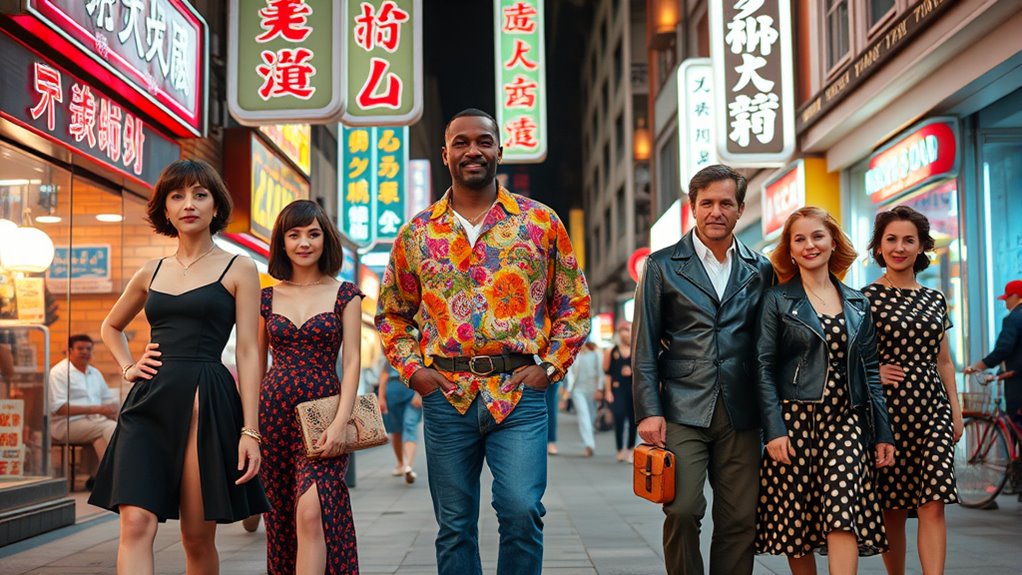
Have you noticed how retro styles are making a worldwide comeback? It’s impossible to ignore the surge in vintage-inspired fashion across different cultures, each bringing their unique flavor to the trend. This resurgence isn’t just about nostalgia; it’s also about embracing sustainable fashion. Many people are choosing vintage pieces or modern reinterpretations of classic styles to reduce their environmental impact. When you wear something vintage or reimagined, you’re participating in a movement that values quality over quantity and tradition over fleeting trends. Designers worldwide are blending old-school aesthetics with contemporary sensibilities, creating fresh looks rooted in history but tailored for today’s fashion scene. These modern reinterpretations often incorporate eco-friendly materials or sustainable production methods, making them appealing to eco-conscious consumers who want style and sustainability to go hand in hand.
In Japan, the retro scene heavily leans into a mix of 80s and 90s influences, with streetwear embracing bold colors, oversized silhouettes, and nostalgic logos. You might find yourself inspired by Harajuku’s vibrant, eclectic style that combines vintage pieces with modern twists. Meanwhile, in Europe, especially in cities like Paris and London, vintage fashion is intertwined with high fashion, where you see designers reworking classic styles into luxurious, sustainable collections. This approach not only preserves cultural heritage but also pushes the industry toward more responsible practices. Across the Atlantic, North America’s retro revival is characterized by a blend of 70s boho chic, 80s glam, and 90s grunge, all reimagined through sustainable fashion lenses. Thrift shopping and upcycling are now mainstream, allowing you to curate unique, environmentally friendly outfits that reflect your personal style.
South Korea’s take on vintage fashion often incorporates modern reinterpretations that fuse traditional Korean elements with Western retro influences, resulting in innovative, stylish looks. In Brazil, vibrant colors and patterns from the 60s and 70s are making a comeback, emphasizing joyful, expressive fashion rooted in local culture. Whether you’re browsing through thrift shops, vintage markets, or high-end boutiques, it’s clear that embracing retro styles is a global phenomenon. What unites these diverse cultures is the desire to honor the past while adapting it to contemporary values—particularly sustainability. When you choose vintage or modern reinterpretations, you’re not just making a fashion statement; you’re supporting a more responsible, mindful approach to style that respects both history and the planet. Retro has become more than a trend; it’s a worldwide movement that celebrates cultural diversity and sustainable innovation.

KEEPSHOWING Mens Oversized Hoodies Vintage Hoodie Couples Pullover Acid Wash Hoodies for Men Streetwear Sweatshirts(Grey(hooded) XL)
Material: This mens pullover oversized hoodies are made of super soft and comfy stretchy material. it's soft, comfortable,…
As an affiliate, we earn on qualifying purchases.
As an affiliate, we earn on qualifying purchases.
Frequently Asked Questions
How Do Local Traditions Influence Vintage Fashion Choices Globally?
You see how local traditions influence vintage fashion choices through cultural symbolism and traditional craftsmanship. When you choose vintage pieces, you’re often inspired by symbols that reflect your heritage or values. Traditional craftsmanship guarantees authenticity and unique details, making each piece meaningful. By embracing these elements, you connect with your culture and add depth to your vintage style, creating a personalized look that respects and celebrates your cultural roots.
What Sustainable Benefits Come From Embracing Retro Styles Worldwide?
Embracing retro styles worldwide subtly encourages sustainable benefits like supporting recycling initiatives and using eco-friendly materials. When you choose vintage clothing, you help reduce waste and lessen environmental impact. By reusing and repurposing timeless pieces, you extend their life and promote mindful consumption. Your fashion choices can inspire others to prioritize sustainability, creating a ripple effect that fosters a healthier planet while celebrating unique, nostalgic styles.
Which Countries Have the Most Diverse Vintage Culture Scenes?
You’ll find the most diverse vintage culture scenes in Japan, the UK, and the US. These countries excel in vintage shopping, offering a wide range of styles rooted in rich fashion history. Tokyo’s bustling thrift stores, London’s eclectic markets, and New York’s iconic vintage boutiques all celebrate different eras, making them perfect for exploring global retro trends. Immerse yourself in their scenes to experience authentic vintage styles and learn about fashion’s historical evolution.
How Has Global Retro Fashion Evolved With Digital Media?
Like a river carving new paths, global retro fashion flows through digital media, evolving with every click. You see digital trendsetting power in social media influence, where vintage styles ignite worldwide trends overnight. This digital wave allows you to access diverse vintage aesthetics, remixing old into fresh new looks. As a result, retro fashion becomes a global tapestry, woven tighter by connectivity and shared inspiration, transforming how you express your unique style.
What Are Common Challenges in Preserving Vintage Clothing Across Cultures?
You face challenges in preserving vintage clothing across cultures, like maintaining cultural authenticity and applying effective preservation techniques. Humidity and improper storage can damage fabrics, while respecting traditional designs requires understanding their significance. To combat this, you should use specific preservation techniques, such as controlled environments and gentle cleaning, ensuring the clothing’s cultural essence remains intact. Balancing modern preservation with authenticity helps keep vintage styles vibrant for future generations.

How to Dress Vintage: Re-Create the Most Iconic Looks of the 20th Century
As an affiliate, we earn on qualifying purchases.
As an affiliate, we earn on qualifying purchases.
Conclusion
As you explore how cultures embrace vintage styles, you’ll see that retro isn’t just about fashion—it’s a way to connect with history and express identity. The theory that nostalgia heals and unites holds true across borders, proving that embracing the past can inspire confidence and community today. So, next time you wear a vintage piece, remember you’re part of a global movement that celebrates shared stories and timeless style.

Korean Style Summer Shirt Women's Retro Cotton Linen Checkered Shirt Women's Loose Casual Short Sleeved top (Coffee,M)
Fabric name: Cotton and linen, soft, comfortable, breathable!
As an affiliate, we earn on qualifying purchases.
As an affiliate, we earn on qualifying purchases.

YUBBAEX 60 Rolls Value Washi Tape Pack Retro Arts Masking Tape Basic Patterns Decorative for DIY Crafts, Bullet Journal Supplies, Planners, Scrapbook, Card/Gift Wrapping (Retro Baroque)
Vibrant Washi Tape Set: 2 sets with vintage or geometric patterns for choose from. 60 different tapes are…
As an affiliate, we earn on qualifying purchases.
As an affiliate, we earn on qualifying purchases.